Keeping Baby Warm at Night in Winter: Layers, Sleep Sacks, Heating Pads and Cold Hands
See Your Baby's Sleep Pattern Emerge
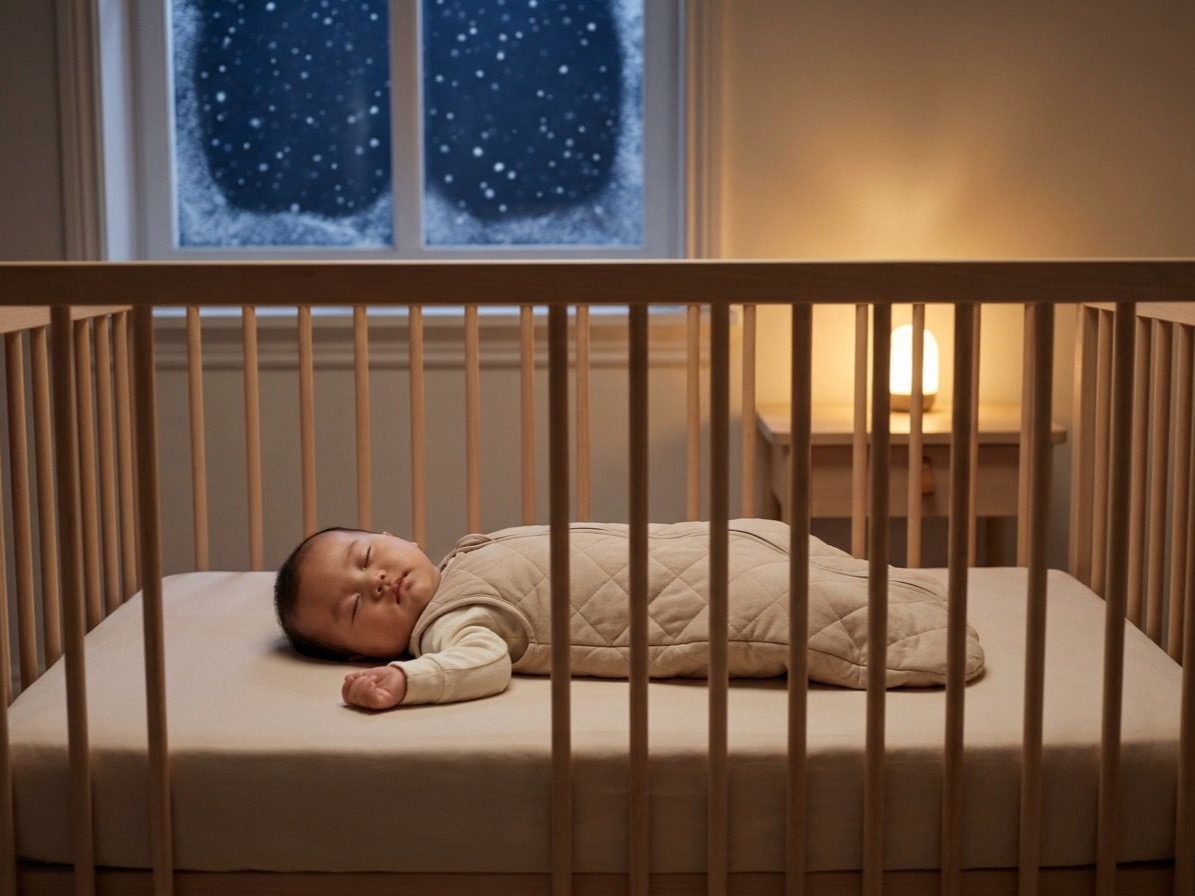
Get Started FreeWhen the nights turn cold, it's tempting to add a blanket or plug in a heating pad for your baby. Warmth for sleep should come from clothing instead. The American Academy of Pediatrics (AAP) says to dress your baby in no more than one layer more than you'd wear to be comfortable in the same room, to use a wearable blanket rather than loose blankets, and to skip hats indoors. To tell whether your baby is too warm or too cold, feel the chest or the back of the neck, not the hands and feet.
💡 Layers or a sleep sack, never loose blankets. No more than one layer more than you're wearing, no hats indoors, and no heating pads, electric blankets or hot water bottles in the crib. Cool hands are normal; check the chest or back of the neck.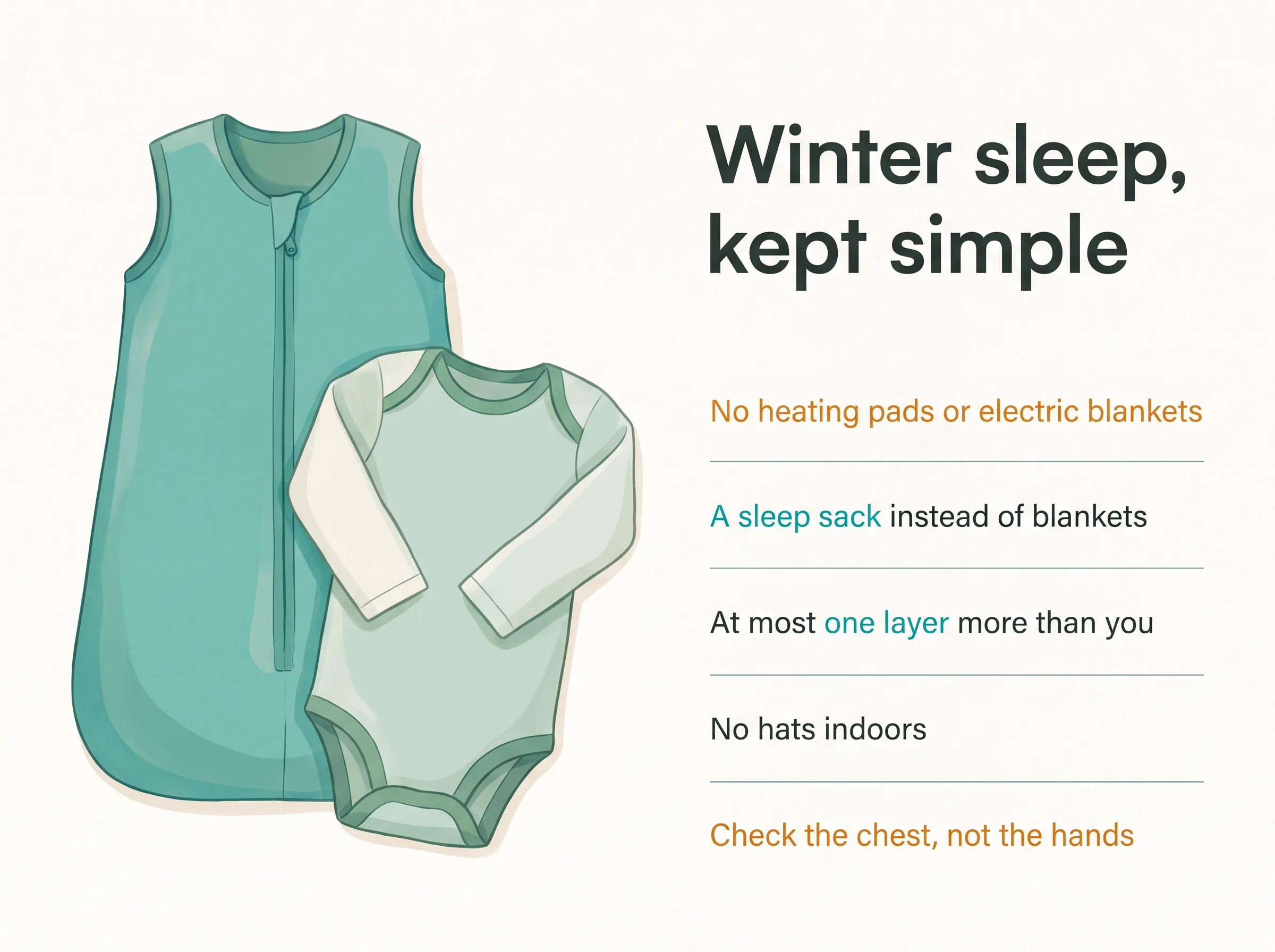
How Many Layers? One More Than You, at Most
The AAP advises considering the room temperature when you dress your baby, with no more than one layer more than an adult would wear to be comfortable in that room. Layers of clothing are safer than blankets, and a wearable blanket such as a sleep sack, or warm sleeper clothing, can also be used. For example, if you're comfortable in long-sleeve pajamas, a long-sleeve bodysuit under a sleep sack is usually enough for your baby.
The AAP also advises against hats indoors. Their benefit for keeping babies warm is unclear, and they add to the risk of overheating. If your baby still sleeps swaddled, stop as soon as they show signs of trying to roll and move to a sleep sack. Our swaddle transition guide covers the timing.
Choosing a Sleep Sack for Winter
- Fit: Choose a sleep sack that fits well so your baby can't slip down inside it. Many are sized by weight rather than age, so check the manufacturer's guide (Lullaby Trust).
- Warmth: Pick the tog rating by room temperature, not by season. Our sleep environment guide has a tog table by room temperature.
- Nothing on top: Don't add a blanket over a sleep sack. If it isn't warm enough, add a layer of clothing underneath or switch to a higher tog (Lullaby Trust).
- No weighted products: The AAP says not to use weighted blankets, sleepers or swaddles on or near your baby.
Keep pillows and blankets out of the crib for the first year. Our separate room sleep guide explains when they can be added.
Heating Pads, Electric Blankets and Hot Water Bottles
A sleeping baby can't move away from a heat source or tell you it's too hot. The Lullaby Trust, a UK charity focused on safer sleep, says not to use hot water bottles in any baby sleep space, to keep the cot away from radiators and other heat sources, and to point a portable heater away from your baby.
Electric mats carry the same problem. Korea's consumer safety agency tells families that older adults and infants, who have trouble responding to overheating, should not use electric mats and heated water mats. It received 2,411 reports involving these products from January 2015 to June 2018, and 88% of the cases with known symptoms were burns.
Low heat can still burn. Japan's product safety agency (NITE) notes that skin held at 44°C (111°F) can be burned after 3 to 4 hours, and at 46°C (115°F) after 30 minutes to an hour. A cover or towel doesn't prevent it.
Too Warm or Too Cold? Check the Chest, Not the Hands
The AAP lists sweating, flushed skin and a chest that feels hot to the touch as signs of overheating. The Lullaby Trust suggests feeling your baby's chest or the back of the neck. Warm is fine; sweaty or clammy means your baby is too hot, so remove a layer. Hands and feet usually feel cooler than the rest of the body, so they aren't a reliable guide.
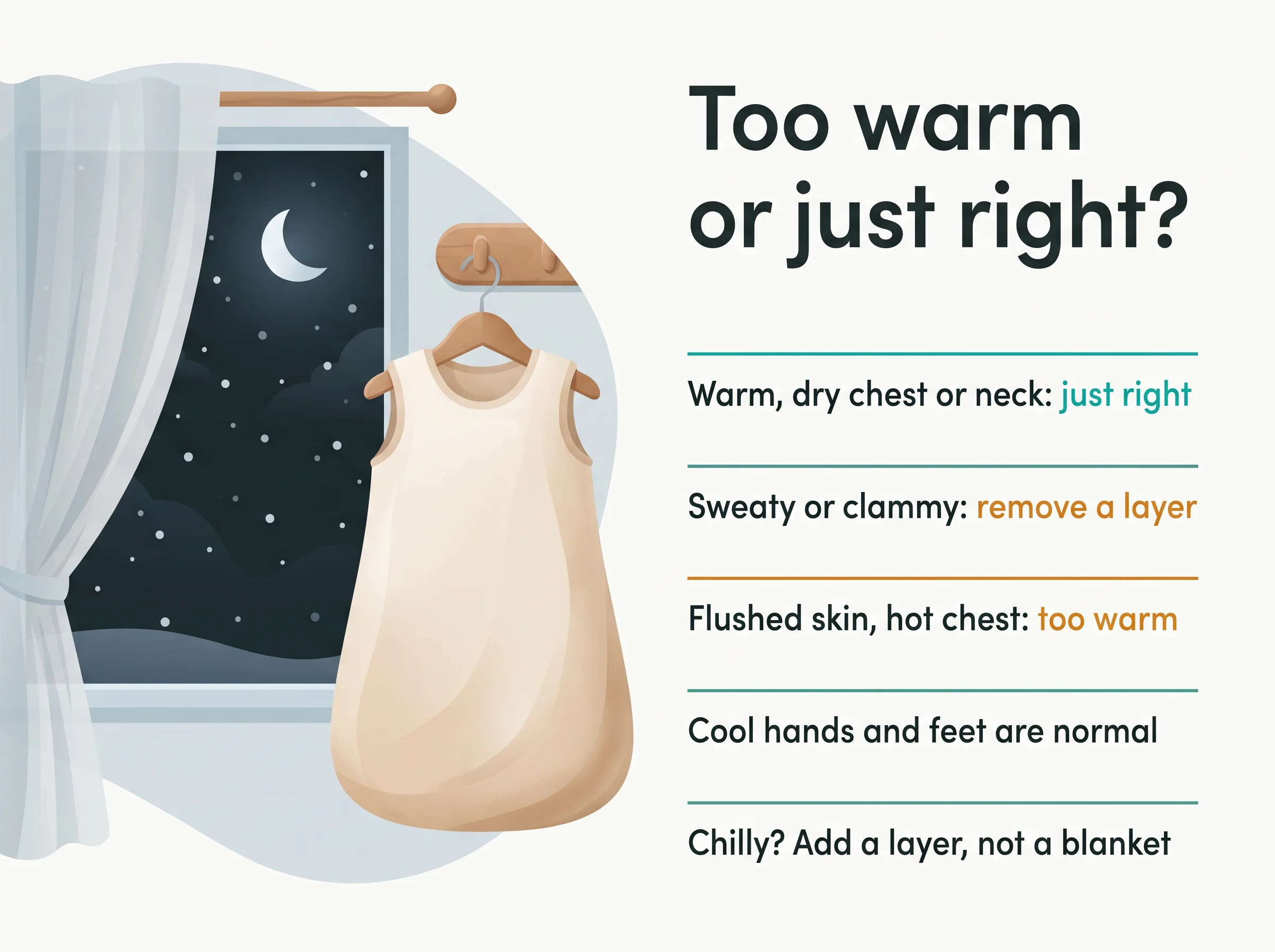
If your baby's head and neck are damp with sweat during sleep, they're too warm. Take off a layer and check the room.
What Room Temperature?
The AAP doesn't give one number. Because studies define overheating differently, it says specific room temperature guidelines are difficult to provide, and advises dressing your baby for the room instead. The Lullaby Trust recommends 16-20°C (61-68°F) for a baby's sleep space. Either way, aim for a room that feels comfortable, not hot.
For humidity and a tog table by room temperature, see our sleep environment guide. For daytime outfits by weather, see our baby clothing by temperature guide.
Track Night Sleep with BebeSnap
If you change the sleep sack or the room temperature, note how many times your baby wakes that night. With the BebeSnap app, you can log when your baby falls asleep and wakes, then see changes in total daily sleep and night wakings at a glance.
- Sleep log: Record sleep and wake times as they happen
- Sleep stats: See total daily sleep and night wakings over time
- Family sharing: Everyone taking night shifts sees the same log
👉 Learn more about BebeSnap Sleep Records
Frequently Asked Questions (FAQ)
Q: Can my baby sleep on a heating pad or electric blanket?
A: No. Keep heating pads, electric blankets, electric mats and hot water bottles out of your baby's sleep space. A baby can't move away from heat or tell you it's too hot, and long contact can cause burns. Korea's consumer safety agency advises that infants should not use electric mats at all.
Q: How many layers should my baby wear to sleep in winter?
A: No more than one layer more than you'd wear to be comfortable in the same room, according to the AAP. If you're comfortable in long-sleeve pajamas, a long-sleeve bodysuit under a sleep sack is usually enough. Skip loose blankets, and don't put a hat on your baby indoors.
Q: My baby's hands and feet are cold. Do they need socks or a blanket?
A: Cool hands and feet are common and don't mean your baby is cold. Feel the chest or the back of the neck instead: warm is fine, while sweaty or clammy means too hot. If your baby really seems chilly, add a layer of clothing or switch to a warmer sleep sack rather than adding a blanket.
Q: What room temperature is best for a baby in winter?
A: The AAP doesn't set a single number because studies define overheating differently. It advises dressing your baby for the room and watching for sweating, flushed skin or a hot chest. The UK's Lullaby Trust recommends 16-20°C (61-68°F) for a baby's sleep space. Aim for comfortable, not hot.
References
- AAP - Evidence Base for 2022 Updated Recommendations for a Safe Infant Sleeping Environment (Technical Report)
- AAP HealthyChildren - Safe Sleep: 9 Ways to Reduce a Baby's Risk of SIDS and Suffocation
- The Lullaby Trust - A Guide to Safer Sleep in Winter (2025)
- Korea Consumer Agency - Fire and Burn Accidents with Electric Mats in Winter (2018, Korean)
- NITE (Japan) - Low-Temperature Burns from Hot Water Bottles and Electric Foot Warmers (Japanese)
See Your Baby's Sleep Pattern Emerge
Track sleep and watch wake windows and night stretches appear as clear graphs.
See what the app does firstMedical Disclaimer: This article is for informational purposes only and does not replace professional medical advice. If you have concerns about your baby's health, please consult a pediatrician.
You Might Also Like
Kaup Index (Baby BMI): How to Calculate It and What's Normal by Age
Wonder Weeks Calculator: Your Baby's 10 Mental Leaps From the Due Date
Baby Weight Gain Calculator: Grams Per Day From Two Weigh-Ins
Baby Impetigo: Golden Crusts, Antibiotic Treatment, and When Nursery Is Safe Again
You Might Also Like
When Can a Newborn Use a Pacifier? Sleep Time, SIDS, Falling Out and When to Stop
Formula-fed babies can start a pacifier anytime; breastfed babies should wait until feeding is going well, usually 3 to 4 weeks (AAP). Offer it at naps and bedtime to lower SIDS risk, leave it out if it falls out, and aim to stop by 36 months.
Baby Won't Sleep Unless Held: How to Put Them Down
A baby who only sleeps when held isn't spoiled; the Moro reflex often plays a part, and it's normal. Hold 20 more minutes for deep sleep, then lower feet-first and slowly to beat the put-down wake.
When Can Baby Sleep in Their Own Room? Room-Sharing, Pillows, Blankets and Moving to a Bed
The AAP advises room-sharing on a separate sleep surface for at least the first 6 months, when sleep-related deaths are highest. Keep pillows and blankets out until 12 months, and move to a bed at about 3 feet tall.