How to Give Medicine to Babies: Complete Fever Reducer & Antibiotic Guide
Check Your Baby's Health from One Photo
Get Started FreeIt's late at night, your baby's fever has spiked, and you finally get that prescribed medicine into their mouth: only for them to spit every drop right back out. Then the crying starts, maybe even some throwing up, and your mind goes blank: "Can I give it again?" If this is you, take a breath. Getting medicine into a baby is hard for every parent, and it's not just your little one who fights it. Each kind of medicine has its own rules for measuring and giving, so let's walk through them one calm step at a time.
Three Things to Check Before Every Dose
When you're rushing, it's tempting to just get it over with, but checking these three things first saves you from the mistakes parents make most often.
First, the amount. Most baby medicines are dosed by body weight, not age, so two babies the same age can need very different amounts. Read the number on the prescription or bottle one more time, and if anything feels off, don't guess: call your pharmacist or pediatrician. One quick phone call buys a lot of peace of mind.
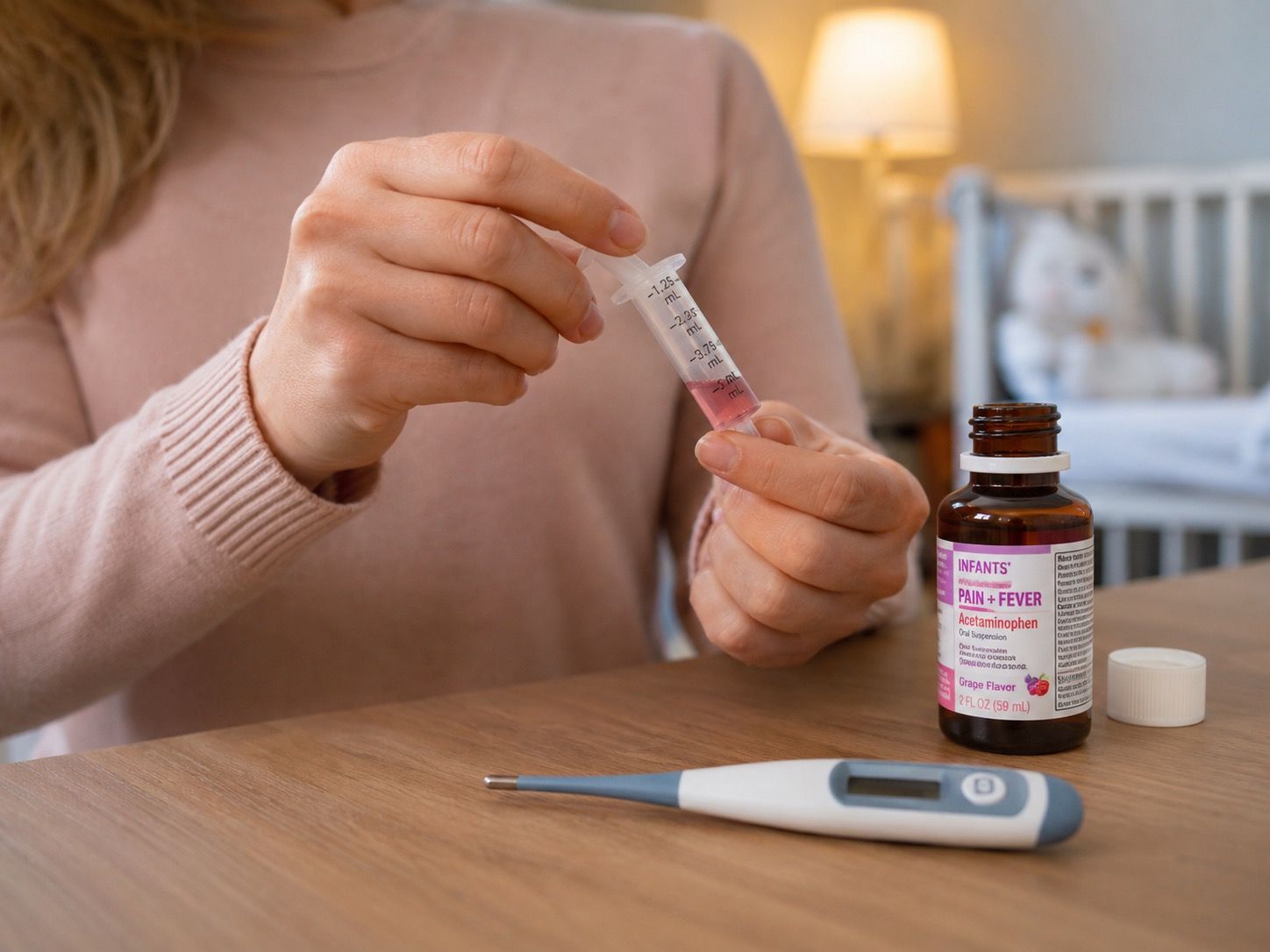
Next, the measuring tool. Never reach for a kitchen spoon, because spoons come in all sizes and the dose ends up all over the place. Use the little oral syringe or measuring cup that comes with the medicine, and measure right down to the milliliter.
Last, the timing. In the fog of a sick night it's easy to lose track, "Did I just give that, or was it two hours ago?" Write down when and how much you gave, and set an alarm for the next dose so nothing slips.
💡 With more than one child at home, medicine bottles get mixed up fast. Label each bottle with the child's name and dose ahead of time, so even a 3 a.m. dose stays straight.The Two Fever Medicines, and How They Differ
There are two main fever reducers for babies. The names sound technical, but once you know the difference, choosing between them is easy.
Acetaminophen is the one in Tylenol. It's gentle enough to use from birth under a doctor's guidance, dosed at 10-15mg per kg of body weight every 4-6 hours, up to 5 times in 24 hours.
Ibuprofen is the one in Motrin and Advil. Your baby has to be at least 6 months old to take it, dosed at 5-10mg per kg every 6-8 hours, up to 4 times in 24 hours. It tends to last a bit longer, but skip it if your baby is dehydrated or has kidney trouble, because it's harder on the kidneys when fluids are low.
When a fever just won't break, some parents alternate the two, but doing the math wrong on doses and timing is exactly how an overdose happens. Only alternate after your doctor has walked you through it.
| Category | Acetaminophen | Ibuprofen |
|---|---|---|
| Age allowed | From birth | From 6 months |
| Dose (per kg) | 10-15mg | 5-10mg |
| Interval | 4-6 hours | 6-8 hours |
| Duration | About 4-6 hours | About 6-8 hours |

With Antibiotics, "Seems Better" Isn't Done
Antibiotics are prescribed for infections caused by bacteria, ear infections, pneumonia, urinary tract infections. And here's the mistake parents make most: stopping the medicine early because the baby looks all better.
Symptoms fading doesn't mean the bacteria are gone. The survivors can flare back up, and worse, they can turn into resistant bacteria that shrug off the medicine entirely. That's why you finish the whole course (usually 7-10 days) even when your baby seems perfectly fine.
Timing matters too. "Twice a day" doesn't just mean morning and evening; it means every 12 hours, and "three times a day" means every 8 hours. The medicine has to stay at a steady level in the body to keep killing bacteria.
Storage is easy to forget. Powder-to-mix antibiotics like amoxicillin often need refrigeration. Check the label for how to store it and when it expires, and when there's leftover medicine, toss it rather than saving it for "next time."
When Your Baby Flatly Refuses, Try This
A baby who spits and gags no matter how you coax them is genuinely upsetting. Here are the tricks that actually work.
The biggest one is aiming for the inner cheek, a little at a time. Push the syringe straight down the middle of the tongue or toward the back and they'll gag and spit instantly. Instead, slide it along the inside of the cheek and release just 0.5-1ml at a time, slowly.
While you're at it, hold them slightly upright rather than flat on their back. That angled position helps prevent choking and reflux.
If it's the bitter taste they're fighting, try masking it. Some medicines taste less bitter chilled, ask your pharmacist whether that's okay first, and pharmacies can often add a strawberry or banana flavor to a syrup.
Afterward, praise them like crazy. For a baby over 1, offer a favorite drink or snack and give a big "You did it!" with a hug. It makes the next dose go a little easier.
And if they throw up, watch the clock. If they bring it all up within 15 minutes, you can re-dose. If it's been 15-30 minutes, some may already be absorbed, so check with your doctor. If your baby vomits every single time, talk to your pediatrician.
💡 Don't sneak medicine into milk or formula. Your baby may decide the milk tastes off and refuse it altogether, and if they don't finish the bottle, they only get part of the dose.Things to Never Do
These are easy to do on autopilot when you're stressed, but they're genuinely dangerous.
Don't split an adult pill in half for your baby; there's no way to get the dose right. Never give aspirin, either: in anyone under 19 it can trigger a serious condition called Reye's syndrome. The AAP also warns against giving over-the-counter cold or multi-symptom medicine to children under 4 without a prescription. And don't give another child's prescription, or bump up the dose on your own thinking "this much won't be enough."
When the Hospital Comes Before the Medicine
In these situations, don't keep dosing at home, head straight to care.
A fever of 100.4°F (38°C) or higher in a baby under 3 months, hives after a dose, or any sign your baby took too much medicine all need care right away. Call 911 for facial swelling or trouble breathing after a dose (signs of a severe allergic reaction), a seizure, or a baby who becomes hard to rouse or goes limp. A fever that won't come down for more than 24 hours despite fever reducers also needs a prompt visit.
Managing Medication with BebeSnap
With baby medicine, "when and how much" is everything. BebeSnap keeps track even on the foggiest night.
- Log each dose and time so you never miss the next one
- See the rise and fall of the fever alongside your temperature records at a glance
- Ask the AI chatbot about doses and symptoms, even in the middle of the night
Frequently Asked Questions (FAQ)
Q: How do I calculate my baby's fever reducer dose?
A: Baby medicine is dosed by body weight, not age. Acetaminophen is 10-15mg per kg every 4-6 hours (max 5 doses in 24 hours), while ibuprofen is 5-10mg per kg every 6-8 hours (max 4 doses in 24 hours). Instead of a kitchen spoon, measure precisely in milliliters using the oral syringe or cup that came with the medicine.
Q: Can I stop antibiotics once symptoms improve?
A: No. Bacteria may remain even after symptoms disappear, so stopping early can cause relapse or antibiotic-resistant bacteria. You should finish the full prescribed course, usually 7-10 days. "Twice a day" means every 12 hours and "three times a day" means every 8 hours, keeping a steady blood concentration is important.
Q: Should I re-dose if my baby throws up the medicine?
A: If your baby throws it all up within 15 minutes, you can give it again. After 15-30 minutes, some may already be absorbed, so ask your doctor. If your baby vomits every time, consult your pediatrician. Aiming the syringe at the inner cheek rather than the middle of the tongue, and giving it slowly, helps reduce spitting up.
Q: Which medicines should I never give my baby?
A: Aspirin is banned for anyone under 19 due to the risk of Reye's syndrome. You also should not give cold or multi-symptom medicine to children under 4 without a prescription, split adult medicine, give another child's prescription, or increase the dose on your own. Avoid mixing medicine into milk or formula as well.
References
Check Your Baby's Health from One Photo
AI stool analysis reads color and texture, and keeps every health record in one place.
See what the app does firstMedical Disclaimer: This article is for informational purposes only and does not replace professional medical advice. If you have concerns about your baby's health, please consult a pediatrician.
You Might Also Like
Tomato for Babies: When to Start, Skin and Seeds, and Why Cherry Tomatoes Are Never Served Whole
Apple for Babies: Stage-by-Stage Portions and When Raw Apple Is Safe
Spinach for Babies: When to Start, Why Boiling Matters, and When to Skip It
Potato for Babies: When to Start, Safe Shapes, and Why Never to Blend It
You Might Also Like

Baby Impetigo: Golden Crusts, Antibiotic Treatment, and When Nursery Is Safe Again
Golden-brown crusts spreading across your baby's skin? Impetigo is a common, highly contagious bacterial skin infection in young children. It stops being contagious 48 hours after treatment starts. Here is how to recognise it and when nursery is safe again.

Baby Mosquito & Insect Bites: Safe Prevention and Treatment
Baby insect repellent: DEET 30% or less, from 2 months only. Large swelling at the bite is normal. Learn to spot skeeter syndrome and danger signs.

Baby Snoring & Infant Sleep Apnea: Causes, Symptoms, and When to Seek Help
About 3.2% of babies snore regularly at 3 months. Learn when snoring is normal and when a 20-second breathing pause means calling 911 right away.