Baby Only Naps 30 Minutes? 5 Steps to Lengthen Short Naps
See Your Baby's Sleep Pattern Emerge
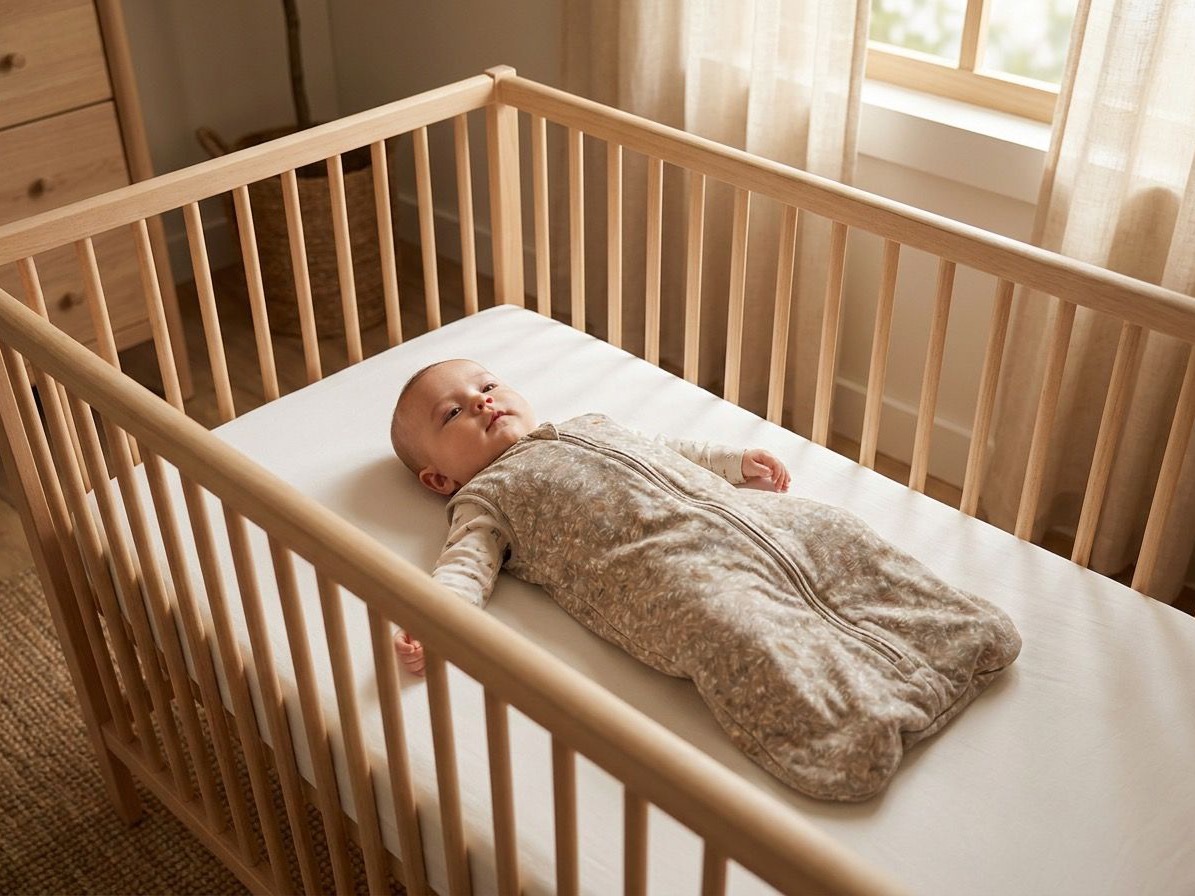
Get Started FreeYou finally got your baby down, and exactly 30 minutes later their eyes pop open. Day after day, it's exhausting. First, take a breath: a 30-minute nap isn't broken. Your baby slept exactly one sleep cycle. Baby nap cycles run about 30–45 minutes, and at the end of each one sleep gets very light. A baby who hasn't yet learned to link cycles simply wakes up. The goal is to help them "cross over" into the next cycle. By adjusting wake windows, the environment, and how you put your baby down, you can stretch those catnaps past the one-hour mark.
Why Exactly 30 Minutes?
Like adults, babies cycle between deep and light sleep. The difference is that one full loop (a sleep cycle) is just 30–45 minutes for a baby. At the end of each cycle, sleep gets very light, and a baby who doesn't yet know how to move into the next cycle on their own simply wakes. This is what parents call the "30-minute wall."
The reassuring part: this is developmental. Around 6 months, as the nervous system matures, daytime sleep naturally begins to consolidate, and by around 12 months the lighter sleep that causes early waking shrinks and the wall mostly disappears. So a 30-minute nap at 4–5 months is completely normal. But if the naps are so short your baby always seems tired, the steps below help them practice linking cycles.
💡 The short answer: a 30-minute nap is one sleep cycle. The keys to lengthening it are nailing the wake window, darkening the room, and laying baby down drowsy but awake so they can move into the next cycle on their own.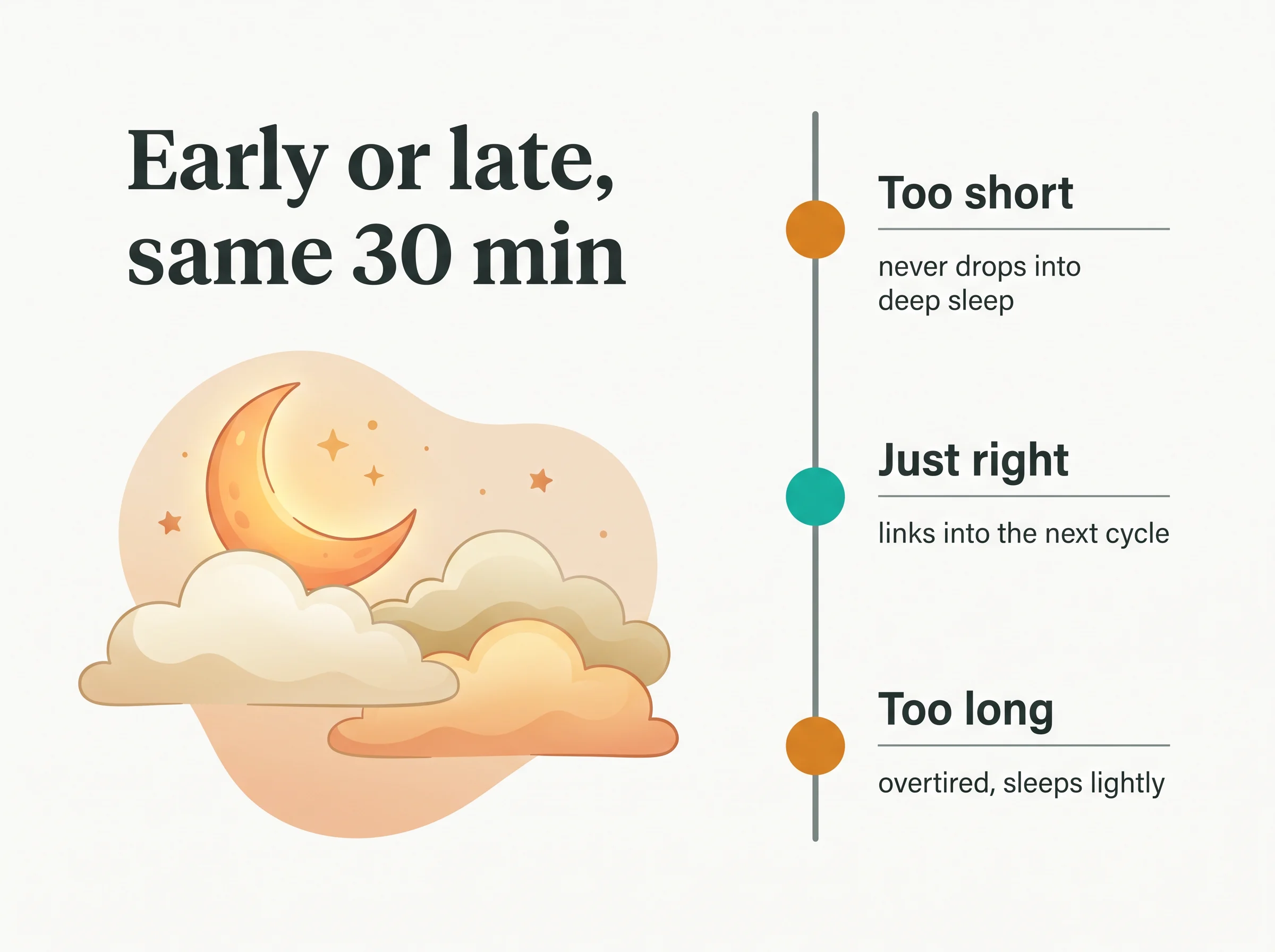
5 Steps to Lengthen Short Naps
Work through these one at a time. Most short naps come down to two things: timing and the ability to fall asleep independently.
1. Nail the wake window
- The most common culprit is timing. An overtired or undertired baby can't drop into deep sleep and wakes at 30 minutes.
- Use age-based wake windows as your guide. A 4-month-old, for example, usually stays happily awake for about 1.5–2 hours.
- Sleepy cues beat the clock. Eye-rubbing, a glazed stare, or wanting to be held more than usual mean it's time: because catching that window leads to deeper sleep.
2. Make the room fully dark and keep white noise on
- From around 3 months, naps in a blackout-dark room are fine. Light and noise make it easier to wake during the light-sleep phase.
- Running white noise steadily through the whole nap masks household sounds between cycles, which raises the odds your baby drifts back to sleep.
3. Lay baby down drowsy but awake
- If you rock baby fully to sleep and then transfer them, they wake 30 minutes later, startled that the arms they fell asleep in are gone.
- Putting baby down drowsy but awake means the surroundings look the same when they wake, so it's easier to roll into the next cycle on their own. This is the single biggest lever for lengthening short naps.
4. Wait before rushing in at the 30-minute wake
- Running in the instant they wake robs baby of the chance to practice linking sleep. If it's just fussing, leave them in place for about 5–10 minutes to see if they resettle.
- This is the "crib hour." It isn't right for very young babies who can't yet self-settle, though, if they're crying hard, pick them up.
5. Build a short, consistent pre-nap routine
- Close the curtains, turn on white noise, sing a short song: a 2–3 minute ritual repeated the same way every time.
- This cue tells the brain "it's sleep time," helping baby settle into deep sleep faster, because predictability lowers the effort of falling asleep.
Expectations Change With Age
The same 30-minute nap means different things at different ages. Use the table below to check what's typical for your baby's stage.
| Age | Expected length per nap | Notes |
|---|---|---|
| 0-3 months | 30 min to a few hours, erratic | Short is completely normal; follow cues |
| 4-5 months | 30-45 min (one cycle) | When the "30-minute wall" peaks |
| 6-8 months | Lengthening, 1-2 hours possible | Naps begin to consolidate as the brain matures |
| 9+ months | Settling into 1-2 hours | Roughly 1 in 4 still nap under an hour |

If you want the full picture on nap counts and transitions, read our nap schedule by age guide too.
Common Mistakes and Fixes
- Scooping baby up the moment they wake: It steals the chance to practice linking sleep. If they're just fussing, watch for 5–10 minutes first.
- Napping in a bright living room: Light wakes baby during light-sleep phases. Darken the space.
- Pushing the next nap too far out: On a short-nap day, trim the next wake window slightly to prevent overtiredness.
Find Your Baby's Pattern with BebeSnap
Short naps are a timing puzzle, so tracking reveals the answer. A few days of logging in BebeSnap surfaces the wake window that fits your baby.
- Sleep logging: One-touch nap start and end
- Wake window calculator: Automatic alerts for the next ideal nap time
- AI consultation: 24/7 help with short-nap questions
Frequently Asked Questions (FAQ)
Q: My baby only naps for 30 minutes, is that okay?
A: Yes, especially at 4–5 months it's completely normal. A baby's sleep cycle is 30–45 minutes, so they wake after a single cycle as sleep lightens. Around 6 months, as the nervous system matures, naps begin to consolidate, and by about 12 months the wall mostly disappears. If your baby wakes happy and is growing well, there's no need to worry.
Q: How do I set the wake window to lengthen short naps?
A: Timing is the most common cause, an overtired or undertired baby can't reach deep sleep and wakes at 30 minutes. Use age-based wake windows as a guide (about 1.5–2 hours at 4 months), but sleepy cues are more accurate than the clock. When you see eye-rubbing, a glazed stare, or extra clinginess, put baby down right away.
Q: Should I pick my baby up the moment they wake at 30 minutes?
A: If it's just fussing, don't rush in, leave them for about 5–10 minutes to see if they resettle. This "crib hour" lets baby practice linking cycles. Laying baby down drowsy but awake from the start helps too, since the surroundings match on waking. But if they're crying hard, pick them up.
Q: When does the 30-minute wall go away?
A: From around 6 months, as the nervous system matures, nap cycles start linking and naps can stretch to 1–2 hours. By about 12 months the lighter sleep behind early waking shrinks and the wall mostly disappears. Still, there's wide variation: roughly 1 in 4 babies nap under an hour even after 9 months.
References
See Your Baby's Sleep Pattern Emerge
Track sleep and watch wake windows and night stretches appear as clear graphs.
See what the app does firstMedical Disclaimer: This article is for informational purposes only and does not replace professional medical advice. If you have concerns about your baby's health, please consult a pediatrician.
You Might Also Like
Wonder Weeks Calculator: Your Baby's 10 Mental Leaps From the Due Date
Baby Weight Gain Calculator: Grams Per Day From Two Weigh-Ins
Baby Impetigo: Golden Crusts, Antibiotic Treatment, and When Nursery Is Safe Again
Baby Mouth Sores (Stomatitis): Causes, How to Tell Them Apart, and Dehydration Signs
You Might Also Like
Baby Sleep While Traveling: Settling Them in a New Place and Resetting After
Worried a trip will wreck your baby's sleep? The first night is the hardest, and most babies reset within 3-7 days at home. What to pack, naps on the move, and safe sleep away.

Baby Sign Language Guide: Communicating Before Words
Start baby sign language around 6~8 months; babies begin signing back at 8~12 months. Learn the basic signs and how to teach them.

Transitioning Out of Swaddling and the Moro Reflex: Timing and How-To
Stop swaddling the moment your baby starts rolling, usually 2-4 months. Learn step-by-step weaning for babies who wake from the Moro reflex.