How to Boost Baby Immunity: Breastfeeding, Vitamin D, and Vaccines, Complete Guide
Check Your Baby's Health from One Photo
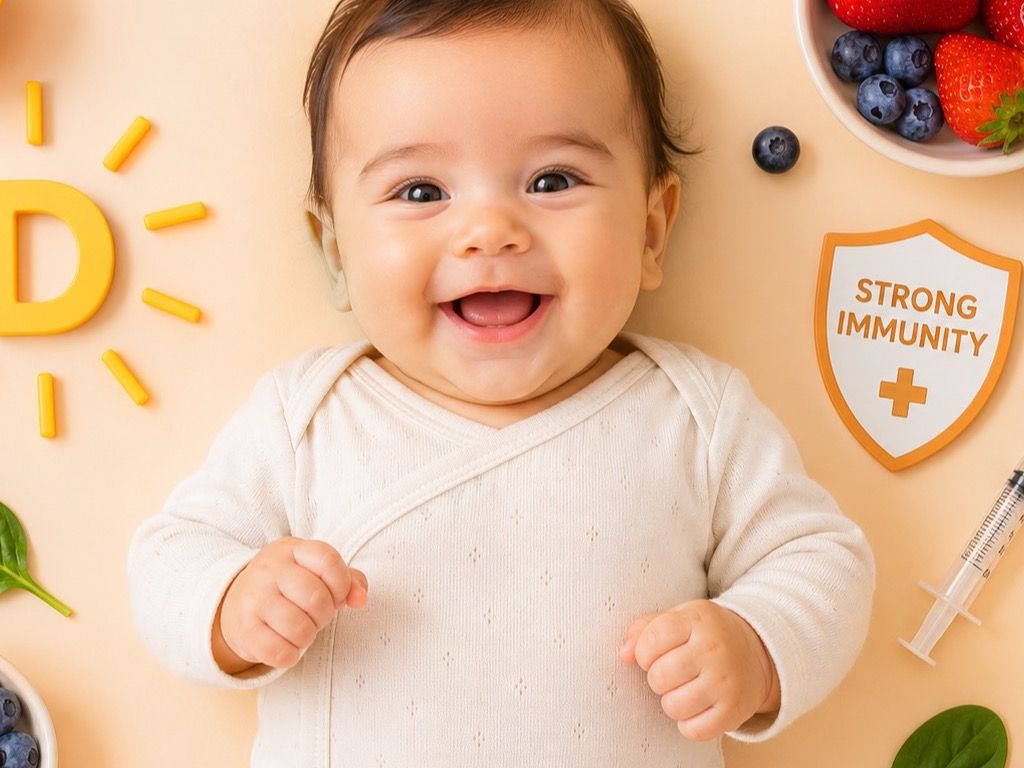
Get Started FreeYou started daycare, and now it feels like your baby has a runny nose every other week. It's heavy on the heart, and of course you wonder, "Is my baby's immune system weak?" Here's the reassuring truth: a baby's immunity is naturally at its lowest between 6 months and 18 months of age. The antibodies they borrowed from you at birth are fading, while their own ability to build immunity is still very much under construction. That system doesn't really settle in until around age 6. The good news is there are proven ways to carry your baby strongly through this window: and the big three are breastfeeding, 400 IU of vitamin D a day, and on-time vaccines.
Why They Get Weaker Right Around 6 Months
When your baby leaves the womb, they come out loaded with your antibodies, passed along through the placenta. That's why brand-new newborns actually get sick surprisingly little. But these mom-supplied antibodies drop off sharply between 4 and 6 months, right when your baby's own immune system still isn't finished. It's during this "immunity gap" that babies catch colds, stomach bugs, and respiratory infections most easily. In other words, getting sick a lot at this age doesn't mean your baby is unusually frail.
💡 Did you know roughly 70% of the body's immune cells live in the gut? That's exactly why caring for gut health (especially once solids start around 6 months) matters so much for immunity.Way #1 to Build Immunity: Breastfeeding
You can't talk about immunity without talking about breast milk. The thick, golden-yellow colostrum that comes in during the first 2 to 3 days after birth isn't just "first milk"; it's a treasure chest packed with immune protection. Colostrum is incredibly rich in IgA antibodies, which directly shield your baby's gut and airways from pathogens like E. coli, RSV, and Salmonella.
Breast milk carries a whole lineup of protectors beyond that. Secretory IgA (sIgA) clings to the gut lining like a shield, blocking germs from getting into the body, and it's most concentrated in colostrum. Lactoferrin is a protein with antibacterial, antiviral, and anti-inflammatory powers that starves bacteria of the iron they need to multiply. Human milk oligosaccharides (HMOs) act as food for beneficial gut bacteria like Bifidobacterium, keeping the gut environment healthy. And milk even delivers lysozyme (an enzyme that breaks down bacterial cell walls) along with living white blood cells, straight to your baby.
💡 The World Health Organization (WHO) and the American Academy of Pediatrics (AAP) recommend exclusive breastfeeding for the first 6 months, then continuing breastfeeding alongside solids for at least 12 months.Of course, plenty of parents can't breastfeed, for all kinds of reasons. Formula can't replicate breast milk's immune components exactly, but please don't beat yourself up over it. You can still give your baby's immune system a strong foundation through other routes: vaccines, vitamin D, and plenty of sleep all do real work.
Way #2: Don't Forget the Vitamin D
Vitamin D is the one people skip most often. It's the nutrient that wakes up immune cells and puts them to work, but breast milk alone doesn't supply enough, and newborns can't soak up much sun either.
That's why the American Academy of Pediatrics (AAP) recommends that breastfed babies get 400 IU (10 mcg) of vitamin D every day, starting within the first few days of life. After the first birthday, that goes up to 600 IU. And yet only 2 to 19% of breastfed infants actually get the recommended amount; it's something a huge number of parents unknowingly miss, so it's worth a deliberate check.
Vitamin D regulates immune cells like T-cells and macrophages, and helps the body produce its own antimicrobial compounds, lowering the risk of respiratory infections. If you're breastfeeding, give a 400 IU/day liquid supplement after talking with your pediatrician; if you're formula-feeding, check whether your formula already includes vitamin D. After age 1, the target is 600 IU a day.
💡 Outdoor walks help with vitamin D too. Just 3 times a week, about 15 minutes each gets you both vitamin D and some movement. For newborns, though, skip direct sun: a gentle stroll in the shade is plenty.Way #3: Keep Vaccines On Schedule
Vaccines are the most scientifically sound, dependable way to safely train your baby's immune system ahead of time. By showing the body a weakened version of a pathogen, they teach it to remember and fight off the real thing. The AAP's 2026 childhood immunization schedule covers 18 vaccine-preventable diseases, including RSV, hepatitis B, influenza, and meningococcal disease.
| Age | Key Vaccines |
|---|---|
| Birth | Hepatitis B (HepB) dose 1 |
| 1 month | Hepatitis B (HepB) dose 2 |
| 2 months | DTaP, Hib, PCV, IPV, Rotavirus |
| 4 months | DTaP, Hib, PCV, IPV, Rotavirus |
| 6 months | DTaP, Hib, PCV, IPV, Rotavirus, Influenza, HepB dose 3 |
| Under 8 months | RSV immunization, 1 dose during RSV season (e.g., nirsevimab) |
| 12–15 months | MMR, Varicella, PCV, Hib |
Way #4: Help Them Sleep Well
"What does sleep have to do with immunity?" you might ask, but a big chunk of your baby's immune work actually happens while they sleep. As your baby snoozes, their body produces a protein called cytokines, which are central to fighting off infection and inflammation. So when sleep runs short, cytokine production drops and resistance to viruses and bacteria slips along with it.
By age, newborns (0-3 months) do best with 14-17 hours a day, and infants (4-12 months) with 12-16 hours. To help them sleep, build the same bedtime routine every night: say, bath, then feeding, then bed: and keep nap times consistent too. Keep the room cool at around 18-22°C (64-72°F), dim, and quiet for deeper sleep. And for safety, follow the AAP recommendation and always lay babies under 12 months flat on their back to sleep.
Way #5: Tummy Time and Moving Their Body
Tummy time is exactly what it sounds like, placing your awake baby belly-down for a stretch. It's usually known as a neck-muscle exercise, but physical activity like tummy time also stimulates the lymphatic system, which gives immune defense a boost.
Start gently: wait at least 30 minutes after a feeding, then do 3-5 minutes at a time, 2-3 times a day. Always do it while your baby is awake and you're right there watching. Add in an outdoor walk 3 or more times a week, about 15 minutes each, and you get movement and vitamin D in one go.
Immune-Friendly Solids (After 6 Months)
Once solids start around 6 months, the food on the spoon becomes another way to support immunity. As mentioned, about 70% of immune cells work in the gut, so foods that nurture a healthy gut environment are especially good.
Try starting with sweet potato and carrots. Their beta-carotene becomes the raw material for vitamin A, which strengthens mucosal immunity, just steam them soft and mash or puree. After 6-7 months, you can add cooked broccoli and spinach, whose antioxidants protect immune cells. For protein, beef and chicken are great: the zinc is essential for making immune cells and the iron fuels the energy they need to work. Plain yogurt can add beneficial gut bacteria, and the omega-3s in salmon and mackerel help calm inflammation. There's no need to wait until age 1 for either: the AAP says that once your baby tolerates a few first foods, and there's no reason to think they're at higher food allergy risk, you can offer small tastes of allergenic foods such as yogurt and fish, since waiting longer may increase the chance of developing an allergy.
When to Get an Immune Check at the Pediatrician
As mentioned, frequent minor illnesses don't automatically mean an immune problem. But if you notice the signs below, it's worth a pediatric consultation.
| Symptom Pattern | Recommended Action |
|---|---|
| 8 or more ear infections per year | Pediatric immune evaluation |
| 2 or more pneumonia episodes | Pediatric immune evaluation |
| Infections not responding to antibiotics | See a pediatrician promptly |
| Poor weight gain combined with frequent infections | Pediatric consultation |
| Serious infection with no fever | See a pediatrician promptly |

Frequently Asked Questions
Q: Besides vitamin D, does my baby need other supplements?
A: Exclusively breastfed infants may also need iron supplementation beginning around 4 months, consult your pediatrician. Formula-fed babies generally receive adequate nutrients from formula. Never add supplements without a pediatrician's guidance.
Q: Do children's immune-boosting health supplements actually work?
A: Most over-the-counter children's immunity products lack strong scientific evidence. The AAP advises that for healthy babies, breastfeeding, vaccines, and a balanced diet are far more effective than any supplement marketed to "boost" immunity.
Q: My baby catches colds frequently. Does that mean their immune system is weak?
A: Eight to ten colds per year is within the normal range for babies starting daycare or playgroups; this is actually how the immune system learns. Red flags for immune deficiency are not the number of colds, but rather infections that don't respond to antibiotics, or recurring pneumonia or ear infections.
Q: Does having older siblings strengthen a baby's immunity?
A: Natural exposure to a wider variety of microbes from older siblings can help train your baby's immune system, much like starting daycare does. However, this does not replace the proven essentials: breastfeeding, 400 IU of vitamin D a day, and keeping vaccines on schedule, which remain the foundation of your baby's protection.
Managing with BebeSnap
Keeping the immunity-building basics (breastfeeding, vitamin D, vaccines, and sleep) in one place makes every pediatric visit so much easier. BebeSnap helps you do exactly that.
- Track vaccine schedules with reminders so no dose slips through the cracks
- See daily sleep totals logged automatically at a glance
- Log feeding and solids to check that nutrition stays well-rounded
👉 Start tracking your baby's health with BebeSnap
References
- AAP HealthyChildren - Breastfeeding and Baby Immune System
- AAP HealthyChildren - Do Kids Need Vitamins to Boost Immunity?
- AAP HealthyChildren - 2026 Immunization Schedule
- AAP HealthyChildren - When to Introduce Common Food Allergens
- NCBI PMC - Immune Development in Infants
- Cleveland Clinic - How to Boost Your Child's Immune System
- Lurie Children's Hospital - Boosting Your Child's Immune System
Check Your Baby's Health from One Photo
AI stool analysis reads color and texture, and keeps every health record in one place.
See what the app does firstMedical Disclaimer: This article is for informational purposes only and does not replace professional medical advice. If you have concerns about your baby's health, please consult a pediatrician.
You Might Also Like
Tomato for Babies: When to Start, Skin and Seeds, and Why Cherry Tomatoes Are Never Served Whole
Apple for Babies: Stage-by-Stage Portions and When Raw Apple Is Safe
Spinach for Babies: When to Start, Why Boiling Matters, and When to Skip It
Potato for Babies: When to Start, Safe Shapes, and Why Never to Blend It
You Might Also Like

Baby Impetigo: Golden Crusts, Antibiotic Treatment, and When Nursery Is Safe Again
Golden-brown crusts spreading across your baby's skin? Impetigo is a common, highly contagious bacterial skin infection in young children. It stops being contagious 48 hours after treatment starts. Here is how to recognise it and when nursery is safe again.
Baby's First Dental Visit: When to Go and How to Care for Baby Teeth
Take your baby to the dentist by age 1 or within 6 months of the first tooth. AAP-recommended oral care guide for parents.

Baby Sunscreen & Sun Protection Guide: When to Start and How to Use SPF Safely
Babies under 6 months should avoid sunscreen, use SPF 30+ mineral formula every 90 minutes from 6 months on.