When Can Babies Start Swimming? Safe Ages and Baby Swim Guide
All Your Baby Records in One App
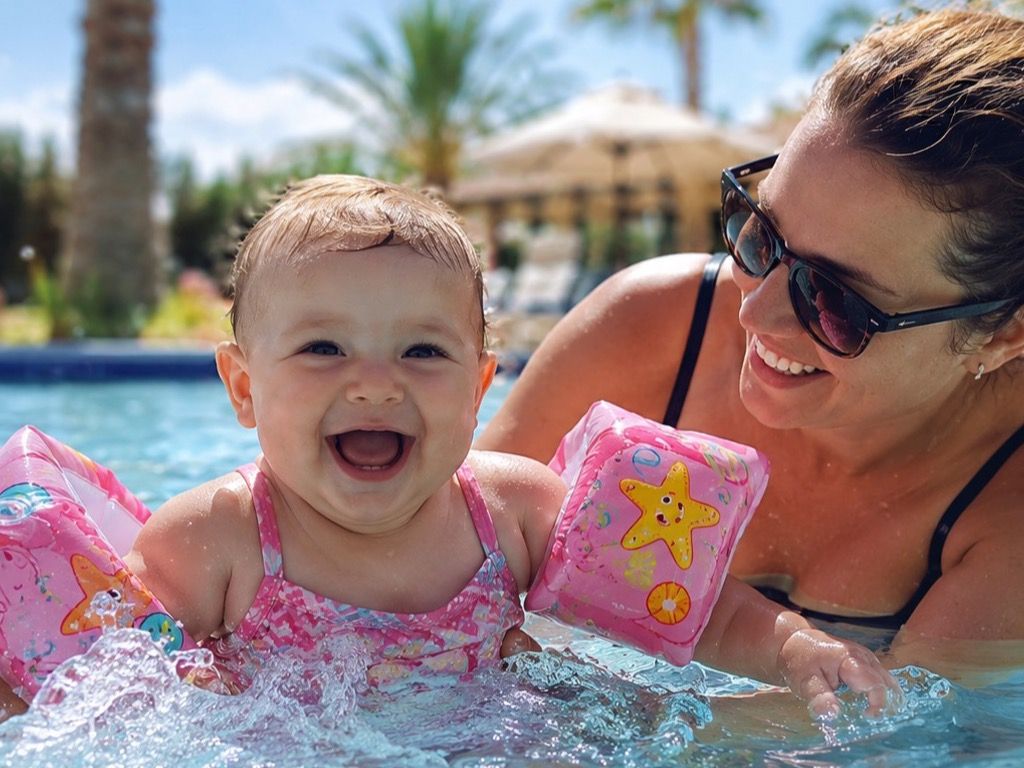
Get Started FreePicturing your baby splashing and giggling in the water? It's such a sweet image. But there's that hesitation too: "Aren't they too little for this? When is it actually safe?" I fell down an internet rabbit hole before our first splash, so I get it. Here's the gist: gentle home water play can start around 4 months, parent-and-baby swim time once they can hold their head up at 6 months, and proper swim lessons at age 1, per the American Academy of Pediatrics (AAP). Just follow your baby's pace, and you'll be fine.
There's one thing I really want to flag, though. Water play is wonderful, but safety isn't optional. Drowning is one of the most common accidents for kids ages 1 to 4. In the U.S., about 10 people die in the water every day, and on average 2 of them are children under 14. Scary numbers: but flipped around, they mean that simply having a grown-up watching closely prevents most of it. So keep the safety basics in mind and dive into the fun.
When Should Your Baby Start?
The right kind of water play depends on how big your baby is. Here's a quick at-a-glance guide.
| Age | Good water play | What to watch |
|---|---|---|
| 0-3 months | Just bathtub baths | Water 37-38°C (98.6-100.4°F), keep it under 5 minutes |
| 4-5 months | Shallow water play at home | Water 32-34°C (89.6-93.2°F), 5-10 minutes |
| 6 months+ | Parent-and-baby swim time | After head control; pick a trusted facility |
| 1 year+ | Swim lessons (AAP-recommended) | Always stay within arm's reach |
| 2 years+ | A good time for the public pool | Best after potty training, for hygiene |

Why Water Play Is So Good for Babies
Splashing around with your baby is more than just play; it actually helps them grow, body and mind.
1. It builds a stronger body
- Moving their arms and legs in water works both the big and small muscles
- The water supports their body, so they get a full workout without straining their joints
- Balancing in the water sharpens their sense of how to move
2. It stimulates their brain
- The warmth, the ripples, the floaty feeling; it's all rich new sensation for your baby
- Exploring a brand-new setting gets their mind buzzing and growing
- Snuggled skin-to-skin in your arms, they feel safe and calm
3. It grows their social side
- In a group class, they get to be around other babies their age
- They practice settling into a setting with its own little routine
- They learn to trust someone new (the instructor)
4. It makes them comfortable with water
- Getting friendly with water early means they face it calmly instead of fearfully
- Swim lessons are one of several safety layers against drowning
- That said, knowing how to swim doesn't make drowning impossible
How to Do Home Water Play Safely
If a swim class still feels like a lot, you can build your baby's comfort with water right at home.
1. Get the water and room ready
- Keep the water at 32-34°C / 89.6-93.2°F (not too cold, not too hot)
- Warm the room too, so they don't get a chill when they come out
- Lay a non-slip mat on the bottom of the tub
2. Start short
- Five to ten minutes is plenty for the first time
- Even if they love it, don't go past 20 minutes
- If they seem tired or start to shiver, take them out right away
3. Don't look away for a second
- Keep your eyes on your baby and stay within arm's reach the whole time
- Don't slip off to the bathroom or to answer the phone
- The rule is simple: no matter what, a grown-up stays right there
How to Pick a Baby Swim Class
Once they're past 6 months, it's worth looking into a proper baby swim class.
1. Checking out a facility
- Look into how they manage the water and keep it clean
- Make sure the pool stays at 32-34°C (89.6-93.2°F)
- Check that the instructors are certified to work with babies and toddlers
2. The right class for your baby
- 6-12 months: a parent-in-the-water class, where you hold and support them, is best
- 1-2 years: start with parent-assisted classes, then ease toward more independence
- Around 4 years+: a small-group class on their own can work. Before age 4, an adult should stay within arm's reach even during lessons
3. Before the first lesson
- Don't feed them within 2 hours of swimming (it helps prevent spit-up)
- Pack a swim diaper and a rash guard
- Go on a day when they're well-rested and in a good mood
Water Safety Rules You Can't Skip
Knowing how to swim doesn't make drowning impossible. You need several layers of safety working together.
1. Stay within arm's reach
- Whenever they're in the water, stay close enough to touch them
- Don't take your eyes off them for even a second
- Skip the phone, the book, anything that splits your attention
2. Use the right flotation gear
- If you use flotation gear, choose a life jacket that fits your baby's body
- Float rings, neck floats, float seats and water wings are NOT safety devices: seats flip over easily and floats can deflate, trapping a baby under the water in seconds
- Even with gear on, never relax your watch
3. No alcohol near water, ever
- More than 70% of adult drowning deaths involve alcohol or drugs
- A caregiver drinking by the water is an absolute no
- Stay fully clear-headed whenever you're watching kids near water
4. Put up four-sided fencing (if you have a home pool)
- A pool at home needs a fence on all four sides, non-negotiable
- At least 1.2 meters high, with a gate that latches on its own
- When you're done, drain it or cover it securely
5. If a child is pulled from the water
- If they are not breathing normally or not responding, call 911 and start CPR with rescue breaths right away
- Any child who needed rescue breaths or CPR should be checked at a hospital, even if they seem fine afterward
When to Skip Water Play
On days when your baby's not feeling their best, it's better to give water play a rest.
- They have a fever or seem off
- There's a rash or an open scratch on their skin
- They've got diarrhea or have been throwing up
- They have an ear infection (it could get worse)
- They had a vaccination recently (wait for the spot to settle)
A Quick Checklist Before You Start
Before water play, just run through these.
- ✅ Can your baby hold their head up well? (classes from 6 months)
- ✅ Are they feeling okay? (no cold, fever, or ear trouble)
- ✅ Is the water 32-34°C (89.6-93.2°F)?
- ✅ Can you watch them without looking away?
- ✅ Has it been 2 hours since they last ate?
- ✅ Is the non-slip mat down?
- ✅ Is a towel ready for the moment they come out?
Tracking Water Play with BebeSnap
Use the BebeSnap app to keep a little record of your baby's water adventures.
- Activity log: Jot down the date, time, and how your baby reacted, and look back on how they're warming up to water
- Sleep and feeding sync: See how sleep and feeds shift before and after water play to find the timing that suits your baby
- AI health monitoring: After a swim, AI keeps an eye out for things like a skin rash or ear discomfort, so you catch them early
Frequently Asked Questions (FAQ)
Q: At what age can babies safely start swimming?
A: Shallow home water play can begin after 4 months, and parent-baby swim classes from 6 months once full head control is established. The AAP recommends formal swim lessons starting at age 1, and a public pool debut is typically suggested after age 2 for hygiene reasons.
Q: What is the right water temperature for baby water play?
A: Keep home water play at 32-34°C (89.6-93.2°F), while newborn bathtub baths should be 37-38°C (98.6-100.4°F). Make sure it's neither too cold nor too hot, and warm the room so your baby doesn't get chilled after getting out. Start with 5-10 minutes and never exceed 20 minutes in the water.
Q: Do swim lessons completely prevent drowning?
A: No, swim lessons alone cannot fully prevent drowning, a multi-layered approach is essential. Practice touch supervision by staying within arm's reach without looking away, install four-sided fencing around home pools, and never drink alcohol while supervising. Drowning is one of the leading causes of death among children ages 1 to 4.
Q: When should I postpone my baby's water play?
A: Skip swimming if your baby has a fever or is unwell, has a skin rash or open wounds, has diarrhea or vomiting, has an ear infection, or was recently vaccinated. Also avoid feeding your baby within 2 hours before swimming to prevent spit-up and vomiting.
References
- AAP HealthyChildren - Swim Lessons
- AAP HealthyChildren - Inclined Sleepers and Other Baby Registry Items to Avoid
- AAP HealthyChildren - Updated Recommendations to Prevent Drowning
- AAP - Drowning Prevention and Water Safety
- AAP Pediatrics - Prevention of Drowning
- Mayo Clinic - Child Safety Near Water
- Mayo Clinic - Infant Swimming FAQ
- AAP HealthyChildren - Updated Guidance on CPR for Drowning
- AAP HealthyChildren - Swim Lessons: When to Start
All Your Baby Records in One App
Feeding, sleep, diapers, growth: every daily record in one place.
See what the app does firstYou Might Also Like
Tomato for Babies: When to Start, Skin and Seeds, and Why Cherry Tomatoes Are Never Served Whole
Apple for Babies: Stage-by-Stage Portions and When Raw Apple Is Safe
Spinach for Babies: When to Start, Why Boiling Matters, and When to Skip It
Potato for Babies: When to Start, Safe Shapes, and Why Never to Blend It
You Might Also Like

Decoding Baby Cries: Reading Hunger, Sleepy, Discomfort, and Pain by Sound and Body Cues
Baby cries can be read through sound patterns and body cues. Here's how to tell hunger, sleepy, discomfort, and pain apart, the pre-cry signals, why crying peaks around 6 weeks, and 5 soothing moves.
Complete Baby Teething Guide: Drooling, Fever, and Pain Relief
Is your baby drooling excessively and not sleeping well? Learn about teething symptoms like drooling, teether tips, and fever facts.
Diaper Size Chart & Guide: When to Size Up by Weight + 5 Key Signs
Diaper sizes are based on weight, not age. Learn the 5 signs it's time to size up, from red marks to blowouts, and the full size chart from newborn to size 5.