Baby Vision Development Milestones: From Newborn Eyesight to Amblyopia Early Detection
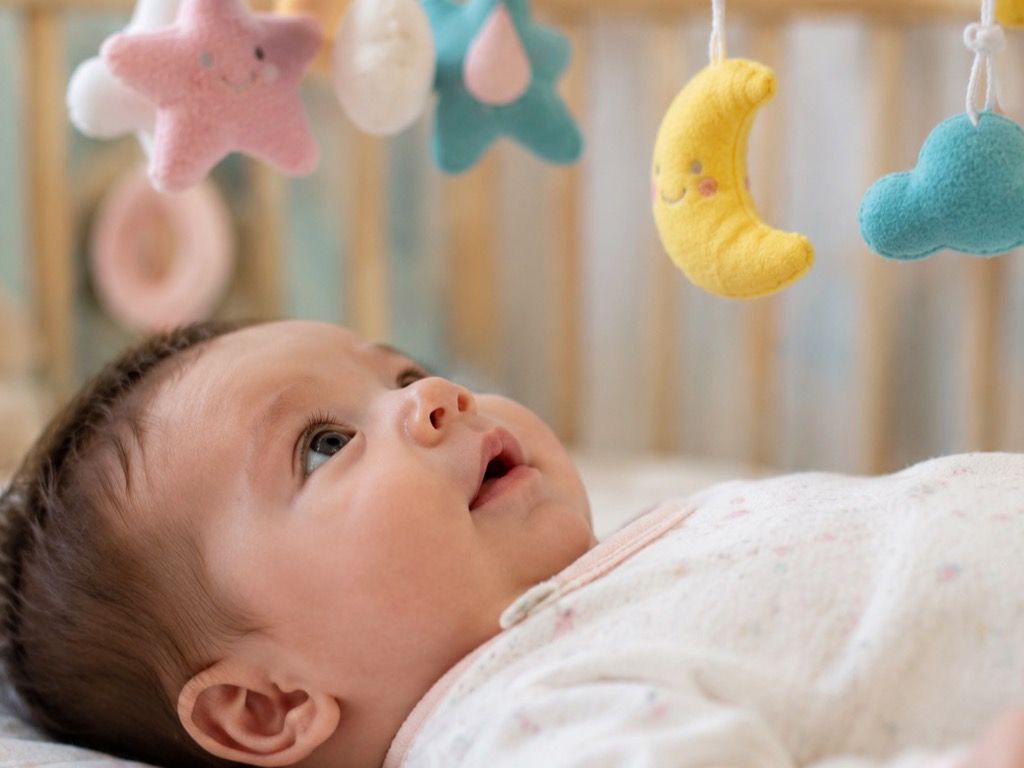
Keep Every Growth Milestone
Get Started FreeIf you've ever waved a toy in front of your newborn and wondered, "Can my baby even see this?"; you're not alone. The truth is, newborns see the world as a soft, blurry place. Their vision is around 20/400, which means they can only make out things about 8 to 12 inches from their face. That's roughly the distance to your face while you're feeding them. So no, nothing's wrong with your little one. Every baby starts out this way.
The amazing part is that this fuzzy world sharpens quickly, and by age 3 to 5 most children see as well as adults. And the few years in between are the most important of your child's entire life for eye health. Let's walk through where your baby is right now, and the few warning signs you really don't want to miss.
What Can Your Baby Actually See Right Now?
Your baby's eyes grow at a remarkable pace from day one. Knowing roughly what to expect month by month takes a lot of the worry out of those "is this normal?" moments.
| Age | Visual Acuity | Key Developmental Milestone |
|---|---|---|
| Newborn | 20/400 (~0.05) | Sees 8–12 inches, high-contrast shapes only, black and white |
| 1 month | ~20/300 | Begins focusing at 10–12 inches; recognizes caregiver's face outline |
| 3–4 months | ~20/200 | Tracks moving objects; color vision begins to emerge |
| 6 months | ~20/100 | Full color vision; binocular vision (depth perception) established |
| 1 year | 20/50–20/40 | Improved distance vision; coordination with fine motor skills |
| 2 years | 20/30–20/25 | Clear color and shape recognition |
| 3 years | 20/20–20/25 | Rapid visual development; first formal eye chart test possible |
| 5–6 years | 20/20 | Adult-level vision achieved; the visual system keeps maturing until about age 10 |
From a Black-and-White World to Full Color
When your baby is born, the color-sensing cells in their eyes aren't fully developed yet. That's exactly why newborns respond so much better to bold black-and-white patterns than to pastel rainbows; there's a real reason those newborn mobiles are always high-contrast.
Around 2 to 3 months, your baby starts picking out bright colors like red and yellow, and by about 6 months they see color pretty much the way you do. One day you'll catch them locking onto a colorful toy with wide, sparkling eyes; it's one of those little milestones that sneaks up on you.
Here's another one worth knowing about: binocular vision, the ability of both eyes to team up and see in 3D. This also settles in around 6 months. But if one eye isn't pulling its weight during this stretch, the brain slowly starts ignoring the weaker eye: and that's how amblyopia (which we'll get to next) can take hold.
And a sweet detail: a newborn focuses best at about 8 to 12 inches, almost exactly the distance from your face to theirs while feeding. It's as if nature set things up so your baby would gaze right into your eyes at mealtime.
The One Thing Every Parent Should Know About: Amblyopia
The name sounds intimidating, but here's the plain version. Amblyopia (often called "lazy eye") is when one or both eyes don't develop normal vision even though the eye itself is perfectly fine structurally. The tricky part is that glasses don't make the eye see clearly right away. Still, the right glasses are a very effective treatment on their own, so keep them on your child consistently once they're prescribed. And it's not rare; it's a common eye condition in kids.
It can be caused by a turned eye (strabismus), strong farsightedness, nearsightedness or astigmatism, a droopy eyelid, or congenital cataracts. The most important thing to remember: caught and treated before age 7, it usually responds really well. Miss that window, and treatment becomes far less effective.
💡 A child with one weak eye won't tell you they can't see well; they have no idea what "seeing well" is supposed to feel like. That's why routine screenings, not waiting for complaints, are the only reliable way to catch it.When to Take a Closer Look
If you notice any of these, don't wait, book an eye appointment.
Something looks off about the eyes
- One eye keeps drifting inward or outward
- The eyes don't seem to move together
Behavior that's different from usual
- Squinting or covering one eye to see
- Holding things right up to their face
- Tilting their head to one side to look at something
- Rubbing their eyes way more than normal
What you can see from the outside
- The pupil shows up white instead of red in photos
- An eyelid droops far enough to cover the pupil
When Should You Get Their Eyes Checked?
A baby's eyes can look totally fine on the outside while something's going on inside, which is why scheduled checkups matter so much. Here's the schedule the American Academy of Pediatrics(AAP) recommends.
| Age | Type of Exam | Purpose |
|---|---|---|
| At birth | Newborn eye exam | Screen for congenital cataracts and congenital glaucoma |
| 6 months and up | Eye check at every well-child visit | Following faces and toys, eye alignment (strabismus) |
| 1 to 2 years and up | Instrument-based screening (photoscreener, etc.) | Screen for refractive errors |
| 3 years | Vision screening (if cooperative) | Early detection of amblyopia and strabismus |
| 4 and 5 years | Vision screening (full eye exam if it's failed) | Pre-school vision check |
| After that | Vision check at regular well-child visits | Ongoing vision health monitoring |

The AAP recommends an eye check at every well-child visit starting in the newborn period, plus vision screening at ages 3 to 5. Keep these on your calendar; they're easy to put off, but this is exactly when problems are most treatable.
Helping Your Baby's Eyes Along at Home
Checkups matter, but so does the everyday play you do together. You don't need anything fancy. Here's roughly what fits each stage.
In the 0 to 3 month stretch, eye contact is your best tool. Get in close, around 8 to 12 inches, the distance they can actually focus on: and smile and chat. Black-and-white mobiles and books work great here, since color is still beyond them and bold contrast grabs their attention.
From 4 to 6 months, color starts coming online, so bring out the bright, colorful toys. Set things within reach and watch them stretch to grab; that reaching is fantastic practice for eyes and hands working together. Showing the same object from different angles and distances helps too.
Around 7 to 12 months, let them crawl freely in a safe space. All that crawling builds their sense of near and far. Peek-a-boo is a winner at this age; it strengthens both visual tracking and that "things still exist when hidden" concept. Reading picture books together is a lovely habit to start now.
After their first birthday, puzzles and blocks sharpen fine eye-hand coordination, and plenty of outdoor time is genuinely good for their eyes: looking into the distance helps.
💡 Some studies suggest that lots of close-up screen time may add to nearsightedness, although this isn't proven yet. The AAP recommends no screens (other than video calls) for babies under 18 months. Honestly, more time playing outside does far more good for their eyes.These Mean: Go to the Doctor Right Away
Separate from everyday development, the following are signs to head straight to an eye doctor or the ER, don't sit and wait on these.
The pupil looks white If your baby's pupil glows white or yellowish in photos instead of the usual red, it can be a sign of a childhood eye cancer (retinoblastoma). It sounds scary, but catching it early makes all the difference, so please get it checked.
Unusual tearing or discharge Constant watering from one eye, or a lot of yellow or green discharge, can mean a blocked tear duct or an infection.
Extreme sensitivity to light If ordinary household lighting makes your baby squeeze their eyes shut or cry hard, it may be more than just sensitivity, congenital glaucoma is worth ruling out.
An eye injury If a chemical splashes into your baby's eye, start rinsing it right away with plenty of clean running water (not hot) for at least 20 minutes, holding the eye open, and call 911 or head to the ER while you keep rinsing; bring the product container with you. If something else gets in the eye or your baby takes a hard knock to the eye area, see a doctor immediately.
Frequently Asked Questions
Q: My newborn's eyes seem crossed. Is this normal?
A: Intermittent crossing in the first 3–4 months is common as the eye muscles develop. However, if the eyes remain crossed after 4 months, or if crossing is constant at any age, see a pediatric ophthalmologist promptly.
Q: My baby hates bright light. Should I be worried?
A: Some sensitivity to bright sunlight is normal. But if your baby squints or cries even under ordinary indoor lighting, this could signal congenital glaucoma and warrants a doctor's visit.
Q: My toddler sits too close to the TV.
A: Sitting very close to the TV can be an early sign of myopia (nearsightedness) in toddlers. If your child is 3 or older, schedule an eye exam. Glasses help them see clearly, and you can ask the eye doctor about ways to slow myopia, such as low-dose atropine drops. Encouraging more outdoor time and limiting close-up screen use also helps protect their eyes.
Q: Both parents have glasses. Will our baby need them too?
A: Myopia has a strong genetic component. Children with two nearsighted parents are at higher risk. Encouraging outdoor time and limiting close-up screen use can help reduce risk.
Managing with BebeSnap
Tracking your baby's eye health and developmental milestones is easy with the BebeSnap app:
- Milestone tracking: Log and track your baby's visual development milestones month by month, so you always know what's coming next
- AI chat consultation: Have a question about something unusual you noticed in your baby's eyes? Ask the BebeSnap AI instantly, day or night
- Health checkup reminders: Set reminders for well-child visits and the vision screenings at ages 3 to 5 so you never miss a checkup
References
Keep Every Growth Milestone
Log height, weight, and milestones. The growth curves are drawn for you.
See what the app does firstYou Might Also Like
Tomato for Babies: When to Start, Skin and Seeds, and Why Cherry Tomatoes Are Never Served Whole
Apple for Babies: Stage-by-Stage Portions and When Raw Apple Is Safe
Spinach for Babies: When to Start, Why Boiling Matters, and When to Skip It
Potato for Babies: When to Start, Safe Shapes, and Why Never to Blend It
You Might Also Like
Wonder Weeks Calculator: Your Baby's 10 Mental Leaps From the Due Date
Enter your due date and get all 10 leap dates. They land at weeks 5, 8, 12, 19, 26, 37, 46, 55, 64 and 75, each lasting 1 to 2 weeks.
Baby Eye Contact, Vision Milestones & Strabismus Check: Pseudostrabismus vs Real Strabismus
Babies start making eye contact at 6-8 weeks. Many newborns look cross-eyed but usually have harmless pseudostrabismus that clears by age 2-3. Learn the 30cm light-reflex test to spot real strabismus at home.

2-Month-Old Daily Schedule: Feeding Intervals, Sleep & a Sample Timetable
What does a 2-month-old's day look like? Feeds every 2.5-3.5 hours, 14-17 hours of total sleep, and 4-5 naps. Use our real sample timetable to shape your baby's daily rhythm.