Baby Mosquito & Insect Bites: Safe Prevention and Treatment
Check Your Baby's Health from One Photo
Get Started FreeThe minute summer rolls around, even a quick walk with the baby comes with a side of mosquito worry. And when your little one does get bitten, that spot puffs up so much bigger and redder than your own bites that your stomach drops a little: "Is that okay?" Here's the reassuring part; most of the time it absolutely is. It's just your baby's sensitive skin reacting. Repellent is the one place to be careful, since not every kind is safe for little ones. Let's walk through summer bug bites together, from preventing them to soothing them.
Why Does My Baby Swell Up So Much?
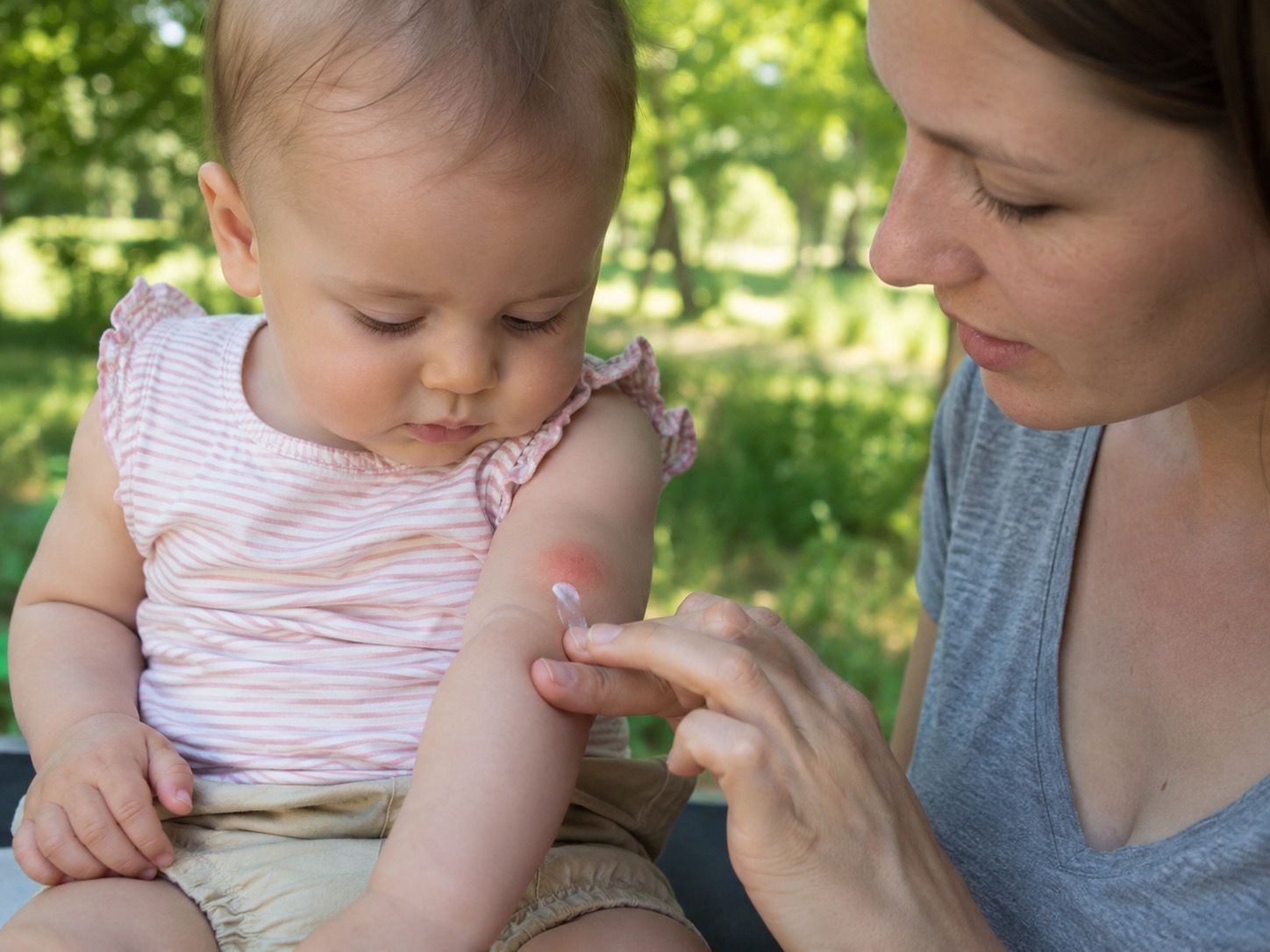
Get bitten by the same mosquito and your bump stays small, but your baby's can balloon up to the size of a coin and feel firm to the touch. It's genuinely startling the first time you see it. The reason is that babies and young children mount a stronger immune reaction to mosquito saliva than adults do. When the swelling gets this big, it even has a nickname: skeeter syndrome.
It usually puffs up and turns red within a few hours of the bite, along with warmth and itching. Because it can look red and angry, it's easy to mistake for an infection: but if it swelled up fast right after the bite, it's far more likely to be an allergic reaction than an infection. The good news is it almost always calms down on its own within a few days, so try not to panic.
What to Do at Home After a Bite
When you spot a bite, start by gently washing it with soap and water. Then keep those tiny fingernails trimmed short, because the real trouble starts when a baby scratches a bite raw.
Cold is your best friend for bringing down the swelling and itch. Hold ice wrapped in a clean cloth, or a cold compress, on the spot for about 10 minutes at a time. Just never put ice straight onto bare skin: wrap it first, since direct ice can give delicate skin a cold burn.
If the itch seems to be really bothering them, you can use calamine lotion or a doctor-recommended antihistamine. The most important thing is keeping them from scratching, because broken skin lets bacteria in and leads to a secondary infection. If they do scratch it until it oozes or forms a yellow crust, it may be infected, so have your pediatrician check it right away.
💡 If your baby just can't keep their hands off a bite, gently cover their hands with thin cotton socks or mittens and lay a cool cloth over the spot.Is Insect Repellent Safe for Babies?
"Can I even spray repellent on a baby?" A lot of parents hesitate here, but with the right ingredient and concentration, you can use it safely.
The most common ingredient, DEET, is fine for babies once they're past 2 months (per the AAP and CDC). Just choose a product with 30% or less. A higher concentration doesn't repel mosquitoes any better; it simply lasts longer. About 10% gives you roughly 2 hours and 30% about 5 hours, so pick based on how long you'll be out.
Picaridin has gotten popular lately too. How long it works depends on the concentration: 5% picaridin protects for about 3 to 4 hours, and 20% for about 8 to 12 hours. Check the product label for the youngest age it's approved for.
Oil of lemon eucalyptus (OLE), on the other hand, sounds reassuring because it's plant-based: but the CDC says not to use it on children under 3. Skip it for little ones.
When you apply any repellent, avoid the hands, the area around the eyes and mouth, and any broken skin. Spray it into your own hands first, then rub a thin layer onto skin that's exposed beyond their clothing. Wash it off with soap once you're home. And steer clear of combo products that mix repellent with sunscreen, since the two need to be reapplied on totally different schedules.
Cutting Down Bites Without Repellent
If your baby is too young for repellent and you'd rather not use it, you can prevent a lot of bites just by managing the surroundings. Limit outings at dawn and dusk, when mosquitoes are out in force, and when you do go out, dress your baby in light-colored long sleeves and pants. A mosquito net over the stroller adds real peace of mind. Around the house, empty any standing water in plant saucers or buckets, since that's where mosquitoes lay eggs. And skip perfume or heavily scented lotions, which actually attract mosquitoes.
When It's a Bee Sting
If the stinger is still in the skin, scrape it out sideways with the edge of a credit card. Don't pinch it out with tweezers, since squeezing can push more venom in. Wash the spot clean and apply cold. Swelling can grow for about 2 days and can last up to a week, but it usually settles on its own. If your child was stung several times or it isn't getting better, check with your pediatrician.
When to Head Straight to the Doctor
Most bites are easily handled at home, but if you see any of these signs, don't wait: get care right away.
Trouble breathing or swelling of the face, lips, or tongue can mean anaphylaxis, a severe allergic reaction. Every second counts, so call 911 immediately. Call 911 too if your baby turns floppy or isn't responding normally after a bite or sting, or has full-body hives with vomiting, since these can also be anaphylaxis. Full-body hives on their own also need medical help immediately. Get urgent care if your child is stung inside the mouth or throat. Seek care right away for a bite that keeps growing with fever and pus (a sign of infection), a rash that comes with a fever, or a bullseye-shaped rash after a tick bite.
Skin Care with BebeSnap
When you're staring at a rash or a bite and can't tell whether it's normal, BebeSnap is there to help.
- AI skin analysis lets you check a bite or rash from a single photo
- Snap a daily photo to track at a glance whether it's healing
- Ask the AI chatbot how to handle a bite, even in the middle of the night
Frequently Asked Questions (FAQ)
Q: My baby's mosquito bite swelled up large. Is that normal?
A: Yes, it usually is. Babies and young children have a stronger immune response to mosquito saliva than adults, so a bite can swell to the size of a coin and feel firm. This is called skeeter syndrome, and while it comes with warmth and itching, it is an allergic hypersensitivity reaction, not an infection. If it swelled quickly right after the bite, it typically settles within a few days.
Q: Is insect repellent safe for babies, and when can I start using it?
A: The AAP and CDC say DEET can be used from 2 months of age. Choose 30% or less and apply it sparingly; a higher concentration only lasts longer (about 2 hours at 10%, about 5 hours at 30%). For picaridin, follow the age on the label. However, oil of lemon eucalyptus (OLE) should not be used on children under 3.
Q: How do I treat an insect bite on my baby?
A: First wash it gently with soap and water, then apply ice wrapped in a clean cloth for under 10 minutes at a time to reduce swelling and itch (never put ice directly on the skin). For significant itching, use calamine lotion or a doctor-recommended antihistamine, and if scratching causes oozing or yellow crusting, see your pediatrician right away, since it may be infected.
Q: When should I take my baby to the doctor immediately for a bite?
A: Call 911 right away if there is trouble breathing or swelling of the face, lips, or tongue (anaphylaxis). Also call 911 for unusual floppiness or full-body hives with vomiting, which can signal anaphylaxis too. Seek immediate care for full-body hives alone, a bite that keeps growing with fever and pus, a rash with fever, or a bullseye-shaped rash after a tick bite.
References
Check Your Baby's Health from One Photo
AI stool analysis reads color and texture, and keeps every health record in one place.
See what the app does firstMedical Disclaimer: This article is for informational purposes only and does not replace professional medical advice. If you have concerns about your baby's health, please consult a pediatrician.
You Might Also Like
Tomato for Babies: When to Start, Skin and Seeds, and Why Cherry Tomatoes Are Never Served Whole
Apple for Babies: Stage-by-Stage Portions and When Raw Apple Is Safe
Spinach for Babies: When to Start, Why Boiling Matters, and When to Skip It
Potato for Babies: When to Start, Safe Shapes, and Why Never to Blend It
You Might Also Like
Baby Impetigo: Golden Crusts, Antibiotic Treatment, and When Nursery Is Safe Again
Golden-brown crusts spreading across your baby's skin? Impetigo is a common, highly contagious bacterial skin infection in young children. It stops being contagious 48 hours after treatment starts. Here is how to recognise it and when nursery is safe again.

How to Trim Baby Nails | Newborn Nail Care Tips & Safety Guide
Baby nails grow fast and can scratch the face. The safest time to trim is while they sleep. Learn when and how to trim, tool choices, and key cautions.
Diaper Rash vs Candida Yeast Rash: How to Tell Them Apart and Choose the Right Cream
Diaper rash not healing after 3 days? Suspect candida! Redness in skin folds with satellite spots needs antifungal cream. Learn how to tell them apart.