Introducing Fish to Your Baby: When to Start, What Order, What to Avoid
Stop Trying to Remember Feed Times
Get Started FreeAdding fish to your baby's meals feels like a decision that needs permission. There is the allergy worry, the mercury headlines, and the bones. But fish is not a food that needs to be delayed. There is no evidence that waiting helps. What matters is which fish you choose. Here is when to start, the order to follow, and the short list of things to avoid.
When to start
The NHS is direct about foods that can trigger allergies: these foods can be introduced from around 6 months as part of your baby's diet, just like any other foods.
On waiting, the evidence points the other way. The NHS notes that delaying the introduction of peanut and hen's eggs beyond 6 to 12 months may increase the risk of developing an allergy to these foods.
So "let's wait until after their first birthday, just in case" is not the safer choice. Once weaning is established, fish can go in like any other ingredient.
💡 One at a time, though. The NHS advises introducing foods that can trigger reactions one at a time so you can spot any reaction. Several new ingredients on the same day tells you nothing about which one caused what.White fish first, a spoonful first
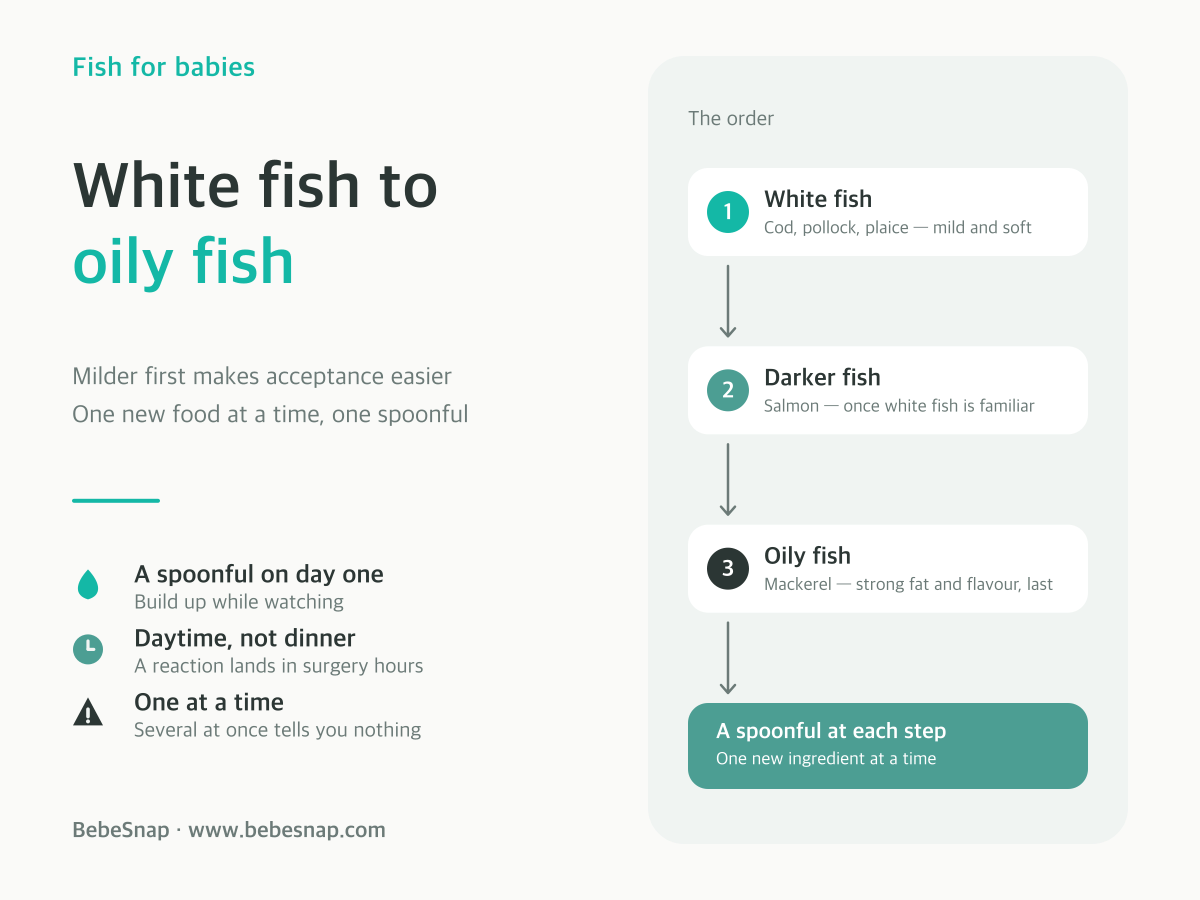
Fish varies a lot in fat and flavour, so starting with the mildest makes acceptance easier.
Step 1 · White fish: cod, pollock, plaice. Soft flesh, mild flavour.
Step 2 · Salmon and other darker fish: introduced once white fish is familiar.
Step 3 · Oily fish: mackerel and similar, with stronger fat and flavour, come last.
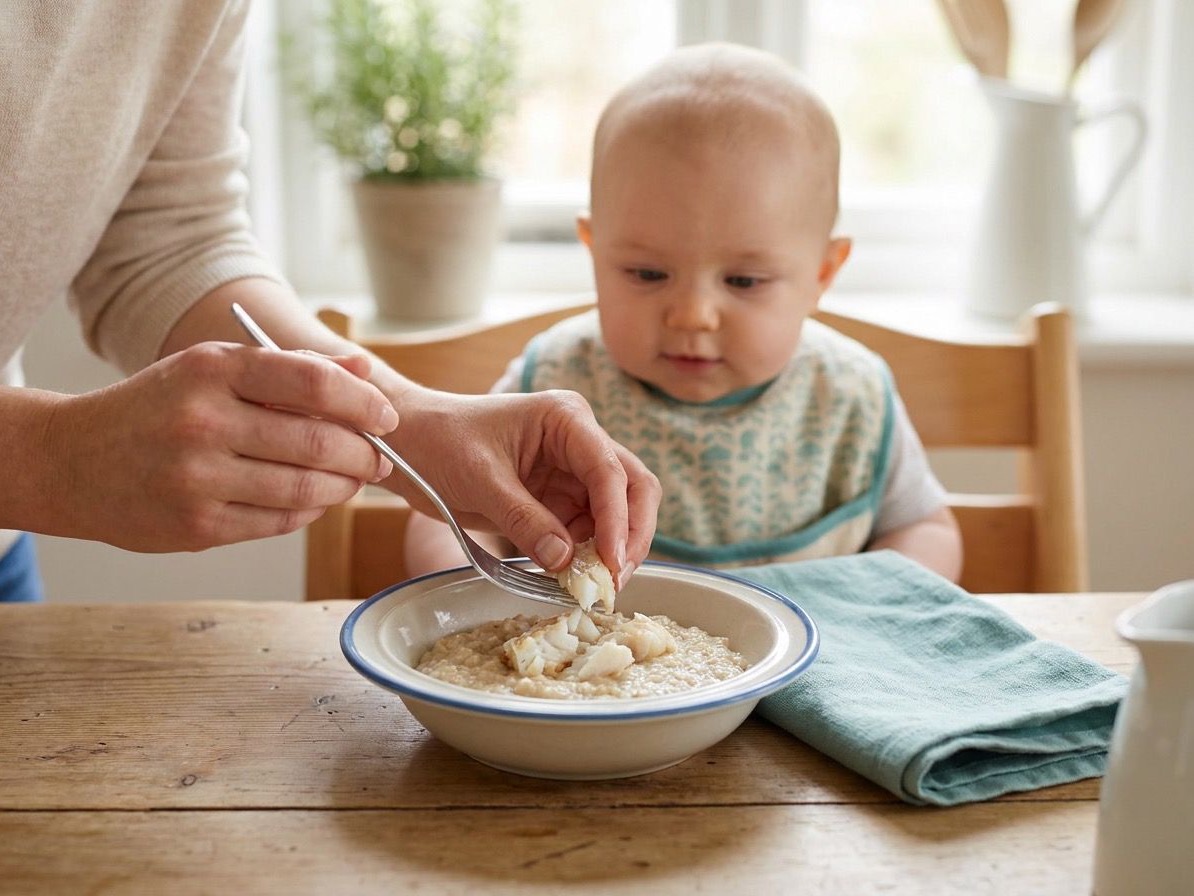
On the first day, offer about a spoonful and build up while watching your baby. Try new ingredients earlier in the day rather than at dinner, so a reaction happens while your doctor's surgery is open.
The fish to avoid
This is the part worth memorising. The NHS is unambiguous:
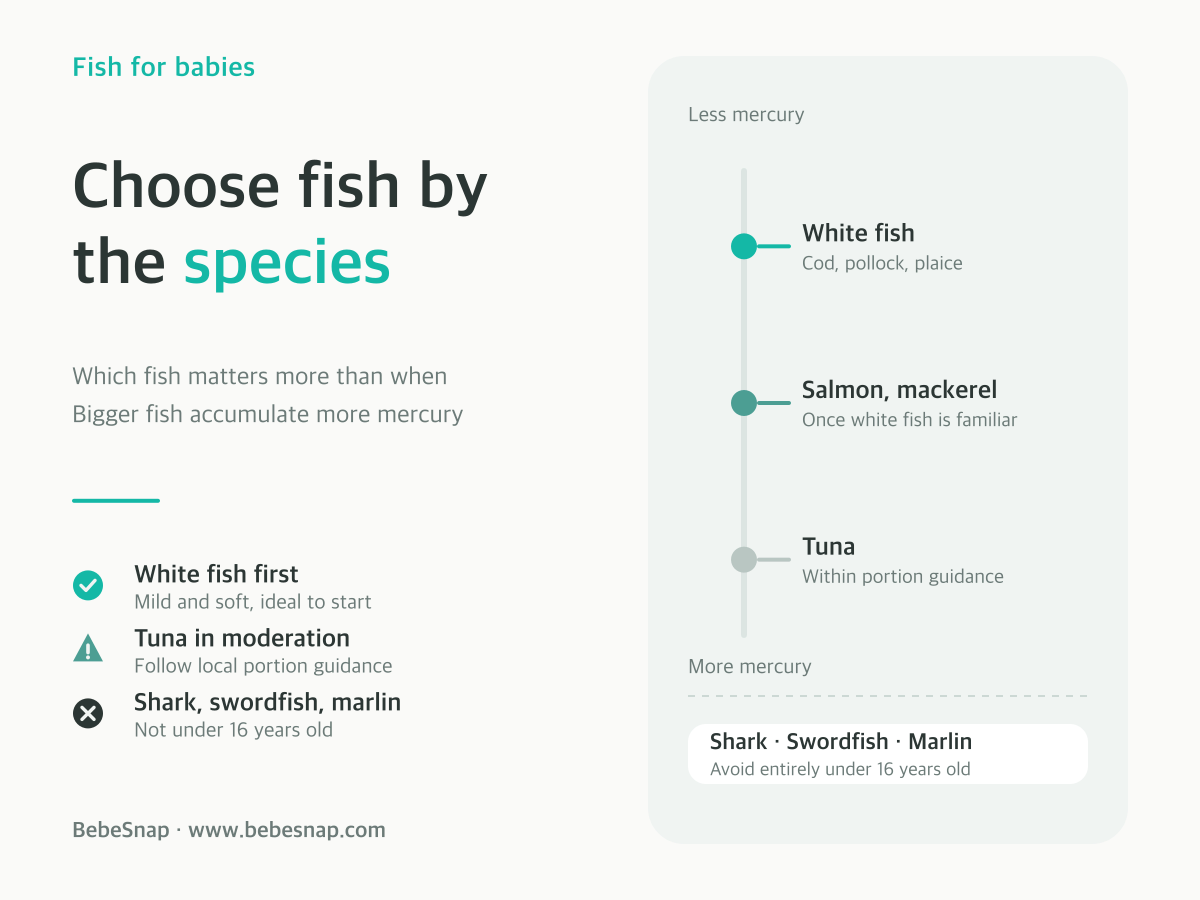
All babies and children under 16 years old should avoid eating shark, swordfish or marlin. The reason is mercury: the amount of mercury in these fish can affect the development of a baby's nervous system.
| Examples | In weaning | |
|---|---|---|
| Good to start with | Cod, pollock, plaice | Mild and soft, ideal for step 1 |
| Once familiar | Salmon, mackerel | Stronger fat and flavour, steps 2 to 3 |
| Avoid entirely | Shark, swordfish, marlin | Mercury: not under 16 years old |
| Never raw | Mussels, clams, oysters | Food poisoning risk |
Raw shellfish is a separate problem
Mercury is one issue; shellfish safety is another. The NHS advises that raw or lightly cooked shellfish, such as mussels, clams and oysters, can increase the risk of food poisoning, so it is best not to give it to babies.
Thoroughly cooked and raw are not the same food here. The situation to watch for is the adult table: a small taste of sashimi or a barely-opened clam shared with a baby.
Bones and cooking
Check bones by hand: do not rely on looking. Run your fingertips through the flesh. Fish with many fine bones is easier to skip early on.
Cook it through: fully cooked, then flaked.
No added salt: fish already contains sodium, and babies do not need seasoning.
Watching for a reaction
The NHS lists swollen lips or face, a red itchy rash, wheezing and coughing, digestive upset, and worsening of existing eczema or asthma. Reactions usually come quickly, but can be delayed.
Difficulty breathing, swelling of the face or lips, or a child going limp means emergency services, immediately.
Logging fish reactions with BebeSnap
- Record the date and the exact ingredient so you can trace what caused what
- Log rashes and vomiting with timing and recovery
- Use AI skin analysis to follow how a rash changes day by day
- Use AI stool analysis to see bowel changes after a new food goes in
Frequently Asked Questions (FAQ)
Q: Isn't it safer to wait until after the first birthday?
A: No. The NHS advises that foods which can trigger allergies may be introduced from around 6 months, just like any other foods, and notes that delaying peanut and hen's eggs beyond 6 to 12 months may actually increase the risk of developing an allergy. Waiting is not the safer option. What matters is introducing one new food at a time so that any reaction can be traced to its cause.
Q: Which fish should I start with?
A: Mild, soft white fish such as cod, pollock or plaice is the easiest starting point. Once your baby is comfortable with those, move to darker fish such as salmon, and then to oily fish such as mackerel, which have stronger fat and flavour. Offer about a spoonful on the first day and build up while watching how your baby responds.
Q: What about tinned tuna?
A: Tuna is not on the NHS list of fish to avoid entirely, which covers shark, swordfish and marlin for everyone under 16. Tuna is, however, commonly subject to portion guidance because of its mercury content, so check the advice that applies where you live rather than treating it like white fish. Shark, swordfish and marlin should simply not be given.
Q: When can my baby have shellfish?
A: Thoroughly cooked shellfish can be introduced like any other allergenic food, one at a time, watching for a reaction. Raw or lightly cooked shellfish is different: the NHS advises that mussels, clams and oysters served raw or lightly cooked increase the risk of food poisoning and are best not given to babies. Be especially careful about sharing from an adult plate.
References
Stop Trying to Remember Feed Times
Log time, amount, and intervals. BebeSnap turns them into your baby's daily pattern.
See what the app does firstMedical Disclaimer: This article is for informational purposes only and does not replace professional medical advice. If you have concerns about your baby's health, please consult a pediatrician.
You Might Also Like
Wonder Weeks Calculator: Your Baby's 10 Mental Leaps From the Due Date
Baby Weight Gain Calculator: Grams Per Day From Two Weigh-Ins
Baby Impetigo: Golden Crusts, Antibiotic Treatment, and When Nursery Is Safe Again
Baby Mouth Sores (Stomatitis): Causes, How to Tell Them Apart, and Dehydration Signs
You Might Also Like
Tomato for Babies: When to Start, Skin and Seeds, and Why Cherry Tomatoes Are Never Served Whole
Tomato can start at 5-6 months once the skin and seeds are removed and it is cooked. Portions run 20-30g at 7-8 months and 30-40g at 9-11 months, counted together with fruit. Cherry tomatoes are the one vegetable Japan's childcare guidance names by name as something not to serve whole.
Complete Guide to Baby Food Allergies: Symptoms, Prevention & Management
Worried about allergies when starting solids? Learn how to identify allergy symptoms and safely introduce new foods.

Potato for Babies: When to Start, Safe Shapes, and Why Never to Blend It
Potato can start once your baby is used to first purees. But green patches carry over 13 times the glycoalkaloid of normal flesh, the skin layer around 96 times the centre, and cooking does not destroy it. Potato is also the one baby food you should never blend.