Baby's First Dental Visit: When to Go and How to Care for Baby Teeth
Check Your Baby's Health from One Photo
Get Started FreeYour little one has two tiny bottom teeth poking through, and you're thinking, "There are barely any teeth: do we really need a dentist already?" That's a completely fair question, and so many parents ask it. But here's what pediatric dentists agree on: the earlier the first visit, the better. The recommended window is by age 1, or within 6 months of that first tooth: the same guidance from both the American Academy of Pediatrics (AAP) and the American Academy of Pediatric Dentistry (AAPD).
It's easy to shrug off baby teeth as "they'll fall out anyway." But they're not just temporary placeholders you can ignore. All 20 of them hold space for the permanent teeth coming later, shape clear speech, and do the daily work of chewing. That's exactly why looking after these little teeth from the very start matters.
Those Tiny Teeth Are Doing a Big Job
Baby teeth usually start pushing through around 6 months, beginning with the lower front ones, and by about 30 months the full set of 20 is in place. These teeth do far more than chew; they reserve the spot where each permanent tooth will eventually come in, and they help your child form clear sounds as they learn to talk.
So when decay is brushed off because "they'll fall out anyway," more problems tend to follow than you'd expect. If a baby tooth is lost too early to decay, the space can narrow and crowd the permanent tooth, speech can get muddled, and the bite can shift. And above all, cavities hurt. A baby in pain eats less, sleeps worse, and can grow self-conscious about smiling.
💡 Baby teeth are not "throwaway" teeth. Decay in a primary tooth can affect the health of the permanent tooth that will take its place.So When Do We Actually Go First?
The wording varies a little by organization, but the bottom line is the same: bring your baby in by the first birthday at the latest, or within 6 months of that first tooth. After that, a check-up every 6 months keeps things on track.
| Organization | Recommended First Visit | Follow-up Schedule |
|---|---|---|
| AAP (American Academy of Pediatrics) | By 12 months of age | Every 6 months |
| AAPD (American Academy of Pediatric Dentistry) | Within 6 months of first tooth | Every 6 months |
The First Visit Isn't Really About Treatment
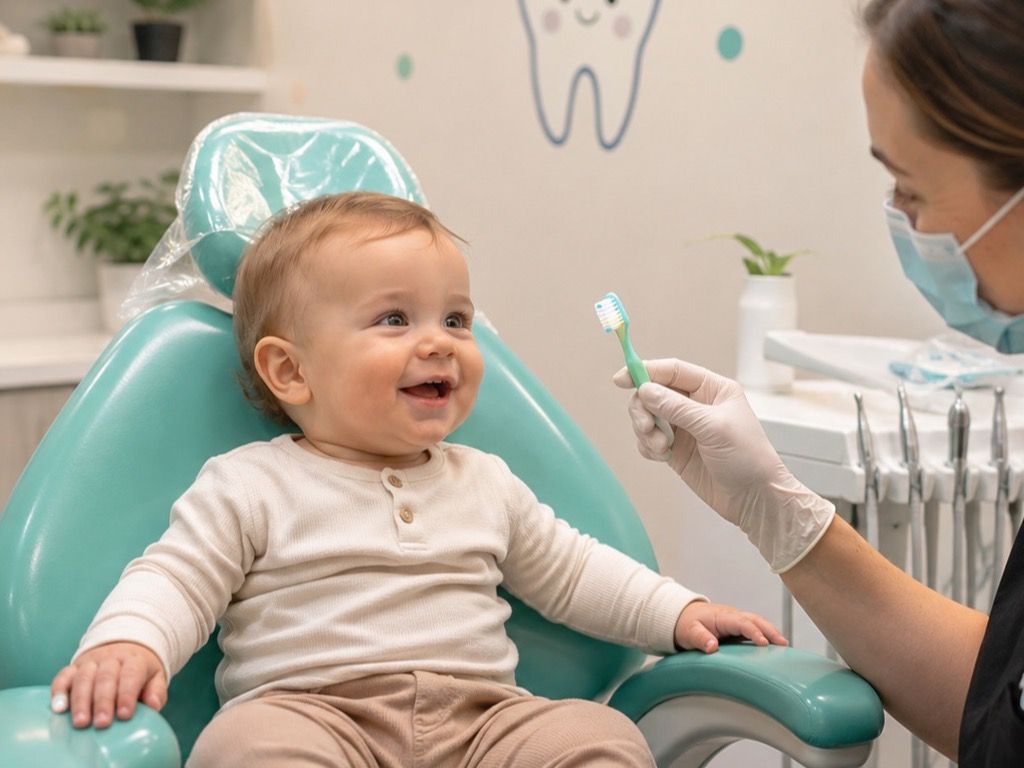
Worried your baby might end up in pain at that first appointment? Take a breath, the first visit is much more about looking and learning than treating. Nothing scary happens; here's what it usually looks like.
First, the dentist takes a gentle look inside to see how the teeth are coming in, whether there's any early sign of decay, and how the gums and mouth are doing. Then they may paint on a little fluoride. The AAP recommends fluoride varnish every 6 months from the first tooth through age 5, and fluoride has over 75 years of repeatedly confirmed safety and effectiveness as a decay preventive (per a joint statement from multiple pediatric dental societies, including Japan's JSPD).
They'll also show you how to brush and how much toothpaste to use, and explain how feeding habits tie into decay. You can ask about diet too, which sweet foods and juices invite cavities, and how nighttime feeding relates to early decay. In the end, the first visit is really a session to learn, together, how to protect your baby's teeth going forward.
How to Brush at Each Age
Before Any Teeth Have Come In
It might seem silly to "brush" when there's not a single tooth yet, but starting now makes everything easier later. After a feeding, dampen a clean gauze pad or soft cloth with a little water and gently wipe the gums. When your baby gets used to having their mouth touched as a normal routine, they tend to resist far less once real brushing begins. Keep it short, gentle, and playful at first.
From the First Tooth Through 36 Months
Now it's time for an actual brush and fluoride toothpaste. The amount is set by age, and the key thing is, it's a lot less than you'd think.
| Age | Toothpaste Amount | Brushing Frequency |
|---|---|---|
| First tooth through under 3 years | Rice-grain size | Twice daily |
| 3 to 6 years | Pea-size | Twice daily |
| 6 years and older | Pea to 1.5 cm | Twice daily |

Finding a Position That Works
Every baby has a comfort zone. For a baby 0–18 months, rest their head in your lap facing up; you'll see right into the mouth. For a toddler 18 months to 3 years, standing in front of the bathroom mirror and brushing from behind, almost like a gentle hug, gives them a sense of security. Once they're past 3, let them have a go first, then step in to check the spots they missed.
Did You Know Cavity Germs Can Pass From Your Mouth to Your Baby's?
Surprisingly few parents know this, but the bacteria that cause cavities (called Streptococcus mutans) can travel from a parent's mouth into a baby's. A baby who doesn't carry these bacteria yet can pick them up from an adult without anyone meaning to pass them on.
The common routes are everyday ones: sharing the same spoon or fork, drinking from the same cup, pre-chewing food before feeding it, or "cleaning" a dropped pacifier in your own mouth. So just using separate utensils and keeping your baby's things out of your own mouth helps a lot. On top of that, taking care of your own cavities and brushing well after sweets is, in the end, another way of protecting your baby.
Nighttime Feeding Habits Tie In Too
Letting a baby drift off with a bottle is convenient, but it's closely linked to decay. When milk pools in the mouth during sleep, cavities form easily in that window. So it's best to avoid putting your baby down with a bottle, feeding repeatedly through the night after the first birthday, or giving juice and sports drinks in a bottle.
Instead, once your baby passes the first birthday, start easing off the bottle and shifting to a cup, and wipe the gums and teeth with gauze after feeds. Gradually trimming back nighttime feeds after the first birthday helps too. Easing into the change slowly is gentler on your baby than stopping all at once.
Small Ways to Make the First Visit Less Scary
Opening up in an unfamiliar place is nerve-racking, for baby and parent alike. A few small preparations turn it into a much smoother experience.
Before you go, pack a favorite toy or comfort object, and book a slot when your baby is rested and in a good mood, like just after a nap. Talk about the dentist as "the place that makes teeth strong." And here's something easy to forget: your own anxious face. Babies read your expression, so keep yours calm and relaxed. During the visit, play a favorite song softly or praise them generously when they cooperate; it makes the next visit easier.
Frequently Asked Questions
Q: My baby has no teeth yet. Is a dental visit really necessary?
A: Yes, the first visit within 6 months of the first tooth, or by age 1, is recommended regardless. Even before teeth appear, the dentist can assess oral development, check the gum environment, and guide you on building healthy habits early.
Q: Is fluoride toothpaste safe for babies who swallow it?
A: In a rice-grain amount, the fluoride content is minimal and safe even if swallowed, and the decay-prevention benefits are well established. Begin encouraging spitting after brushing as your child develops, but don't delay using fluoride toothpaste out of concern.
Q: Should I choose a pediatric dentist or a general dentist?
A: Pediatric dentists, also called pedodontists, complete specialized training in child behavior, development, and dental care specific to infants through adolescents. For infants and toddlers, a board-certified pediatric dentist is the strongest recommendation.
Q: What if my baby refuses to let me brush their teeth?
A: Resistance is normal, especially around 12–18 months. Keep sessions short (1–2 minutes), use a soft-bristled infant brush, let them hold their own brush too, and make it part of a consistent bedtime routine. The resistance usually lessens with time and consistency.
Managing with BebeSnap
Tracking your baby's oral health milestones is easy with BebeSnap:
- Log each tooth eruption date and position to track the full 20-tooth timeline
- Set reminders for 6-month dental check-ups so you never miss a visit
- Use the AI chatbot to get answers to your oral health questions anytime
👉 Get parenting advice from BebeSnap AI Chatbot
References
- AAP HealthyChildren - Brushing Up on Oral Health: Never Too Early to Start
- AAP HealthyChildren - Baby's First Tooth: Facts Parents Should Know
- AAPD - Parent FAQ
- ADA MouthHealthy - First Dental Visit for Baby
- Japan Society of Pediatric Dentistry - Fluoride Statement
- Stanford Children's Health - A Child's First Dental Visit
Check Your Baby's Health from One Photo
AI stool analysis reads color and texture, and keeps every health record in one place.
See what the app does firstMedical Disclaimer: This article is for informational purposes only and does not replace professional medical advice. If you have concerns about your baby's health, please consult a pediatrician.
You Might Also Like
Tomato for Babies: When to Start, Skin and Seeds, and Why Cherry Tomatoes Are Never Served Whole
Apple for Babies: Stage-by-Stage Portions and When Raw Apple Is Safe
Spinach for Babies: When to Start, Why Boiling Matters, and When to Skip It
Potato for Babies: When to Start, Safe Shapes, and Why Never to Blend It
You Might Also Like
Baby Impetigo: Golden Crusts, Antibiotic Treatment, and When Nursery Is Safe Again
Golden-brown crusts spreading across your baby's skin? Impetigo is a common, highly contagious bacterial skin infection in young children. It stops being contagious 48 hours after treatment starts. Here is how to recognise it and when nursery is safe again.

Baby's First Flight: When Can Babies Fly & How to Handle Ear Pain
When can your baby fly? From the right age to fly to handling ear pain at takeoff and what to pack, here's everything for a comfortable first flight with your baby.
Baby Sunscreen & Sun Protection Guide: When to Start and How to Use SPF Safely
Babies under 6 months should avoid sunscreen, use SPF 30+ mineral formula every 90 minutes from 6 months on.