Potty Training Guide | When to Start, Methods & Tips for Success
Keep Every Growth Milestone
Get Started FreePotty training is an important developmental milestone and a challenge many parents find daunting. "When should we start potty training?" and "How do we ditch the diapers?" are common questions. This guide covers when to start potty training, effective methods, and tips for nighttime training success.
When to Start Potty Training
Starting potty training when your child is ready is the most important factor. While the average starting age is 18-30 months, there's significant variation, so watch for your child's readiness signs.
Physical Readiness Signs
- Stays dry for 2+ hours at a time
- Has somewhat predictable bowel movements
- Can walk and sit independently
- Can pull pants up and down
Cognitive Readiness Signs
- Understands potty-related words (pee, poop)
- Shows discomfort with wet diapers
- Shows interest in the bathroom
- Can follow simple instructions
Emotional Readiness Signs
- Shows desire for independence ("I do it!")
- Wants to please parents
- Doesn't resist sitting on the potty
| Age | Development | Training Recommendation |
|---|---|---|
| Under 18 months | Bladder control difficult | Too early |
| 18-24 months | Watch for readiness signs | Can start if signs present |
| 24-30 months | Most are ready | Recommended time |
| 30-36 months | Can communicate needs | Often adapts quickly |
Preparing for Potty Training
Preparing in advance makes potty training much smoother.
Choosing a Potty Chair or Seat
| Type | Pros | Cons |
|---|---|---|
| Potty chair | Child-sized, stable | Needs emptying and cleaning |
| Potty seat (toilet adapter) | Practice on regular toilet | Needs step stool, may feel unstable |
| Combination products | Both functions | Can be expensive |

Other Supplies
- Training pants (cloth or disposable)
- Step stool (for toilet seat)
- Potty training books
- Reward stickers (optional)
Creating the Environment
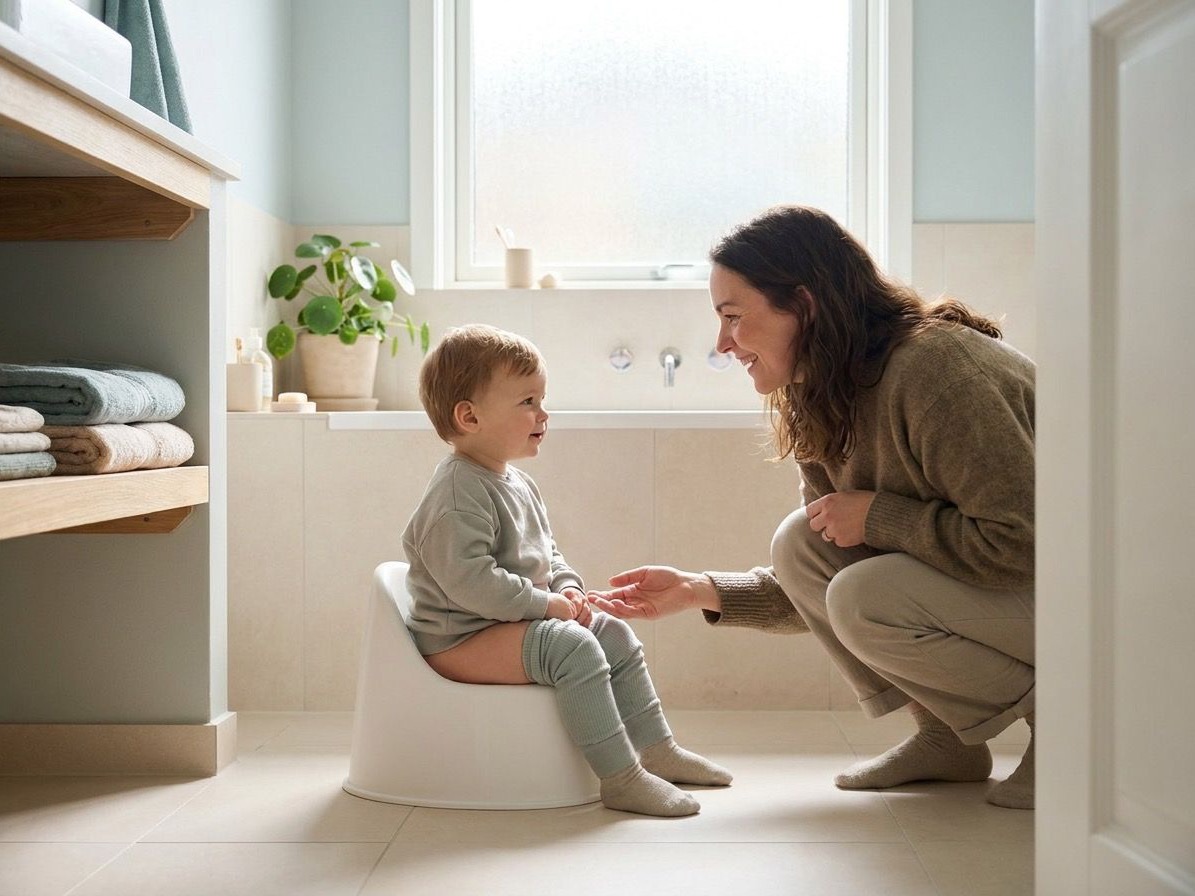
- Place potty in bathroom to become familiar
- Play potty training games with dolls
- Use potty training videos or songs
- Let child see parents use bathroom
Potty Training Methods (Step by Step)
Step 1: Getting Comfortable (1-2 weeks)
Goal: Eliminate fear of the potty
- Place potty where child can see it
- Let them sit with clothes on
- "This is YOUR potty" - create ownership
- Never force them to sit
Step 2: Regular Sitting Practice (2-4 weeks)
Goal: Build habit of sitting on potty
- Sit at scheduled times:
- After waking
- After meals
- After naps
- Before bath
- Before bed
- Don't sit longer than 5 minutes
- Big praise for any success
Step 3: Diaper-Free Daytime
Goal: Spend daytime without diapers
- At home: no bottoms or loose pants only
- Ask "Do you need to pee?" every 30-60 minutes
- Never scold for accidents
- Praise and encourage every success
Step 4: Going Out
Goal: Use bathroom while out
- Go to bathroom before leaving
- Bring extra clothes
- Locate restrooms in advance
- Start with short outings
Pee Training vs Poop Training
Many children master urine and bowel control at different times.
| Aspect | Pee Training | Poop Training |
|---|---|---|
| Typical timing | Often mastered first | Often mastered later |
| Challenges | Frequent urge, high frequency | Difficulty pushing, fear |
| Tips | Regular sitting schedule | Security, use step stool |
When Child Refuses to Poop on Potty
- Use step stool for squatting position
- Allow diaper while sitting on potty (gradual)
- Play near potty during typical poop times
- If constipation is the cause, see your pediatrician (diet changes alone often aren't enough)
Nighttime Training
Daytime and nighttime training are separate. Nighttime control requires physiological development.
Signs Ready for Night Training
- Waking up dry more often
- Wakes at night saying needs to pee
- Daytime training fully complete
Nighttime Training Methods
- Use bathroom before bed
- Reduce fluids 1-2 hours before bed
- Use waterproof mattress pad
- Waking your child at night to use the toilet only means fewer wet sheets that night (regular waking doesn't teach nighttime dryness)
Nighttime Training Timeline
- Most succeed between ages 3-5
- Bedwetting until 5-6 is normal
- Talk to your pediatrician after age 5 if it bothers your child or family; there is no need to wait until 7. See the doctor promptly at any age if a child who was dry for 6 months starts wetting again, has daytime accidents, or has pain when peeing
Potty Training Refusal and Regression
Refusal and regression during potty training are common.
Handling Refusal
- Take a 1-2 week break and restart
- Never force it
- Try different motivation (favorite character underwear)
- Identify stress sources
Causes of Regression
- New sibling
- Moving, starting daycare
- Family stress
- Physical issues like constipation or UTI
Handling Regression
- First have your pediatrician check for a physical cause such as a urinary tract infection or constipation
- Don't scold
- It's okay to go back to diapers temporarily
- Focus on resolving the cause
- Accept child's emotions
Potty Training Success Tips
Effective Praise
- Praise the process, not just results ("Great job sitting on the potty!")
- Be specific ("You told me you needed to pee!")
- Avoid excessive rewards
- Be consistent
What to Avoid
- Getting angry or shaming for accidents
- Comparing to other children
- Forcing to sit
- Asking too frequently
| Good Approach | What to Avoid |
|---|---|
| "Want to try sitting on the potty?" | "Sit on the potty right now!" |
| "It's okay, you'll do better next time" | "Why did you have an accident again?" |
| "Thanks for telling me" | "Why didn't you tell me sooner!" |
| "You're such a big kid using the potty" | "Your younger sibling can do it, why can't you?" |
When to Consult a Professional
Most children achieve daytime continence by around age 4. Consult a professional if:
Consultation Recommended
- Frequent daytime accidents after age 4
- Severe constipation from holding bowel movements
- Pain during urination or bowel movements (pain when peeing, a fever, or cloudy or bloody urine can mean a urinary tract infection, so see your pediatrician the same day if you can; call 911 if your child is confused, unusually drowsy, or has trouble speaking)
- Sudden regression (see your pediatrician first to rule out a urinary tract infection or constipation rather than waiting)
- Very frequent urination or inability to hold
Track Development with BebeSnap
Potty training is an important developmental milestone. Use BebeSnap to record your child's progress.
- Development Records: Track training start date, first successes
- Diaper Records: Understand patterns to time training
- AI Consultation: Ask our AI about potty training questions
Frequently Asked Questions (FAQ)
Q: At what age should I start potty training?
A: The average starting age is 18-30 months, but your child's readiness signs matter more than age. The right time is when they stay dry for 2+ hours, understand potty words, show interest in the bathroom, and can pull pants up and down. Starting too early can actually lengthen the process.
Q: How long does potty training usually take?
A: Potty training takes an average of 3-6 months. It progresses through getting comfortable with the potty (1-2 weeks), regular sitting practice (2-4 weeks), diaper-free daytime, and then using the bathroom while out. Never scold for accidents, and praise every success.
Q: When can my child stop wearing nighttime diapers?
A: Nighttime dryness is separate from daytime training and depends on physiological development. Most children succeed between ages 3-5, and bedwetting until age 5-6 is within the normal range. Using the bathroom before bed and reducing fluids 1-2 hours beforehand helps. Talk to your pediatrician after age 5 if it bothers your family, and right away if wetting returns after 6 dry months or peeing hurts.
Q: Why did my child suddenly start having accidents again?
A: Common causes of regression include environmental changes like a new sibling, moving, or starting daycare, as well as family stress or physical issues like constipation or a UTI. First have your pediatrician rule out a physical cause, and call the same day if peeing hurts or your child has a fever. Don't scold; it's okay to return to diapers temporarily. Focus on resolving the cause and accept your child's emotions.
References
Keep Every Growth Milestone
Log height, weight, and milestones. The growth curves are drawn for you.
See what the app does firstYou Might Also Like
Tomato for Babies: When to Start, Skin and Seeds, and Why Cherry Tomatoes Are Never Served Whole
Apple for Babies: Stage-by-Stage Portions and When Raw Apple Is Safe
Spinach for Babies: When to Start, Why Boiling Matters, and the One Time to Skip It
Potato for Babies: When to Start, Safe Shapes, and Why Never to Blend It
You Might Also Like
Wonder Weeks Calculator: Your Baby's 10 Mental Leaps From the Due Date
Enter your due date and get all 10 leap dates. They land at weeks 5, 8, 12, 19, 26, 37, 46, 55, 64 and 75, each lasting 1 to 2 weeks.

Roseola in Babies | High Fever Then Rash, Febrile Seizures & When to Worry
If a pink rash appears just as a 3–4 day high fever breaks, it's likely roseola, common between 6 months and 2 years and usually self-limiting. Timeline, febrile-seizure care, and red flags inside.
Complete Baby Teething Guide: Drooling, Fever, and Pain Relief
Is your baby drooling excessively and not sleeping well? Learn about teething symptoms like drooling, teether tips, and fever facts.