Daycare Adjustment Guide: Overcoming Separation Anxiety & Helping Your Baby Thrive
All Your Baby Records in One App
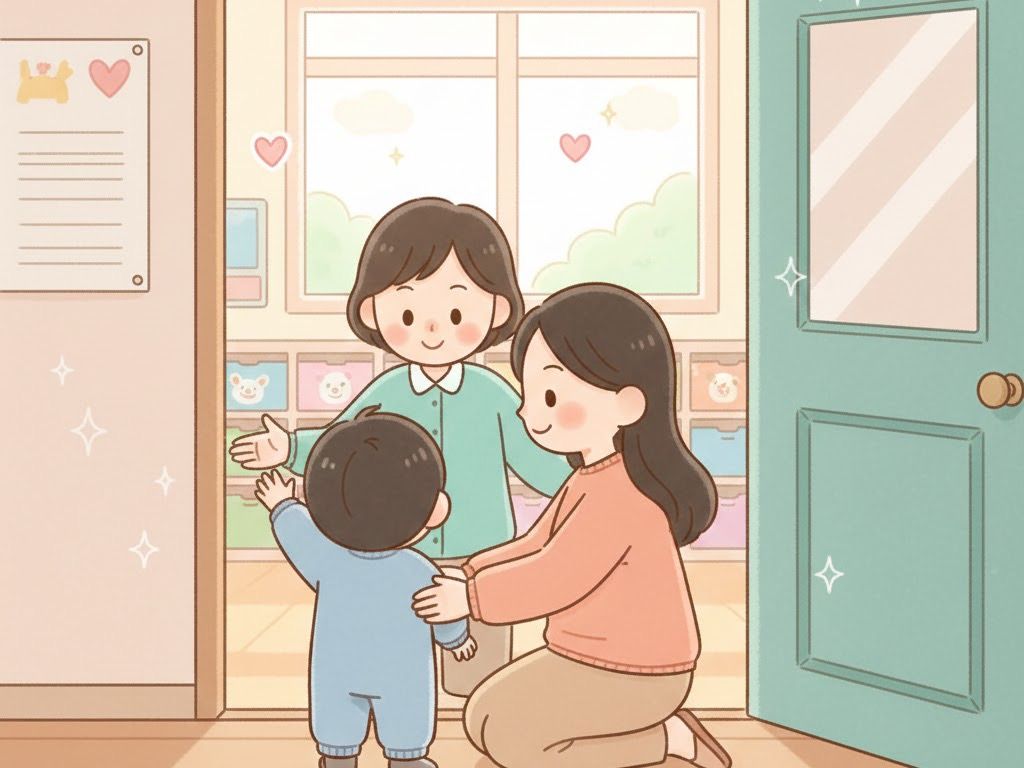
Get Started FreeThe daycare drop-off: your toddler is clinging to your leg, tears streaming, begging you not to leave. You peel their little fingers off, hand them to a teacher, and walk away hearing screams that follow you to the car. If you have lived this scene, you are not alone: and you are not scarring your child. Separation anxiety at daycare drop-off is one of the most universal parenting experiences, and research consistently shows that most children adjust within 2 to 4 weeks. This guide covers everything from choosing the right time to start daycare, to managing separation anxiety by age, to knowing when something may genuinely need attention.
When Is the Right Time to Start Daycare?
There is no single "perfect age" to start daycare. The right timing depends on your child's temperament, developmental stage, and your family's needs. Here are general guidelines to consider.
Age-Based Considerations
- Under 12 months: Attachment to the primary caregiver is the top developmental priority. If daycare is necessary, smaller group settings with a low child-to-caregiver ratio are ideal
- 12 to 24 months: Separation anxiety peaks during this period, but structured adaptation programs make the transition very manageable. Peer exposure at this age supports social development
- 24 to 36 months: Growing interest in other children makes daycare transitions smoother. Language development allows children to express their feelings, which helps with coping
- 36 months and older: Social skills are more developed, and children actively enjoy peer relationships. Adaptation tends to be fastest at this age
Signs Your Child May Be Ready
- Can spend short periods with grandparents or other familiar caregivers without you
- Shows curiosity about other children and approaches them
- Can communicate basic needs (through words or gestures)
- Can follow simple routines (mealtimes, nap times)
Understanding Separation Anxiety: Normal vs Concerning
Separation anxiety is the distress a child feels when separated from their primary caregiver. It is not a disorder; it is a healthy sign of secure attachment. Understanding what is normal at each age helps you respond appropriately.
Separation Anxiety by Age
| Age | Separation Behavior | What to Expect |
|---|---|---|
| 6-8 months | Stranger anxiety begins | Cries or clings when unfamiliar people approach |
| 8-14 months | Peak separation anxiety | Intense crying when parent is out of sight, clinging |
| 15-24 months | Separation anxiety continues | Heightened anxiety in new environments, may refuse naps/meals |
| 2-3 years | Gradually easing | Can express feelings verbally, growing interest in peers |
| 3+ years | Mostly resolved | Social skills developing, enjoys peer relationships |

Normal Responses
- Crying and clinging at drop-off, but calming down within 5 to 20 minutes after the parent leaves
- Being extra clingy at pickup, running to you with joy
- Mild regression at home (more whiny, wanting to be held more)
- Gradual decrease in crying over 1 to 4 weeks
Red Flags That Warrant Professional Guidance
- After 4+ weeks, separation distress shows zero improvement
- Child cries throughout the entire day at daycare and refuses all activities
- Sleep, eating, or toileting problems worsen severely and persist beyond 4 weeks
- Extreme fear of separation even at home (follows parent to the bathroom constantly)
- Physical complaints (stomachaches, headaches) that appear only on daycare mornings
The Daycare Adaptation Timeline
Most quality daycare programs use a gradual introduction schedule. While specifics vary by provider, the general framework looks like this.
Phase 1: Visit Together (Days 1-2)
- Parent stays with the child for 30 minutes to 1 hour
- Child explores the classroom, toys, and meets teachers while you are their "safe base"
- Building familiarity with the physical space
Phase 2: Short Separations (Days 3-5)
- Say goodbye and leave for 1 to 2 hours
- Child participates in morning activities
- Teacher begins building a relationship with your child
Phase 3: Through Lunch (Week 2)
- Morning activities plus lunch at daycare
- Eating with peers is a new social experience
- Approximately 3 to 4 hours at the center
Phase 4: Through Nap (Week 3)
- Morning activities, lunch, and nap time
- Learning to sleep in a new environment
- Approximately 5 to 6 hours at the center
Phase 5: Full Day (Week 4)
- Complete daily schedule from arrival to pickup
- Transition to regular hours
6 First-Week Survival Strategies
1. Create a Goodbye Ritual
Repeat the same goodbye sequence every single day. For example: big hug, three kisses, and a phrase like "Have fun with your friends! I will be back after snack time!" Consistency gives your child predictability, and predictability creates safety.
2. Keep Goodbyes Short and Bright
When your child cries, every instinct tells you to stay longer. But prolonged goodbyes increase anxiety. Give a warm smile, deliver your goodbye ritual, and walk away confidently. Your child takes emotional cues from you: if you look worried, they feel more afraid.
3. Never Sneak Away
Slipping out while your child is distracted might seem easier in the moment, but it teaches them that you can vanish without warning. This destroys trust and intensifies separation anxiety. Always say goodbye before you leave, even if it triggers tears.
4. Keep Your Promises
If you say "I will pick you up after nap time," be there after nap time. For young children who cannot yet understand clock time, use routine-based language: "I will be back after snack" instead of "I will be back at 3:00."
5. Send a Comfort Object
A small stuffed animal, a family photo, or a cloth that smells like home can be a powerful source of security. This "transitional object" helps your child feel connected to you even when you are apart. Check with the daycare about their policy on personal items first.
6. Avoid Other Big Changes During Adaptation
Weaning from the bottle or pacifier, starting potty training, moving to a new home, or switching beds: save these transitions for after daycare adjustment is complete (at least 4 weeks). Stacking multiple changes at once maximizes stress for your child.
Common Changes During the Adaptation Period
During the transition to daycare, you may notice these changes at home. Most are completely normal and temporary.
Sleep Changes
- More night waking or difficulty falling asleep
- Nightmares or night terrors may appear
- Nap patterns temporarily disrupted
- Usually stabilizes within 2 to 3 weeks
Appetite Changes
- Eating very little at daycare but a lot at home, or vice versa
- New environment tension affects appetite
- Avoid forcing food; offer nutritious snacks and trust the process
Behavioral Changes
- More clingy, whiny, or wanting to be held (regression)
- Increased self-soothing behaviors (thumb sucking, blanket rubbing)
- More frequent tantrums or mood swings
- "Velcro behavior", not letting you out of sight at home
Communicating with Your Child's Caregivers
The foundation of a smooth adaptation is trust between parents and teachers.
What to Share at Drop-Off
- Your child's sleep quality the previous night
- Any unusual circumstances ("They woke up grumpy today")
- Health updates ("They have a slight runny nose")
What to Ask at Pickup
- How did eating, sleeping, and diaper changes go?
- How was their mood and activity participation?
- How long did they cry after separation?
- How did they interact with other children?
Effective Questions to Ask
- "How many minutes did they cry after I left?"
- "What activities seemed to interest them today?"
- "How did nap time go? Did they fall asleep easily?"
- "Is there anything I can do at home to support the transition?"
When Adaptation Is Not Working
If 4 or more weeks have passed and your child is still struggling significantly, try these adjustments.
- Step back one phase: Shorten daycare hours and gradually build up again
- Adjust drop-off timing: Try arriving when your child is in their best mood
- Have a focused meeting with the teacher: Understand your child's specific behavior patterns at daycare
- Increase security at home: Extra cuddle time before and after daycare, create a special post-pickup ritual
- Arrange playdates with classmates: Building friendships outside daycare can ease the transition inside it
Signs It May Be Time to Consider a Different Daycare
- After 8+ weeks, there is zero progress toward adjustment
- Your child shows extreme fear toward specific teachers or the environment
- Physical regression worsens (for example, a potty-trained child begins having regular accidents again)
- Your parental instinct tells you something is genuinely wrong
Track the Transition with BebeSnap
During the daycare adjustment period, tracking your child's sleep, feeding, and mood changes gives you valuable data to share with caregivers and assess progress. BebeSnap makes this simple.
- Sleep & Feeding Tracking: Monitor how daycare affects your child's sleep and eating patterns, objective data helps you see adaptation progress over time
- Family Sharing: Share records with your partner, grandparents, or anyone involved in pickup and care so everyone stays informed and consistent
- AI Chatbot: When you are worried ("My child won't eat at daycare, is this normal?"), get immediate guidance from our AI assistant
FAQ
Q: My child cries all day at daycare. Should I keep sending them?
A: Crying for 30+ minutes after separation is common during the first 1 to 2 weeks. The key question is: is the crying decreasing over time? If week 1 brings 30 minutes of tears, week 2 brings 15, and week 3 brings 5, your child is adjusting well. However, if after 4 weeks there is no reduction and your child refuses to participate in any activities all day, discuss the situation with the teacher and consider consulting a child development specialist.
Q: Is it okay to sneak out when my child is distracted?
A: No. While saying goodbye triggers more immediate tears, it builds crucial trust; your child learns "my parent always tells me before they leave." Sneaking out teaches the opposite: "my parent can disappear at any moment." This increases general anxiety and makes separation anxiety worse over time, not better.
Q: My child keeps getting sick since starting daycare. Is this normal?
A: Yes, this is extremely common. Children typically get 8 to 12 respiratory infections in their first year of group childcare as their immune system encounters new viruses. This frequency usually decreases significantly by the second year as immunity builds. See your pediatrician for high fevers, persistent symptoms, or if your child refuses to eat or drink.
Q: Should I avoid making other big changes during the daycare adjustment period?
A: Absolutely. Weaning, potty training, moving, bed transitions, and other major changes should wait until at least 4 weeks after your child has fully settled into daycare. Overlapping transitions creates compounding stress that can overwhelm a young child.
Q: My child was adjusted, but suddenly started crying again at drop-off. What happened?
A: This is very common and usually temporary. Regression can happen after weekends, holidays, a teacher change, a classroom transition, or family changes at home (new sibling, parent traveling). In most cases, the child readjusts within 1 to 2 weeks. Maintain your consistent goodbye ritual and give extra reassurance; they will bounce back.
References
- Happiest Baby - How to Handle Daycare Separation Anxiety
- Raising Children Network - Starting Child Care
- The Goddard School - Dealing With Separation Anxiety
- Casa Early Learning - How to Transition Baby to Daycare
- The Bump - Tips for Transitioning Into Daycare
- Wonderschool - Making the Transition To Daycare
All Your Baby Records in One App
Feeding, sleep, diapers, growth: every daily record in one place.
See what the app does firstYou Might Also Like
Tomato for Babies: When to Start, Skin and Seeds, and Why Cherry Tomatoes Are Never Served Whole
Apple for Babies: Stage-by-Stage Portions and When Raw Apple Is Safe
Spinach for Babies: When to Start, Why Boiling Matters, and the One Time to Skip It
Potato for Babies: When to Start, Safe Shapes, and Why Never to Blend It
You Might Also Like

Decoding Baby Cries: Reading Hunger, Sleepy, Discomfort, and Pain by Sound and Body Cues
Baby cries can be read through sound patterns and body cues. Here's how to tell hunger, sleepy, discomfort, and pain apart, the pre-cry signals, why crying peaks around 6 weeks, and 5 soothing moves.

Diaper Rash vs Candida Yeast Rash: How to Tell Them Apart and Choose the Right Cream
Diaper rash not healing after 3 days? Suspect candida! Redness in skin folds with satellite spots needs antifungal cream. Learn how to tell them apart.

Postpartum Depression Self-Check Guide: Baby Blues vs PPD, EPDS Screening & Recovery
Feeling tearful and overwhelmed after giving birth? Learn the difference between baby blues (80% of mothers) and postpartum depression, EPDS self-screening, and breastfeeding-safe treatments.