Breast Milk Storage Times: Room 4hrs, Fridge 4 Days, Freezer 6 Months
Stop Trying to Remember Feed Times
Get Started FreeYou've worked hard to pump that breast milk, how do you store it safely without losing nutrients? Based on Centers for Disease Control and Prevention(CDC) and American Academy of Pediatrics(AAP) guidelines, here's your complete guide to storing expressed breast milk.
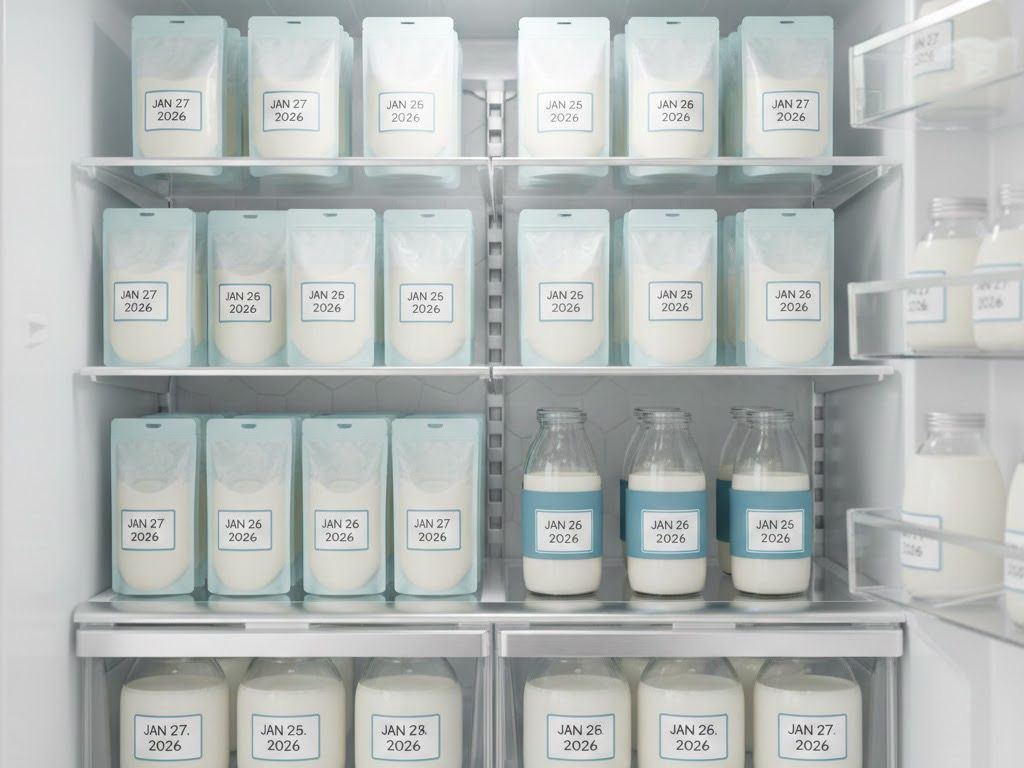
Breast Milk Storage Chart (CDC Guidelines)
| Storage Location | Temperature | Fresh Milk | Thawed Milk |
|---|---|---|---|
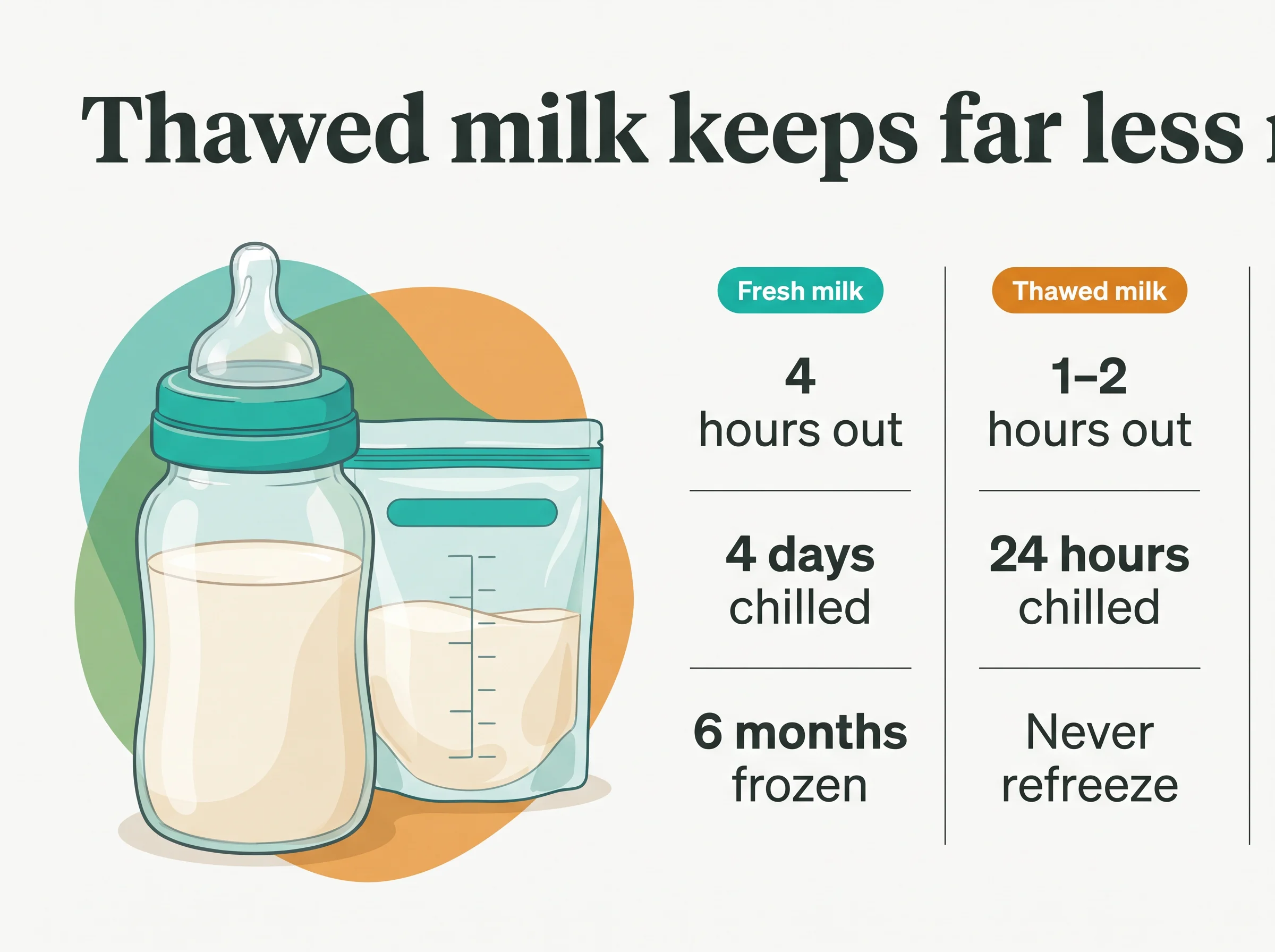
| Room Temperature | Up to 77°F (25°C) | Up to 4 hours | 1-2 hours |
| Insulated Cooler | 59°F (15°C) | Up to 24 hours | Not recommended |
| Refrigerator | 40°F (4°C) | Up to 4 days (optimal: 3 days) | Within 24 hours |
| Freezer (attached) | 5°F (-15°C) | Up to 2 weeks | Never refreeze |
| Freezer (separate door) | 0°F (-18°C) | Up to 6 months (optimal) | Never refreeze |
| Deep Freezer | -4°F (-20°C) or colder | 6-12 months | Never refreeze |
Storage Containers
Recommended Containers
| Container Type | Pros | Cons | Best For |
|---|---|---|---|
| Breast Milk Storage Bags | Disposable, space-saving, freezer-optimized | Single-use, cost | Freezer storage |
| Glass Containers | Reusable, no chemical concerns | Heavy, breakable | Refrigerator storage |
| BPA-free Plastic | Lightweight, durable | Scratches can harbor bacteria | Short-term storage |

Containers to Avoid
- Regular plastic bags: Tear easily, chemical leaching risk
- Disposable bottle liners: Not designed for storage
- BPA-containing plastic: Hormone disrupting chemicals
How to Store Breast Milk
Refrigerator Storage
- Seal tightly: Minimize air contact
- Store in back: Door area has temperature fluctuations
- Label with date: Always record pumping date
- Store in small portions: 2-4oz (60-120ml) increments
Freezer Storage
| Step | Method | Reason |
|---|---|---|
| 1. Cool | Refrigerate for 1 hour after pumping | Prevent rapid temperature change |
| 2. Portion | Divide into 2-4oz (60-120ml) amounts | Prevent waste after thawing |
| 3. Leave space | Fill containers only 3/4 full | Milk expands when frozen |
| 4. Label | Record date + amount | First-in-first-out management |
| 5. Position | Store in back of freezer | Temperature stability |
Thawing Frozen Breast Milk
Recommended Thawing Methods
| Method | Time Required | Notes |
|---|---|---|
| Refrigerator thawing | 8-12 hours | Safest method, requires planning |
| Running water | 20-30 minutes | Start cold, gradually warm |
| Warm water bath | 10-15 minutes | Don't place directly on heat |
Never Do This
- Don't microwave: Destroys nutrients, creates hot spots
- Don't use boiling water: Nutrient loss
- Don't thaw at room temperature: Bacteria growth risk
- Never refreeze: Bacterial multiplication concerns
Warming Breast Milk
Safe Warming Methods
- Warm water bath: Place container in 98-104°F (37-40°C) water
- Bottle warmer: Use temperature-controlled device
- Running warm water: Hold under tap while swirling
Checking Temperature
- Wrist test: Drop on inner wrist, should feel lukewarm
- Bottle thermometer: Around 98°F (37°C) is ideal
- Not too hot: Prevent burning baby's mouth
Identifying Spoiled Breast Milk
Normal Changes
| Appearance | Explanation | Action |
|---|---|---|
| Layer separation | Fat rises to top | Gently swirl to mix |
| Color variation | Yellow, white, bluish tints | Normal: varies with diet |
| Soapy smell | Lipase enzyme activity | Normal: scald if baby refuses |
Signs of Spoilage
- Sour smell: Strong, offensive odor
- Taste: Distinctly sour (taste small amount)
- Chunks: Clumps that don't mix when swirled
- Expired: Past CDC guideline timeframes
Tips for Working Moms
Transporting Pumped Milk
| Item | Purpose |
|---|---|
| Insulated cooler bag | Transport pumped milk |
| 2-3 ice packs | Maintain temperature (below 59°F/15°C) |
| Storage bags/containers | Hold pumped milk |
| Labels + marker | Record date, time, amount |
At the Office
- Refrigerator available: Store separately from other food
- No refrigerator: Cooler bag + ice packs (24 hours)
- Always label: Name and date required
Dealing with High Lipase (Soapy Smell)
Some mothers' milk has overactive lipase enzyme, causing a soapy smell after freezing.
Scalding Method
- Right after pumping: Pour milk into pot
- Heat to 180°F (82°C): Just before boiling (small bubbles at edges)
- Cool immediately: Place in ice bath
- Then freeze
Frequently Asked Questions (FAQ)
Q: Can I combine milk pumped at different times?
A: Yes, you can. But cool the freshly pumped milk in the refrigerator first before adding it to already chilled milk. The storage clock for the combined batch starts from the first, earliest pumping time, not the latest one. So if that milk is refrigerated, use the whole batch within 4 days of the original pumping session.
Q: Can I refreeze thawed breast milk?
A: No, you should never refreeze it. According to the CDC, thawed breast milk should not be refrozen because bacteria can multiply once it warms up. Instead, use thawed milk within 24 hours if it's kept in the refrigerator, or within 1 to 2 hours if it's left at room temperature. Discard any that isn't used in time.
Q: What about milk my baby didn't finish?
A: Milk that your baby's mouth has touched may contain bacteria introduced by saliva, so it shouldn't be saved like freshly pumped milk. Use this leftover milk within 2 hours of the feeding, and discard whatever isn't finished after that. Storing milk in small 60 to 120ml portions helps reduce this kind of waste.
Q: Is yellow frozen milk okay?
A: Yes, this is completely normal. Breast milk color naturally varies with your diet and can appear white, yellow, or even bluish, and none of these signal spoilage. It's also normal for frozen milk to separate into layers, with the fat rising to the top; just swirl it gently to remix before feeding.
Manage Pumping with BebeSnap
If tracking pumping times, amounts, and storage dates feels overwhelming, BebeSnap can help.
- Pumping logs: Record time, amount, left/right side
- Expiration alerts: Auto-calculate refrigerator/freezer expiration
- Inventory management: Track frozen milk stock
- Integrated feeding: Combine pumping + nursing + formula records
- AI reports: Pumping pattern analysis and tips
👉 Learn more about BebeSnap Feeding Records
References:
Stop Trying to Remember Feed Times
Log time, amount, and intervals. BebeSnap turns them into your baby's daily pattern.
See what the app does firstMedical Disclaimer: This article is for informational purposes only and does not replace professional medical advice. If you have concerns about your baby's health, please consult a pediatrician.
You Might Also Like
Wonder Weeks Calculator: Your Baby's 10 Mental Leaps From the Due Date
Baby Weight Gain Calculator: Grams Per Day From Two Weigh-Ins
Baby Impetigo: Golden Crusts, Antibiotic Treatment, and When Nursery Is Safe Again
Baby Mouth Sores (Stomatitis): Causes, How to Tell Them Apart, and Dehydration Signs
You Might Also Like
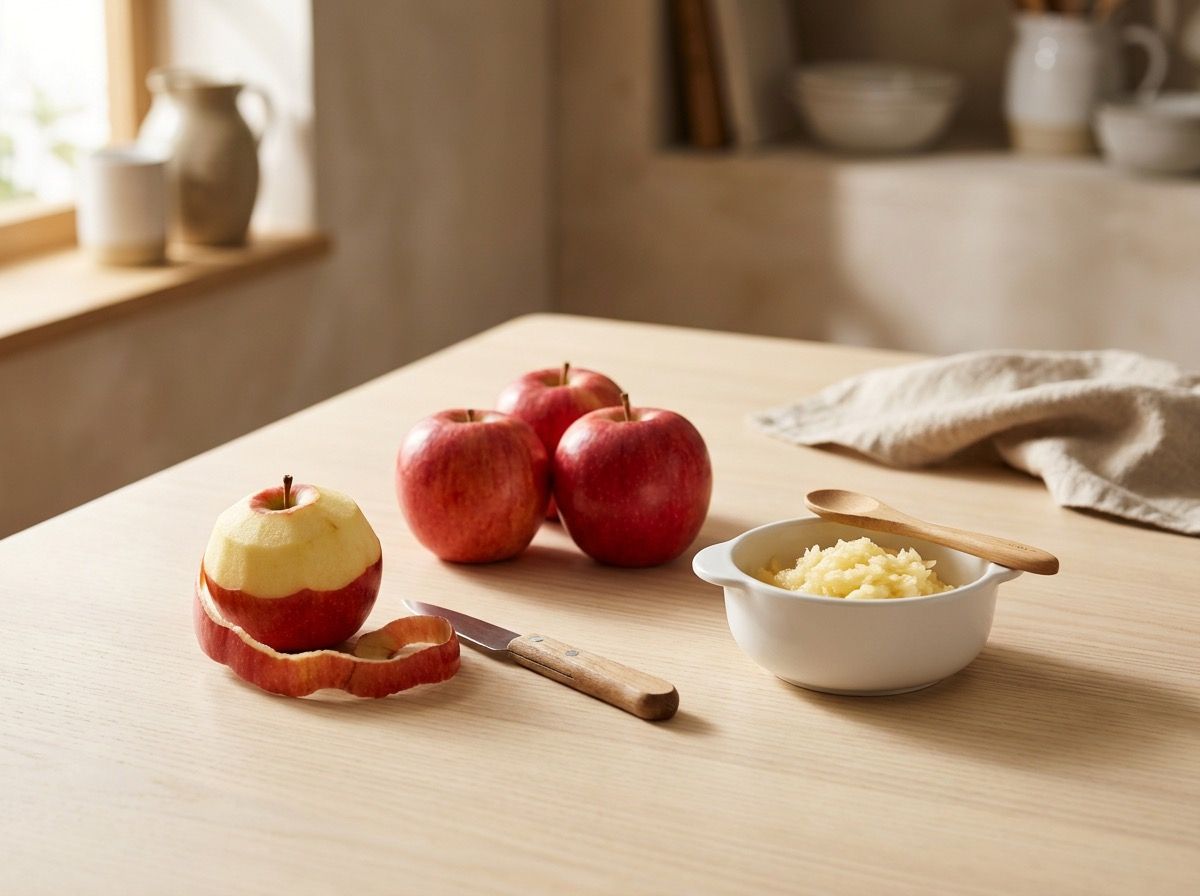
Apple for Babies: Stage-by-Stage Portions and When Raw Apple Is Safe
Apple can start in the first weaning stage, grated and cooked. Portions are 20-30g at 7-8 months and 30-40g at 9-11 months, counted together with vegetables. Front teeth bite, but the molars that grind only start coming in at the end of weaning.
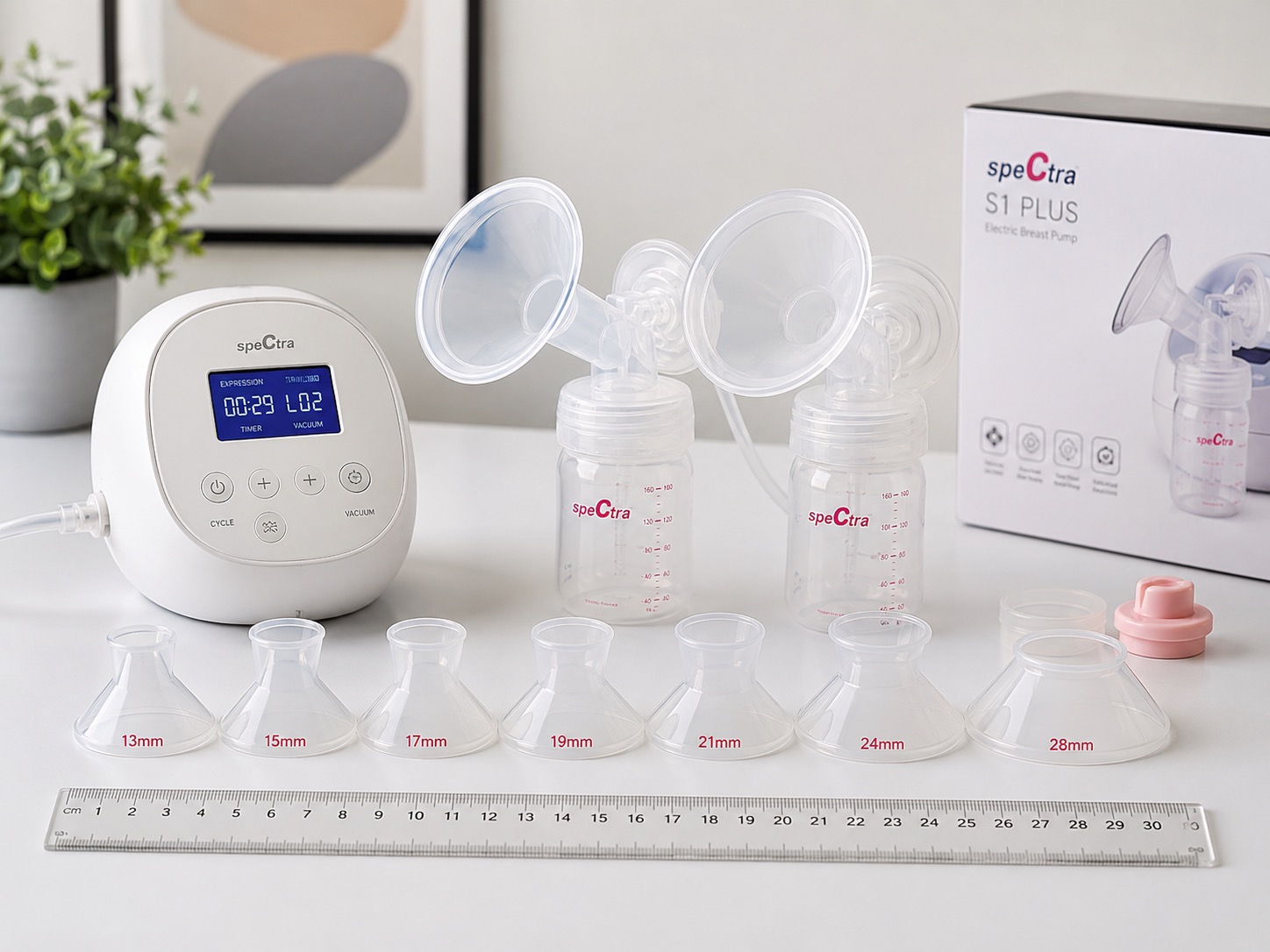
Breast Pump Flange Size Guide: How to Measure Your Nipple in mm and Choose the Right Fit
Is pumping painful or low-yield? Measure your nipple diameter in mm and add 2–4mm. Correct flange fit is key to comfort and output.

Breast Engorgement Relief: Before It Becomes Mastitis
Rock-hard, painful breasts? Engorgement happens to nearly all new moms. Learn massage and cold compress techniques before it becomes mastitis.