Baby Won't Eat? Age-by-Age Guide to Food Refusal Causes & Practical Solutions
Stop Trying to Remember Feed Times
Get Started Free"Not even one bite," "He spits it right back out," "She ate perfectly yesterday but won't open her mouth today"... When your baby refuses food, panic sets in fast. Is something wrong? Are they getting enough nutrition? Take a deep breath; you are not alone. Research shows that 25 to 35 percent of toddlers and preschoolers are described by their parents as "picky" or poor eaters. Food refusal is one of the most common challenges in early childhood, and in most cases, it is a completely normal part of development. This guide walks you through age-specific reasons why babies refuse food, how to distinguish a feeding strike from genuine appetite loss, and practical strategies, including the Division of Responsibility approach, that work without force-feeding.
Appetite Fluctuations Are Normal
Here is the most important thing to understand: your baby's appetite is supposed to change from day to day, and even from meal to meal.
Natural Reasons Appetite Fluctuates
- Growth spurts: Babies eat ravenously during rapid growth, then eat less when growth slows down
- Teething: Sore gums can make eating painful, leading to temporary food refusal
- Illness: Colds, ear infections, mouth sores, and other illnesses reduce appetite temporarily
- Developmental leaps: When mastering a new skill (crawling, walking), babies may be too excited to sit still and eat
- Seasonal changes: Many babies eat less in hot summer months
Age-by-Age Guide to Food Refusal
The reasons behind food refusal change significantly as your baby grows. The same "won't eat" behavior has very different causes and solutions at different ages.
6–8 Months: Early Weaning Refusal
Common Causes
- Unfamiliarity with spoons and new food textures
- Strong preference for breast milk or formula
- Baby may not be developmentally ready for solids yet
- Puree is too thin or too thick for baby's current stage
What to Do
- Offer a small breast or bottle feed first (not a full feed) so baby is not starving but not full
- Start with just 1–2 spoonfuls and stop immediately if baby turns away
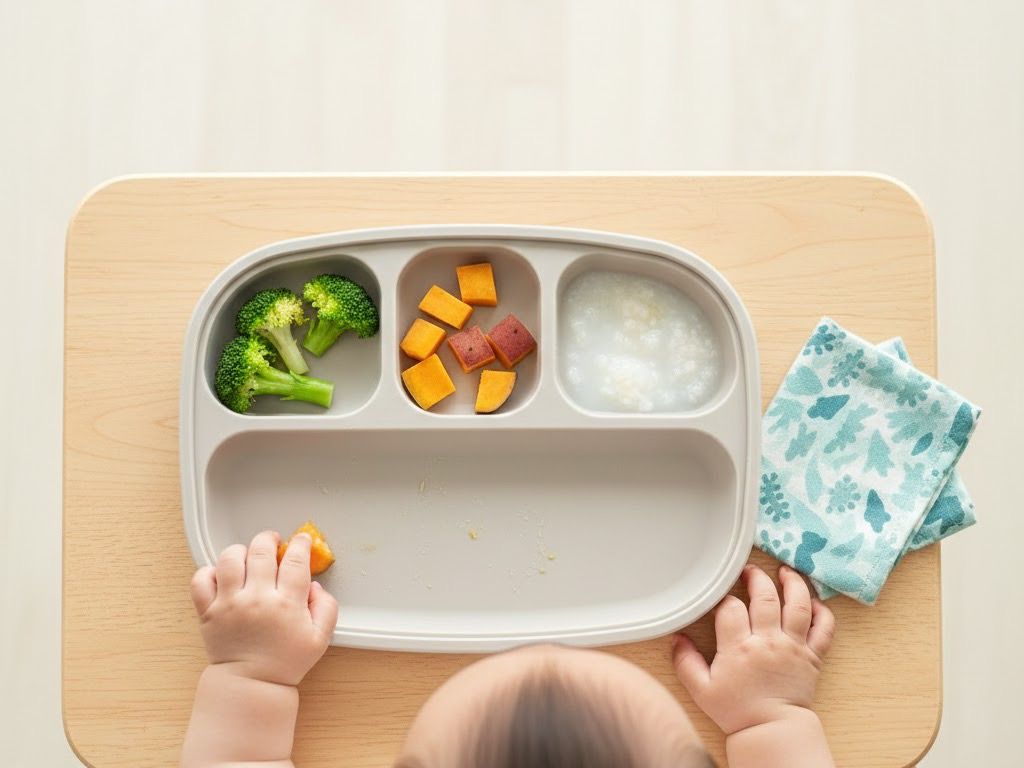
- Let your baby touch and explore the food with their hands (sensory play is learning!)
- Dip the spoon in breast milk or formula to make the new taste less foreign
- Eat together as a family, babies learn by watching you eat
9–11 Months: Texture Transition Refusal
Common Causes
- Transitioning from smooth purees to lumpy, mashed, or chopped textures
- Growing desire for independence, baby wants to feed themselves but lacks the skill
- Sensitivity to certain textures (sticky, slimy, or lumpy foods)
- Teething pain making chewing uncomfortable
What to Do
- Change textures gradually, do not jump from smooth puree to chunky overnight
- Offer finger foods alongside spoon-fed meals (soft cooked carrot sticks, banana pieces)
- Give baby their own spoon to hold while you feed with a second one
- During teething, try chilled foods (cold fruit puree, refrigerated yogurt) to soothe gums
- Offer the same ingredient in different textures (mashed vs. finely diced vs. stick-shaped)
12–18 Months: The Post-Birthday Food Strike
Common Causes
- Growth rate naturally slows after the first birthday, reducing calorie needs (this is the biggest factor!)
- "No!" and "Mine!", autonomy and self-assertion are developing rapidly
- Food neophobia: an instinctive wariness of unfamiliar foods
- Walking opens up a world of exploration that is far more interesting than sitting in a high chair
What to Do
- Expect smaller portions after age 1; this is completely normal, not a cause for alarm
- Offer choices: "Do you want apple or banana?" (limit to 2 options)
- Create a self-feeding-friendly setup and accept the mess, independence matters more than neatness right now
- New foods require 10 to 20 exposures before acceptance, one rejection does not mean forever
- Even placing the food on the plate without expecting baby to eat it counts as useful visual exposure
18–36 Months: Picky Eating Intensifies
Common Causes
- Food preferences are just forming, so a favorite food one day may be refused the next
- Strong preferences based on color, texture, smell, or even plate arrangement
- Too many snacks throughout the day reduce hunger at mealtimes
- Negative associations with mealtimes (pressure, conflict, stress)
What to Do
- Reduce snacking and maintain a consistent schedule with meals and snacks 2–3 hours apart
- Set a 30-minute mealtime limit, when time is up, calmly remove the food with no commentary
- Plate one familiar food alongside one new food at every meal
- Allow food play (touching, smelling, licking); it is all part of food learning
- Model eating the same foods enthusiastically at the table
Feeding Strike vs Genuine Appetite Loss
Not all food refusal is the same. It is important to distinguish between a normal feeding strike and appetite loss that may need medical attention.
| Feature | Feeding Strike (Normal) | Genuine Appetite Loss (See a Doctor) |
|---|---|---|
| Weight | Gaining steadily along growth curve | Losing weight or plateauing for 2+ weeks |
| Energy level | Active, playful, alert | Lethargic, less active than usual (if floppy or hard to wake, call 911 instead of waiting) |
| Duration | Resolves within a few days to 2 weeks | Persists for more than 2 weeks |
| Eating pattern | Varies meal to meal | Refuses nearly all food at every meal |
| Fluids | Drinks breast milk, formula, or water normally | Fluid intake also significantly reduced |
| Vomiting/diarrhea | None | Accompanied by vomiting, diarrhea, or constipation |
Ellyn Satter's Division of Responsibility
A widely used approach to food refusal is Ellyn Satter's Division of Responsibility in Feeding. The AAP describes the same principle: it's a parent's responsibility to provide food, and the child's decision to eat it.
The Parent's Job: What, When, Where
- What: Decide which healthy, varied foods to offer
- When: Establish regular meal and snack times
- Where: Create a calm, screen-free eating environment at the table
The Child's Job: How Much and Whether
- How much: The child decides how much to eat from what you have provided
- Whether: The child decides whether to eat at all, and that is okay
The core principle is that your job ends once you put food on the table. Whether and how much your child actually eats is their decision. Pushing "just one more bite" only builds negative associations with food over time.
💡 Babies are born knowing how to read their own hunger and fullness signals. When parents trust these signals instead of overriding them, children develop healthier lifelong eating habits.5 Things to Never Do
1. Force-Feed
- Never push a spoon into a resisting mouth or hold a child's nose to make them open up
- Force-feeding creates fear and trauma around food and mealtimes
- It may work short-term but leads to even stronger refusal long-term
2. Use Screens as Distraction
- Feeding your baby while they watch TV or a phone numbs their hunger and fullness cues
- Screen-dependent eating can lead to overeating and mindless eating habits
- Turn off all screens during meals
3. Offer Constant Snacks
- Grazing on crackers, fruit, and juice all day means your baby is never truly hungry at mealtimes
- Limit snacks to twice a day, at least 2 hours before the next meal
- Snacks should also be eaten sitting down at the table
4. Use Food as a Reward
- "Finish your rice and you can have ice cream" teaches children that meals are punishment and dessert is the prize
- Never attach reward or punishment language to food
5. Immediately Offer a Replacement Meal
- If you immediately cook something different when your child refuses, they learn that refusal produces something better
- Serve one family meal with at least one item you know your child enjoys
Foods to Try When Baby Won't Eat
When your baby is in a food refusal phase, try these nutrient-dense, easy-to-eat options.
| Food | Why It Works | How to Serve |
|---|---|---|
| Avocado | Healthy fats, creamy texture | Mashed on toast or as finger-food sticks |
| Banana | Naturally sweet, quick energy | Mashed or cut into graspable pieces |
| Scrambled eggs | Protein-rich, soft texture | Soft-scrambled in small, bite-sized pieces |
| Sweet potato | Naturally sweet, high calorie | Steamed and mashed or cut into sticks |
| Yogurt | Calcium, protein, probiotics | Plain unsweetened, mixed with fruit |
| Chicken soup or porridge | Easy to digest, hydrating, nutritious | Blended smooth or with soft chunks |
| Cheese | High calorie, calcium-rich | Small cubes or shredded as finger food |
| Tofu | Soft, mild flavor, good protein | Mashed or cut into small cubes |

When to See a Doctor
Most food refusal is a normal developmental phase, but the following signs warrant a pediatrician visit.
Call 911 Right Away If:
- Your baby is unresponsive, floppy, or not waking up as easily as usual
- Your baby is struggling to breathe or breathing very fast
- Skin, lips, or tongue look pale, blue, gray, or blotchy
- Your baby vomits forcefully (projectile vomiting) again and again, or the vomit is green or bloody
- No wet diaper in 8 hours for a baby (no pee in 12 hours for a toddler)
See a Doctor Immediately If:
- Your baby is losing weight or has fallen off their growth curve for 2 or more weeks
- Dehydration signs: peeing less often (for babies, fewer than 6 wet diapers a day), a parched, dry mouth, fewer tears when crying, a sunken soft spot, or playing less than usual
- Vomiting after every attempt to eat
- Crying or signs of pain when swallowing
- Extreme sensory reactions to food textures (gagging, panic, or terror)
Schedule an Appointment If:
- Food refusal persists for more than 2 weeks with almost all foods
- Fluid intake (breast milk, formula, water) is also declining (if your baby is barely feeding or has had nothing to drink for 8 waking hours, see a doctor right away instead)
- Your baby's weight is significantly below average for their age
- A baby who previously ate well is now refusing everything (regression)
- Extreme anxiety or fearful behavior around mealtimes
Frequently Asked Questions
Q: How long does a typical feeding strike last?
A: Most feeding strikes resolve on their own within a few days to two weeks. The post-birthday food strike can last longer, but as long as your child's growth curve is normal, there is no cause for concern.
Q: If my baby won't eat solids, can I just give more breast milk or formula?
A: Before 12 months, milk is still the main nutrition source, so leaning on it for a while is fine. From about 6 months, though, babies need iron from foods like meat or fortified cereal, so see your pediatrician if refusal continues. After 12 months, however, relying solely on milk can actually deepen solid food refusal. Offer the meal first, then milk or water after or between meals.
Q: My baby will only eat one food. How do I fix picky eating?
A: Do not remove the preferred food entirely. Instead, place a small amount of a new food next to it on the plate. Your child does not have to eat it, just seeing it repeatedly is progress. Research shows it takes 10 to 20 or more exposures for a child to accept a new food. Pressure always backfires.
Q: My baby throws food on the floor. What should I do?
A: Between 12 and 18 months, food throwing is a completely normal developmental behavior, babies are exploring cause and effect. Calmly say "Food stays on the table" and if it continues, simply end the meal with "It looks like you're done." Avoid reacting with frustration, as that can reinforce the behavior.
Q: My child eats well at daycare but refuses food at home. Why?
A: This is extremely common. At daycare, the peer modeling effect is powerful, seeing other children eat motivates your child to join in. Daycare also has consistent routines and boundaries. At home, try to replicate this: eat together as a family, keep meal times consistent, and apply the same calm, no-pressure approach.
Track Feeding Patterns with BebeSnap
Recording your baby's feeding patterns helps identify food refusal triggers and provides valuable data for pediatrician visits. BebeSnap makes this easy.
- Feeding Tracker: Log how much your baby eats at each meal and you will start to see patterns, "She's been eating less since Tuesday" becomes instantly visible
- AI Health Consultation: "My baby is refusing solids" or "Is this a feeding strike?", ask our AI chatbot for instant guidance
- Growth Tracker: Log weight and height to see at a glance whether your baby is tracking along a healthy growth curve
References
Stop Trying to Remember Feed Times
Log time, amount, and intervals. BebeSnap turns them into your baby's daily pattern.
See what the app does firstMedical Disclaimer: This article is for informational purposes only and does not replace professional medical advice. If you have concerns about your baby's health, please consult a pediatrician.
You Might Also Like
Wonder Weeks Calculator: Your Baby's 10 Mental Leaps From the Due Date
Baby Weight Gain Calculator: Grams Per Day From Two Weigh-Ins
Baby Impetigo: Golden Crusts, Antibiotic Treatment, and When Nursery Is Safe Again
Baby Mouth Sores (Stomatitis): Causes, How to Tell Them Apart, and Dehydration Signs
You Might Also Like
Tomato for Babies: When to Start, Skin and Seeds, and Why Cherry Tomatoes Are Never Served Whole
Tomato can start at 5-6 months once the skin and seeds are removed and it is cooked. Portions run 20-30g at 7-8 months and 30-40g at 9-11 months, counted together with fruit. Cherry tomatoes are the one vegetable Japan's childcare guidance names by name as something not to serve whole.

Baby Oral Thrush: Symptoms, Treatment & Prevention, Complete Guide
White patches in your baby's mouth that won't wipe off? It could be oral thrush (Candida). Learn how to tell thrush from milk residue, treatment with nystatin, and how to prevent reinfection during breastfeeding.

Formula Calculator: Weight×2.5oz Formula & Amount by Age
Not sure how much formula to give? Basic formula: weight(kg)×150ml÷feedings. From newborn 2-3oz to 6-month 6-8oz.