Newborn Acne vs Heat Rash: Differences and Proper Care
Check Your Baby's Health from One Photo
Get Started FreeWhen red rashes suddenly appear on a newborn's face, many parents worry. Newborn acne and heat rash/eczema are the most common skin conditions, but they have different causes and treatments. Learn to accurately distinguish between them and respond appropriately.
What Is Newborn Acne?
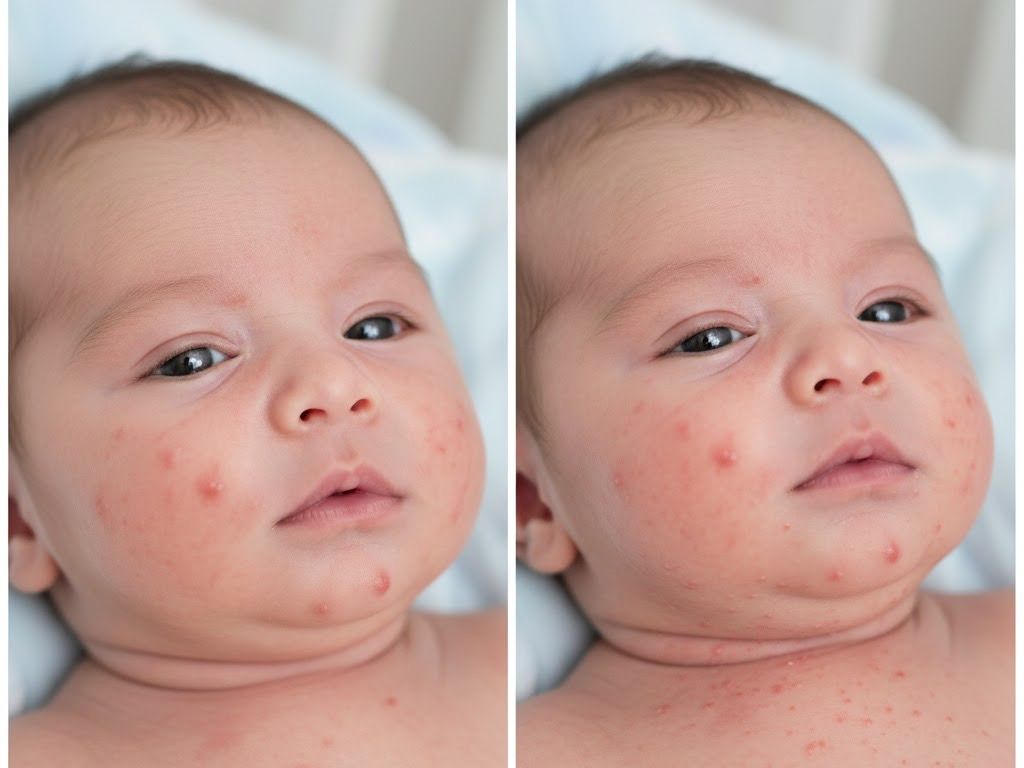
Newborn acne (Neonatal Acne) appears as small red bumps around 2-4 weeks after birth, occurring in about 20% of all newborns.
Characteristics of Newborn Acne
- Mainly occurs on cheeks, nose, forehead
- Small red bumps or white pustules
- Not itchy
- Skin may appear oily
- Occurs between 2 weeks to 3 months of age
Cause
Caused by hormones passed from mother before and after birth and changes in baby's own hormones stimulating the sebaceous glands.
Newborn acne usually disappears naturally within 3-4 months without special treatment.What Is Infantile Eczema?
Infantile eczema is a skin inflammatory reaction that appears over a wider area than newborn acne and is accompanied by itching.
Characteristics of Infantile Eczema
- Starts on cheeks and can spread to whole body
- Red, rough rash, may weep
- Itchy, baby tries to scratch
- Skin is dry and peeling
- Usually starts between 2-6 months of age
Cause
Occurs due to complex factors including immature skin barrier function, genetic factors, and environmental irritants (dryness, irritating substances).
Newborn Acne vs Infantile Eczema Comparison
| Category | Newborn Acne | Infantile Eczema |
|---|---|---|
| Onset | 2-4 weeks after birth | 2-6 months after birth |
| Location | Cheeks, nose, forehead | Starts on cheeks, can spread |
| Appearance | Small red bumps, white pustules | Red rough rash, weeping |
| Itching | None | Yes (severe) |
| Skin Condition | Oily | Dry, peeling |
| Duration | Resolves in 3-4 months | Needs management, months to years |

How to Handle Newborn Acne
Basic Care
- Wash face once daily with lukewarm water
- Use gentle baby cleanser (if needed)
- Pat dry with soft towel
- Don't squeeze or rub
- Keep nails short
Things to Avoid
- Adult acne treatments
- Excessive use of oils or lotions
- Harsh cleansers
- Touching baby's face
How to Handle Infantile Eczema
Basic Care
1. Thorough Moisturizing
- Apply moisturizer within 3 minutes of bathing
- Full body moisturizing 2-3 times daily
- Ceramide-containing products recommended
- Use fragrance-free, hypoallergenic products
2. Bathing Care
- Use lukewarm water (36-37°C/97-99°F)
- Bath time under 5-10 minutes
- Small amount of gentle cleanser
- Avoid bubble baths
3. Environmental Care
- Maintain 50-60% indoor humidity
- Dress in cotton clothing
- Avoid harsh detergents
- Maintain proper room temperature (20-22°C/68-72°F)
4. Itch Management
- Keep nails short
- Use cotton mittens (prevent scratching)
- Soothe with cool towel
- Consult pediatrician if severe
When to Visit the Doctor
Seek Immediate Medical Care If
- Rash spreads rapidly
- Yellow discharge or pus
- Accompanied by fever
- Baby is very fussy and can't sleep
- Spreading to entire body
Consult Pediatrician If
- Symptoms persist over 2 weeks
- No improvement with home care
- Weeping or suspected infection
- Family history of atopic dermatitis
Prevention and Management Tips
Common Prevention
- Maintain proper indoor temperature and humidity
- Don't overdress baby
- Choose cotton clothing
- Avoid frequently touching baby's face
- Use clean bedding
Care for Nursing Mothers
If breastfeeding, mother's diet can affect baby's skin.
- Avoid spicy foods
- Watch dairy intake (for eczema)
- Stay well hydrated
- Maintain balanced diet
Other Similar Skin Conditions
Milia
- Small white bumps on nose and cheeks
- Caused by blocked oil glands
- Resolves naturally within weeks
Heat Rash
- Occurs in hot environments
- Mainly on neck, back, armpits
- Improves when cooled down
Atopic Dermatitis
- Persistent or worsened eczema
- Chronic, recurrent
- Requires professional treatment
Skin Care with BebeSnap
BebeSnap app helps systematically manage your baby's skin condition.
- AI skin analysis to identify symptoms
- Record skin changes with photos
- Track symptom patterns
- Use records for doctor visits
👉 Learn more about AI Skin Analysis
Frequently Asked Questions (FAQ)
Q: How do I tell newborn acne apart from infantile eczema?
A: Newborn acne appears at 2-4 weeks as small red bumps or white pustules on the cheeks, nose, and forehead; it is not itchy and the skin looks oily. Infantile eczema starts at 2-6 months on the cheeks and can spread, with a red, rough, sometimes weeping rash that is itchy. Eczema skin also tends to be dry and peeling.
Q: Does newborn acne need to be treated?
A: It usually clears on its own within 3-4 months without special treatment. Wash the face once a day with lukewarm water and pat dry with a soft towel. Do not squeeze or rub it, and avoid adult acne treatments and heavy use of oils or lotions, which can actually irritate the skin.
Q: How do I manage infantile eczema?
A: Moisturizing is most important. Apply moisturizer within 3 minutes of bathing and moisturize the whole body 2-3 times a day, using fragrance-free, ceramide-containing products. Bathe in lukewarm water (36-37°C) for under 5-10 minutes, keep indoor humidity at 50-60% and room temperature at 20-22°C, and dress baby in cotton.
Q: When should I see a doctor about a baby skin rash?
A: Seek immediate care if the rash spreads rapidly, there is yellow discharge or pus, it comes with a fever, or your baby is very fussy and cannot sleep. Consult a pediatrician if symptoms last more than 2 weeks, do not improve with home care, or there is a family history of atopic dermatitis.
References
Check Your Baby's Health from One Photo
AI stool analysis reads color and texture, and keeps every health record in one place.
See what the app does firstMedical Disclaimer: This article is for informational purposes only and does not replace professional medical advice. If you have concerns about your baby's health, please consult a pediatrician.
You Might Also Like
Apple for Babies: Stage-by-Stage Portions and When Raw Apple Is Safe
Spinach for Babies: When to Start, Why Boiling Matters, and the One Time to Skip It
Potato for Babies: When to Start, Safe Shapes, and Why Never to Blend It
Wonder Weeks Calculator: Your Baby's 10 Mental Leaps From the Due Date
You Might Also Like
Baby Impetigo: Golden Crusts, Antibiotic Treatment, and When Nursery Is Safe Again
Golden-brown crusts spreading across your baby's skin? Impetigo is a common, highly contagious bacterial skin infection in young children. It stops being contagious 48 hours after treatment starts. Here is how to recognise it and when nursery is safe again.
Complete Newborn Bath Guide: Timing, Temperature, and Techniques
When and how to bathe a newborn? Sponge baths before cord falls off, ideal water temp 36-38°C, and 2-3 baths per week per AAP guidelines.

Baby Dehydration Signs: How to Check, Home Treatment & When to Rush to the ER
Has your baby's diaper been dry for 6+ hours? Infants dehydrate 4 times faster than adults. Learn to spot the signs (sunken fontanelle, no tears, skin turgor) plus ORS dosing and ER warning signs.