Formula Feeding Guide: Amount, Schedule & Overfeeding Signs by Age
Stop Trying to Remember Feed Times
Get Started FreeHow much formula should I give my baby? This is the most common question from new parents. This guide covers formula amounts by age, calculation formulas, feeding intervals, and signs of overfeeding/underfeeding.
Basic Formula Calculation
The simplest way to calculate formula:
Weight (kg) × 150ml = Total daily formula
For example:
- 3kg (6.6 lb) baby: 3 × 150 = 450ml/day
- 4kg (8.8 lb) baby: 4 × 150 = 600ml/day
- 5kg (11 lb) baby: 5 × 150 = 750ml/day
Divide this by number of feedings for per-feeding amount.
Formula Amount by Age
Recommendations from AAP and pediatric guidelines:
| Age | Per Feeding | Feedings/Day | Daily Total |
|---|---|---|---|
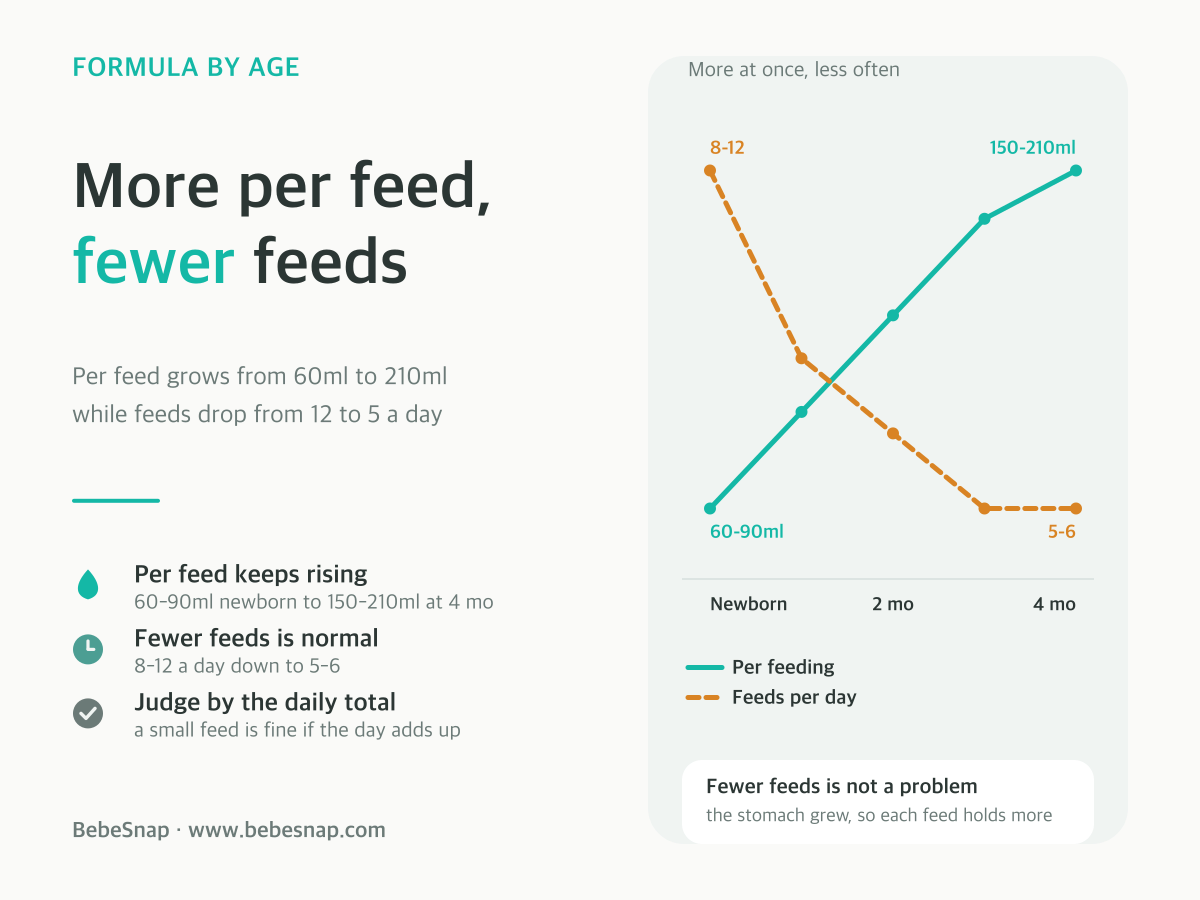
| Newborn (0-2 weeks) | 60-90ml (2-3 oz) | 8-12 | 400-700ml |
| 1 month | 90-120ml (3-4 oz) | 7-8 | 600-750ml |
| 2 months | 120-150ml (4-5 oz) | 6-7 | 750-900ml |
| 3 months | 150-180ml (5-6 oz) | 5-6 | 800-950ml |
| 4 months | 150-210ml (5-7 oz) | 5-6 | 850-1000ml |
| 5-6 months | 180-240ml (6-8 oz) | 4-5 | 900-1000ml |
| 7-9 months | 180-240ml (6-8 oz) | 3-4 | 700-900ml* |
| 10-12 months | 180-240ml (6-8 oz) | 2-3 | 500-700ml* |
*Formula naturally decreases after starting solids.
Newborn Formula (0-1 month) Detailed Guide
The newborn period sees daily changes in formula needs:
First Week Amounts
- Day 1: 10-30ml (0.5-1 oz) × 8-12 times
- Day 2: 20-40ml (0.5-1.5 oz) × 8-10 times
- Day 3: 30-60ml (1-2 oz) × 8 times
- Day 5: 50-70ml (1.5-2.5 oz) × 7-8 times
- Day 7: 60-90ml (2-3 oz) × 7-8 times
Why Gradually Increase?
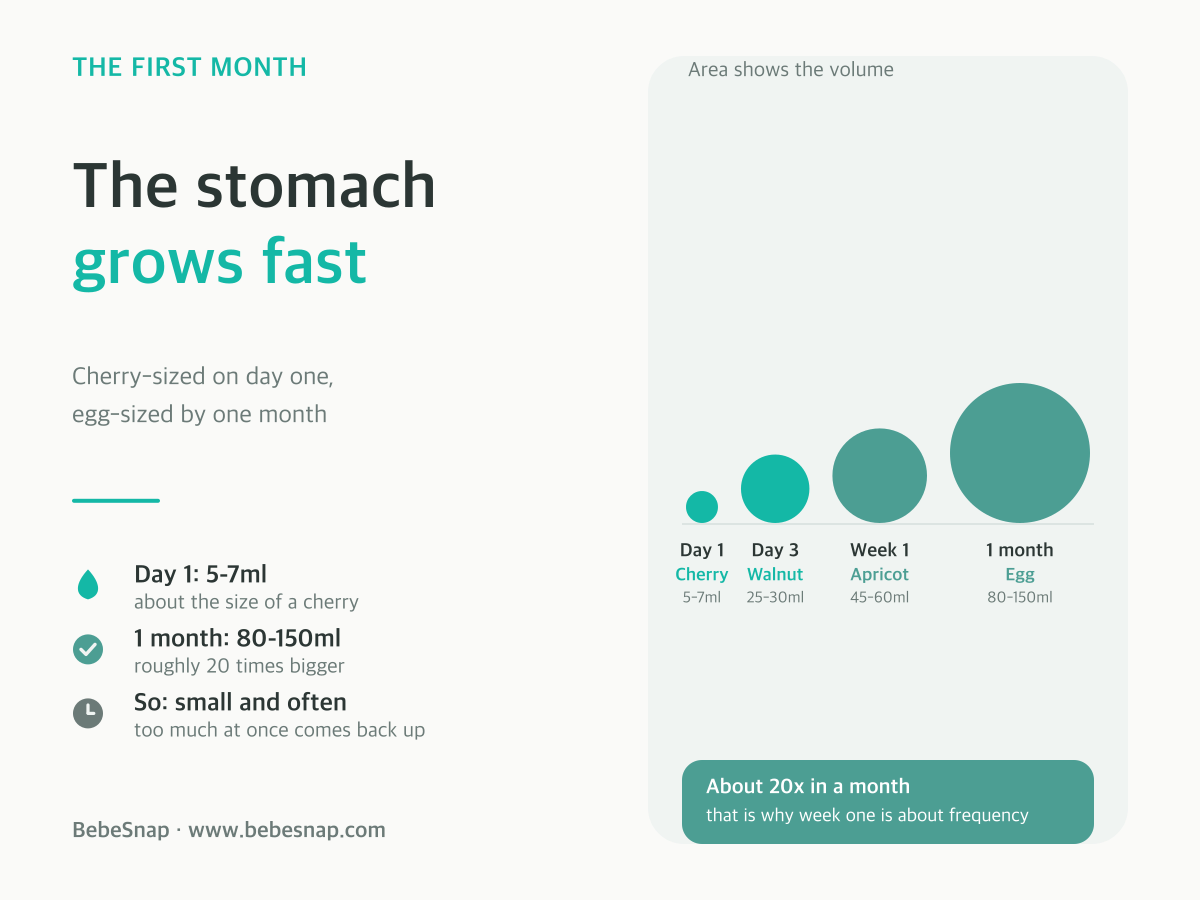
Because newborn stomachs grow rapidly:
- Day 1: Cherry size (5-7ml)
- Day 3: Walnut size (25-30ml)
- Week 1: Apricot size (45-60ml)
- 1 month: Egg size (80-150ml)
Feeding Intervals
Recommended feeding intervals:
| Age | Recommended Interval |
|---|---|
| Newborn-1 month | 2-3 hours |
| 2-3 months | 3-4 hours |
| 4-6 months | 4 hours |
| 7+ months | 4-5 hours |

Important: Intervals are from the start of one feeding to the start of the next. Night intervals may stretch to 4-5 hours.
Signs of Underfeeding vs Overfeeding
Signs Baby Needs More
- Still searching and sucking after feeding
- Fewer than 6 wet diapers per day
- Hard stools or decreased frequency
- Slow weight gain (less than 150-200g/week)
- Frequent waking and fussiness
Signs Baby is Overfed
- Frequent spitting up after feeding
- Distended, hard belly
- Fussiness or arching back during feeding
- Frequent constipation or diarrhea
- Excessive weight gain
How to Prepare Formula
Correct formula preparation:
1. Prepare Water
- Temperature: 40-50°C (104-122°F) - boiled water cooled down
- Water first: Always add water before powder
2. Measure Formula
- Follow manufacturer's ratio (usually 1 scoop per 20ml water)
- Level off the scoop
3. Mix
- Roll bottle side to side (shaking creates bubbles)
- Bubbles can cause gas and discomfort
4. Check Temperature
- Drop a few drops on inner wrist
- Should feel lukewarm or body temperature
Formula Feeding Position
Correct feeding positions:
1. Hold baby at 45+ degree angle
- Reduces air swallowing and reflux
2. Keep nipple full of formula
- Prevents air from entering
3. Burp during feeding
- Offer burping opportunity every 60-90ml
4. Hold upright 10-15 minutes after feeding
- Prevents reflux
Mixed Feeding (Breast milk + Formula)
Calculating formula for combo feeding:
Method 1: Formula After Breastfeeding
- Offer formula after nursing as much as baby wants
- Reduce amount if baby leaves some
Method 2: Alternate Breast and Bottle
- Example: Breast morning/evening, formula during day
- Calculate formula by weight, subtract estimated breast milk
Mixed Feeding Tips
- Don't mix breast milk and formula in same bottle
- Refrigerate breast milk; make formula fresh
Night Feeding Tips
Making night formula feeding easier:
- Pre-measure: Portion powder into dispensers
- Use thermos: Keep water at right temperature
- Bedside setup: Keep supplies within reach
- Dim lighting: Makes it easier for both to fall back asleep
Formula Storage and Safety
Prepared Formula
- Room temperature: Use within 1 hour (discard immediately if baby drank from it)
- Refrigerated: Use within 24 hours
- Reheating: Only once
Formula Can Storage
- Use within 1 month after opening
- Store in cool, dry place
- Keep scoop outside the can
Track Formula with BebeSnap
Why tracking formula matters:
- Confirm baby is eating enough
- Understand feeding patterns
- Provide accurate info for doctor visits
With BebeSnap:
- One-touch formula amount and time recording
- Automatic daily/weekly intake calculations
- AI analysis of proper amount for baby's weight
- Real-time sharing with family
Frequently Asked Questions (FAQ)
Q: Is it better to make formula more concentrated?
A: No. Making formula more concentrated than directed strains your baby's kidneys and can cause dehydration and constipation. Always follow the manufacturer's instructions, which is usually 1 level scoop of powder per 20ml of water. Add the water to the bottle first, then the powder, and roll the bottle gently to mix without creating bubbles.
Q: Can I save leftover formula for later?
A: Formula your baby has already drunk from should be discarded within 1 hour, because bacteria from saliva multiply quickly in the warm milk. Formula that's been prepared but untouched can be kept in the refrigerator and used within 24 hours. If you reheat refrigerated formula, only do so once, and never reheat leftovers a second time.
Q: How do I switch formula brands?
A: Switch gradually rather than all at once, because a sudden change can upset your baby's digestion. Over a period of 3 to 7 days, mix the old and new formula together, slowly increasing the proportion of the new one each day. Watch for any unusual fussiness, constipation, or diarrhea during the transition.
Q: Can I prepare formula ahead for night feedings?
A: Preparing formula ahead of time isn't recommended, because bacteria can grow in formula that sits too long. Instead, make each bottle fresh right before the feeding. To make night feeds easier, you can pre-measure the powder into dispensers and keep water at the right temperature in a thermos by your bedside.
References
Stop Trying to Remember Feed Times
Log time, amount, and intervals. BebeSnap turns them into your baby's daily pattern.
See what the app does firstMedical Disclaimer: This article is for informational purposes only and does not replace professional medical advice. If you have concerns about your baby's health, please consult a pediatrician.
You Might Also Like
Wonder Weeks Calculator: Your Baby's 10 Mental Leaps From the Due Date
Baby Weight Gain Calculator: Grams Per Day From Two Weigh-Ins
Baby Impetigo: Golden Crusts, Antibiotic Treatment, and When Nursery Is Safe Again
Baby Mouth Sores (Stomatitis): Causes, How to Tell Them Apart, and Dehydration Signs
You Might Also Like
Apple for Babies: Stage-by-Stage Portions and When Raw Apple Is Safe
Apple can start in the first weaning stage, grated and cooked. Portions are 20-30g at 7-8 months and 30-40g at 9-11 months, counted together with vegetables. Front teeth bite, but the molars that grind only start coming in at the end of weaning.

Formula Feeding Intervals: How Many Hours Apart and How Many Feeds a Day
You know the daily total, but how many bottles, how far apart? From 2-3 hours and 8-12 feeds as a newborn to 4-5 hours and 4-6 feeds at 4-6 months, plus when to wake a sleeping baby.
Mixed Feeding Guide: How to Supplement with Formula Without Losing Milk Supply
Want to add formula but worried about milk supply? Learn timing and methods to supplement without losing breast milk production.