Baby Pollen Allergy & Air Quality Guide: Symptoms, Prevention & Protection
Check Your Baby's Health from One Photo
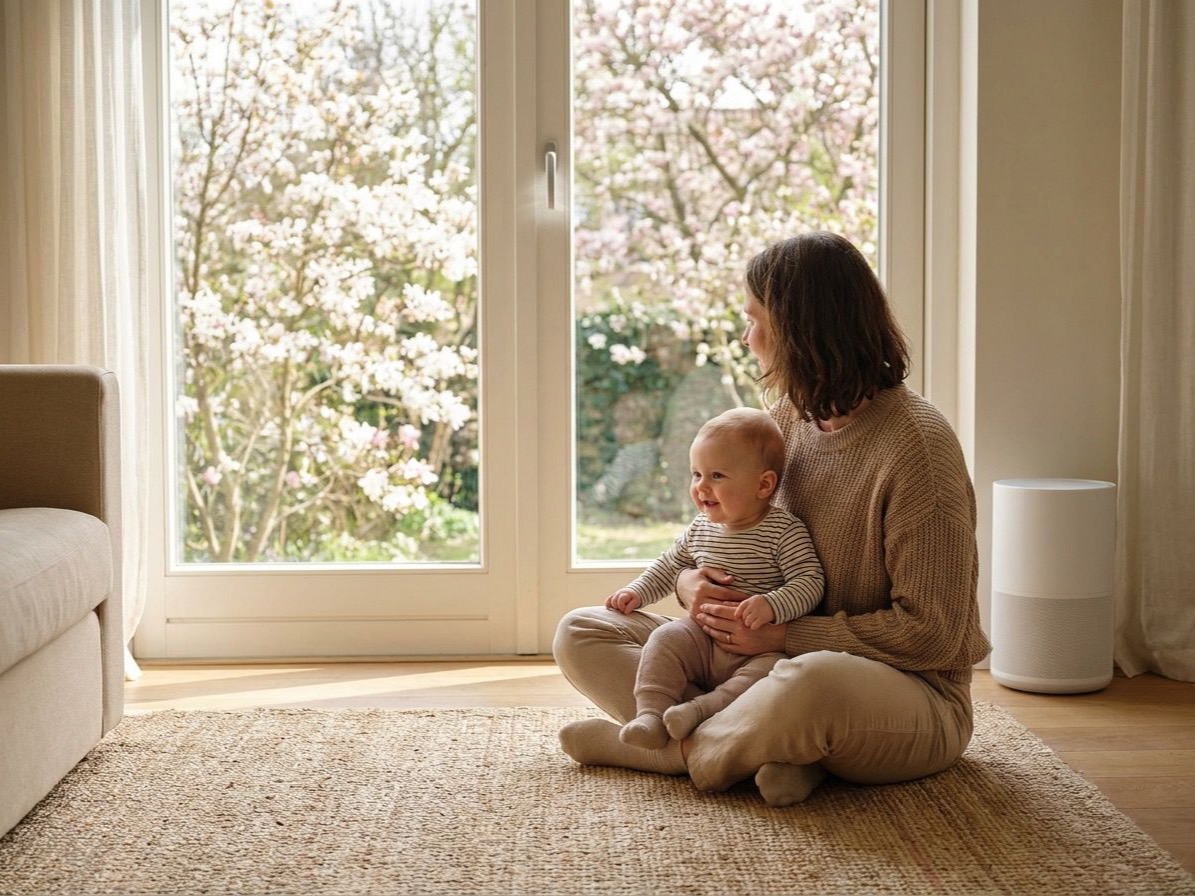
Get Started FreeProtect your baby from pollen allergies, yellow dust, and fine dust this spring! Learn how to tell allergies from colds, safe outdoor timing, and indoor air quality tips.
Can Babies Get Pollen Allergies?
As spring arrives with warmer weather and blooming flowers, parents naturally worry about pollen, air pollution, and their baby's health. So can babies actually develop pollen allergies?
The short answer: pollen allergies are very rare in babies under 2 years old. A child typically needs at least 1-2 seasons of pollen exposure before their immune system develops an allergic response. However, yellow dust and fine particulate matter (PM2.5) can irritate any baby's respiratory system regardless of allergy status, making air quality awareness essential for all parents.
💡 Pollen allergies affect approximately 3-5% of children aged 0-4. While uncommon, they are not impossible. If you notice persistent symptoms, consult your pediatrician.Cold vs. Allergy: How to Tell the Difference
When your baby starts sneezing and develops a runny nose, it can be difficult to determine whether it is a cold or an allergy. Here are the key differences.
| Feature | Common Cold | Pollen Allergy |
|---|---|---|
| Nasal discharge | Starts clear, turns yellow/green | Stays clear and watery |
| Fever | Possible (37.5-39°C / 99.5-102°F); under 3 months, 38°C / 100.4°F or higher means call your pediatrician right away, even at night | No fever |
| Duration | Improves within 7-14 days | Persists throughout pollen season (weeks to months) |
| Eye symptoms | Rare or mild | Red, itchy, watery eyes |
| Sneezing pattern | Intermittent | Multiple sneezes in a row |
| Skin symptoms | Uncommon | Possible itching, hives |
| Behavioral cues | Fussy, lethargic | Frequent rubbing of nose and eyes |
Pollen Allergy Symptom Checklist
Watch for these signs that may indicate a pollen allergy in your baby.
Respiratory symptoms
- Persistent clear, runny nose
- Nasal congestion causing mouth breathing
- Frequent sneezing in succession
- Cough that worsens at night
Eye symptoms
- Red, bloodshot eyes
- Excessive tearing
- Swollen eyelids
- Constant rubbing or touching of eyes
Skin symptoms
- Red rash on face, arms, or legs
- Itchy skin (scratching behavior)
- Worsening of existing eczema
Behavioral changes
- More fussy and irritable than usual
- Snoring or mouth breathing during sleep
- Decreased appetite
Note: If these symptoms worsen after outdoor activities or on high-pollen days, allergies are more likely the cause.
But if your baby is struggling to breathe (including breathing very fast or wheezing with effort), turns blue or gray around the lips, or is limp, floppy, or not responding as usual, don't wait it out at home. Call 911 (or your local emergency number) right away. If you hear wheezing but your baby is not struggling, call your pediatrician promptly.
Types of Airborne Allergens: Pollen, Yellow Dust & Fine Dust
Understanding what threatens your baby's airways during spring helps you protect them more effectively.
Pollen
Microscopic particles released by plants for reproduction that travel through the air.
Key pollen seasons
- Spring (March-June): Tree pollen including alder, birch, pine, and oak
- Fall (August-October): Weed pollen including ragweed and mugwort
- In East Asia, cedar pollen (February-April) is a major allergen
Yellow dust (Asian dust storms)
Sand and dust originating from deserts in China and Mongolia that travel on prevailing winds. Primarily occurring from March to May, yellow dust carries heavy metals, bacteria, and mold spores, making it particularly hazardous for babies.
Fine dust: PM10 & PM2.5
| Type | PM10 (fine dust) | PM2.5 (ultrafine dust) |
|---|---|---|
| Size | 10 micrometers or smaller | 2.5 micrometers or smaller |
| Penetration | Nose, bronchi | Deep into lung tissue and bloodstream |
| Sources | Dust, pollen | Vehicle exhaust, industrial emissions |
| Risk level | High | Very high (WHO Group 1 carcinogen) |

Seasonal Allergy Calendar
Knowing when allergy risks peak helps you prepare in advance.
| Period | Primary allergens | Risk level |
|---|---|---|
| Feb-Mar | Alder, cedar pollen + yellow dust begins | High |
| Apr-May | Pine, oak pollen + peak yellow dust | Very high |
| Jun-Jul | Grass pollen (reduced during rainy season) | Moderate |
| Aug-Oct | Ragweed, mugwort pollen | High |
| Nov-Jan | Indoor allergens (dust mites) | Moderate |
Tip: Check your local air quality index and pollen forecasts daily during spring and fall seasons.
Protecting Your Baby During Outdoor Activities
Before going out
1. Check air quality
- Monitor your local air quality index (AQI) via weather apps or government websites
- Check pollen counts and forecasts
- AQI categories: Good (0-50) / Moderate (51-100) / Unhealthy for sensitive groups (101-150) / Unhealthy (151+)
2. When to stay indoors
- Air quality index rated "Unhealthy for sensitive groups" or worse
- Yellow dust advisories or warnings are issued
- Pollen counts are "High" or "Very high"
- Early morning hours (5-10 AM) when pollen counts peak
3. When you must go out
- Use a stroller cover or rain shield to protect your baby
- Dress baby in light long sleeves and pants
- Use a hat to prevent pollen from settling in hair
- Children 24 months and older can wear a well-fitting child-sized mask; never put a mask on a younger child, who may not be able to remove it without help
After returning home
1. Brush off clothing at the entrance to minimize bringing allergens indoors
2. Change clothes immediately and place outdoor clothing in the laundry
3. Give your baby a bath, paying special attention to hair, face, hands, and feet
4. Use saline nasal drops to rinse allergens from nasal passages
5. Use artificial tears to flush dust from eyes (consult your pediatrician first)
Indoor Air Quality Management
Since babies spend most of their day indoors, maintaining clean indoor air is critical.
Air purifier essentials
- Use an air purifier with a HEPA filter
- Run it 24 hours a day in your baby's room
- Replace filters on schedule (typically every 6-12 months)
- Place the unit out of your baby's reach
Ventilation tips
- Ventilate only when air quality is "Good" (typically between 2-4 PM)
- Keep ventilation sessions short: 10-20 minutes
- Run the air purifier immediately after ventilating
- Avoid opening windows during yellow dust events or poor air quality days
Humidity control
- Maintain indoor humidity at 40-60%
- Too dry: nasal membranes weaken, allowing easier allergen penetration
- Too humid: encourages mold and dust mite growth
- Clean humidifiers daily to prevent bacterial growth
Cleaning habits
- Prioritize wet mopping over dry sweeping to prevent dust from becoming airborne
- Wash bedding weekly in water at 60°C (140°F) or higher
- Minimize carpets and rugs
- Reduce stuffed animals, cushions, and other dust-collecting items
- Keep your home smoke-free (tobacco smoke sharply raises indoor fine-dust levels and makes breathing symptoms worse)
When Medication Is Needed: Always Consult Your Pediatrician
If your baby's allergy symptoms are severe, always consult a pediatrician before using any medication. Never give your baby adult medications or over-the-counter allergy drugs without medical guidance.
Medications your pediatrician may prescribe
| Medication type | Minimum age | Effect |
|---|---|---|
| Saline nasal rinse | From birth | Physically removes allergens from nose |
| Antihistamine syrup | Cetirizine: 6 months+, Loratadine: 2 years+ | Relieves runny nose, sneezing, itching |
| Leukotriene receptor antagonist | 6 months+ | Reduces congestion and bronchial symptoms (FDA boxed warning (2020): Reports of neuropsychiatric effects including behavioral changes and sleep disturbances. Always use under pediatrician supervision.) |
| Nasal corticosteroid spray | 2 years+ | Reduces nasal inflammation |
| Allergy eye drops | Per doctor's guidance | Relieves eye itching and redness |
Allergy testing
- Skin prick test: Small amounts of allergens are applied to the skin to check for reactions
- Blood test (specific IgE): Measures antibodies to specific allergens in the blood
- Testing is generally more accurate after age 2
Air Quality Apps & Monitoring Tools
Stay informed with real-time air quality data to protect your baby.
Global tools
- AirVisual / IQAir - Global real-time air quality monitoring
- AirNow - US EPA air quality data
- Weather apps with built-in AQI displays
AQI reference chart
| AQI level | Category | Baby outdoor activity |
|---|---|---|
| 0-50 | Good | Safe for outdoor activities |
| 51-100 | Moderate | Okay, but limit prolonged exposure |
| 101-150 | Unhealthy for sensitive groups | Avoid outdoor activities |
| 151+ | Unhealthy to hazardous | Stay indoors |
Track Allergy Symptoms with BebeSnap
Manage your baby's spring health systematically with BebeSnap!
- Symptom logging: Record daily symptoms like runny nose, cough, and skin changes to identify patterns
- AI stool analysis: Quickly check for digestive changes related to allergies by snapping a photo
- AI skin analysis: Photograph allergy-related skin rashes for instant AI-powered analysis
- AI chatbot: Ask questions like "My baby has pollen allergy symptoms" for personalized guidance
- Pediatric visit records: Log diagnoses and prescriptions for easy reference at follow-up appointments
Frequently Asked Questions (FAQ)
Q: Can babies under 2 get pollen allergies?
A: Pollen allergies are very rare in babies under 2, because a child typically needs at least 1-2 seasons of pollen exposure before their immune system develops an allergic response. Pollen allergies affect roughly 3-5% of children aged 0-4 (uncommon but not impossible) so if you notice persistent symptoms, consult your pediatrician.
Q: How can I tell a cold from a pollen allergy?
A: With a cold, nasal discharge starts clear and turns yellow or green, fever is possible, and it improves within 7-14 days. With an allergy, the discharge stays clear and watery, there is no fever, eyes become red, itchy, and watery, and symptoms persist throughout pollen season. If symptoms last beyond 2 weeks or worsen after outdoor activities, suspect an allergy.
Q: Can I take my baby outside on poor air quality days?
A: It is best to stay indoors when the air quality index is "Unhealthy for sensitive groups" or worse, when yellow dust warnings are issued, or when pollen counts are "High." If you must go out, protect your baby with a stroller cover and dress them in long sleeves and pants. After returning home, brush off clothing at the entrance, give a bath right away, and rinse the nose with saline.
Q: Can I give my baby allergy medicine on my own?
A: No. Never give adult or over-the-counter medications without medical guidance, always consult a pediatrician first. Among antihistamines, cetirizine can be used from 6 months and loratadine from 2 years, while nasal corticosteroid sprays are for ages 2 and up. Pediatricians typically prescribe non-sedating second-generation antihistamines for infants and young children.
References
Check Your Baby's Health from One Photo
AI stool analysis reads color and texture, and keeps every health record in one place.
See what the app does firstMedical Disclaimer: This article is for informational purposes only and does not replace professional medical advice. If you have concerns about your baby's health, please consult a pediatrician.
You Might Also Like
Tomato for Babies: When to Start, Skin and Seeds, and Why Cherry Tomatoes Are Never Served Whole
Apple for Babies: Stage-by-Stage Portions and When Raw Apple Is Safe
Spinach for Babies: When to Start, Why Boiling Matters, and the One Time to Skip It
Potato for Babies: When to Start, Safe Shapes, and Why Never to Blend It
You Might Also Like
Baby Impetigo: Golden Crusts, Antibiotic Treatment, and When Nursery Is Safe Again
Golden-brown crusts spreading across your baby's skin? Impetigo is a common, highly contagious bacterial skin infection in young children. It stops being contagious 48 hours after treatment starts. Here is how to recognise it and when nursery is safe again.
How to Use BebeSnap AI Stool Analysis: Stop Worrying About Baby Poop
Analyze your baby's poop with AI whenever you're worried. Learn how to use BebeSnap's AI stool analysis feature step by step.
Baby Heat Rash (Miliaria) Guide: Types, Treatment & How to Tell It From Eczema
Tiny bumps on your baby's neck, back, or armpits? Learn the 3 types of heat rash, how to distinguish it from eczema, and home care tips including keeping rooms at 72-78°F.