Baby Oral Thrush: Symptoms, Treatment & Prevention, Complete Guide

Check Your Baby's Health from One Photo
Get Started FreeSpotting white patches inside your baby's mouth can be alarming. It might be leftover milk residue, but if those patches will not wipe off, you could be looking at oral thrush. Oral thrush is a fungal infection caused by Candida albicans, and it is one of the most common infections in newborns and young infants. About 5 to 7 percent of babies under 6 months develop thrush, and the good news is that it is easily treatable; most cases clear up within 1 to 2 weeks with proper antifungal medication. This guide covers everything you need to know: symptoms, how to tell thrush from milk residue, treatment options, the connection between thrush and diaper rash, and what breastfeeding mothers should watch for.
What Is Oral Thrush?
Oral thrush (also called oral candidiasis or moniliasis) is an infection of the mouth caused by an overgrowth of the fungus Candida albicans on the mucous membranes of the mouth.
Candida is actually a normal part of the body's microbiome; it naturally lives on skin and in the mouth. However, because a baby's immune system is still immature, the fungus can sometimes multiply uncontrollably and cause visible infection.
Babies most likely to develop thrush
- Newborns: can pick up Candida from the mother's birth canal during delivery
- Babies on antibiotics: antibiotics kill normal bacteria in the mouth, allowing Candida to overgrow
- Babies with weakened immune systems: premature infants or those with chronic conditions
- Babies whose pacifiers or bottle nipples are not adequately sterilized
- Breastfed babies whose mother has a nipple Candida infection
Symptoms of Oral Thrush in Babies
The hallmark symptom of thrush is white patches inside the mouth. Look for the following signs.
Inside the mouth
- White or creamy yellow patches on the tongue, gums, inner cheeks, and roof of the mouth
- Patches that look like cottage cheese or curdled milk
- Patches may merge together, covering larger areas of the mouth
- If the patches are rubbed off forcefully, the underlying tissue appears red, inflamed, and may bleed slightly
Behavioral changes
- Fussiness or crying during feeding (because the mouth is sore)
- Refusing the breast or bottle
- Increased drooling
- In severe cases, reduced feeding and intake
Thrush vs Milk Residue: How to Tell the Difference
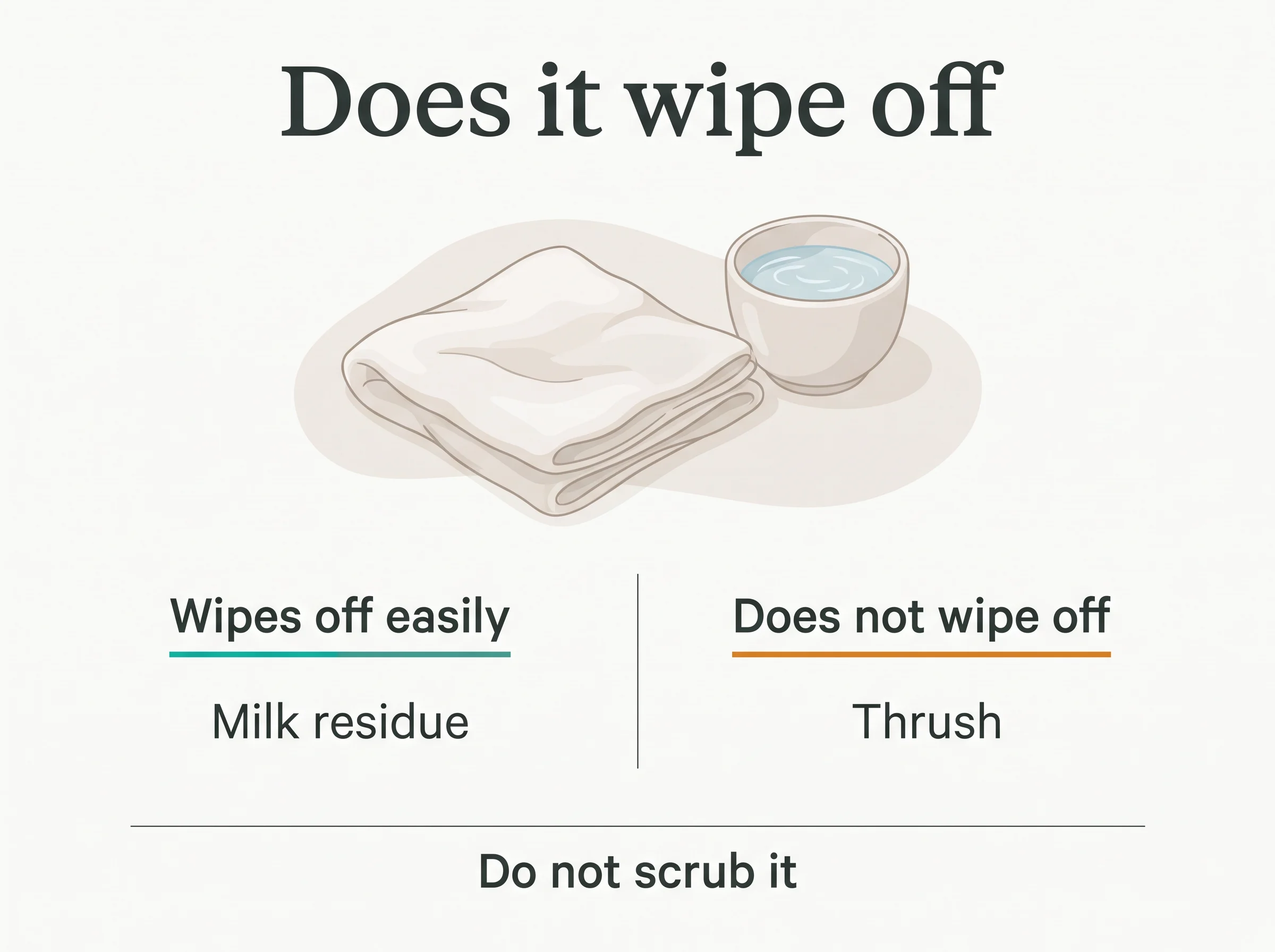
It can be hard to tell whether the white coating in your baby's mouth is thrush or simply leftover milk. Here is a simple way to find out.
| Feature | Oral Thrush | Milk Residue |
|---|---|---|
| Wipe test | Does NOT wipe off with a soft cloth | Wipes off easily with a soft cloth |
| What's underneath | Red, inflamed tissue; may bleed slightly | Normal, healthy pink tissue |
| Location | Tongue, inner cheeks, gums, roof of mouth | Usually only on the tongue surface |
| Over time | Persists regardless of feeding | Fades naturally between feedings |
| Baby's behavior | May fuss during feeding, reduced intake | No change in behavior |

The Thrush-Diaper Rash Connection
Babies with oral thrush can also develop a Candida diaper rash. When a baby swallows Candida fungus along with saliva and breast milk, the yeast travels through the digestive tract and can cause a fungal infection in the diaper area.
How to identify a Candida diaper rash
- Bright red or purplish-red patches, more intense than a typical diaper rash
- Sharply defined edges with small satellite spots around the main rash
- Rash appears in skin folds (groin creases), unlike regular diaper rash, which typically spares the folds
- Does NOT respond to standard diaper rash creams (zinc oxide, petroleum jelly)
If your baby has thrush in the mouth and a rash in the diaper area, both need to be treated simultaneously to prevent reinfection.
Nipple Thrush in Breastfeeding Mothers
During breastfeeding, Candida can pass between the baby's mouth and the mother's nipple. The infection can go in either direction, from baby to mother or from mother to baby. This is why treating both mother and baby at the same time is essential.
Symptoms of nipple thrush in mothers
- Burning, stinging, or shooting pain in the nipple during or after feeding
- Nipples appear unusually pink, red, or shiny
- Peeling, flaking, or cracked skin on or around the nipple
- Itching around the nipple and areola
- Persistent feeding pain even when the latch is correct
Treatment Options
Oral thrush is treated with antifungal medication, and most cases improve within 1 to 2 weeks. Always see your pediatrician for a proper diagnosis and prescription.
Treatment for baby
1. Nystatin (Mycostatin): the most commonly prescribed
- Comes as a liquid suspension; apply to the inside of the mouth using a cotton swab or clean finger
- Apply 4 times daily, after feedings
- Treatment typically lasts 7 to 14 days
- Continue for the full prescribed course even if the white patches disappear, stopping early can lead to recurrence
2. Miconazole oral gel
- May be used when nystatin is not effective
- Apply a small amount to the oral mucosa with a clean finger
- For babies under 4 months, don't buy it over the counter; use it only if your pediatrician prescribes it, exactly as directed (the UK NHS lists the mouth gel for babies over 4 months)
3. Fluconazole (Diflucan) oral medication
- May be prescribed for severe or recurrent thrush
- Given by mouth as directed by your pediatrician
Treatment for mother (nipple thrush)
- Apply miconazole or clotrimazole cream to the nipples after each feeding
- Wipe clean before the next feeding
- In severe cases, oral fluconazole may be prescribed
- Mother and baby MUST be treated at the same time to prevent reinfection
Home Care and Prevention
Alongside medical treatment, good hygiene at home is critical to preventing recurrence.
Sterilization and hygiene
- Boil all bottle nipples, pacifiers, and teething rings for at least 5 minutes after every use
- Sterilize any toy or object that your baby puts in their mouth daily
- Wash your baby's hands frequently (babies who suck their fingers can reinfect themselves)
- After feeding, gently wipe the inside of your baby's mouth with a clean, damp gauze
For breastfeeding mothers
- Clean and dry your nipples before and after every feeding
- Change breast pads frequently (a warm, moist environment promotes Candida growth)
- Wash bras in hot water (60 degrees Celsius or higher)
- Sterilize breast pump parts after every use
Diaper care
- Change diapers frequently to minimize moisture
- Allow diaper-free time whenever possible to let the skin breathe and dry
- If a Candida diaper rash is present, apply prescribed antifungal cream
Probiotics
- Consult your pediatrician about infant-safe probiotics
- Breastfeeding mothers may also benefit from taking probiotics
- There isn't strong evidence yet that probiotics prevent Candida overgrowth, so check with your pediatrician before using them
When to See a Doctor
See your pediatrician if any of the following apply.
- You notice white patches in your baby's mouth for the first time (accurate diagnosis is important)
- Your baby refuses to feed or has significantly reduced intake due to thrush
- There is no improvement after 5 days of antifungal treatment
- Thrush keeps coming back after treatment
- You suspect a Candida diaper rash in addition to oral thrush
- Your baby develops a fever or shows signs of dehydration (fewer wet diapers, no tears when crying). Call right away: under 3 months, a temperature of 100.4°F (38°C) or higher needs a doctor immediately, and for babies under 1, fewer than 6 wet diapers a day is a warning sign. Call 911 if your baby has had no wet diaper in 12 hours, is limp or unresponsive, or is hard to wake
- You are a breastfeeding mother experiencing severe nipple pain or difficulty nursing
Track Health with BebeSnap
Staying on top of your baby's health changes requires consistent tracking. BebeSnap makes it easy and organized.
- Health Log: Record when thrush appeared, treatment progress, and medication application times so you can give your pediatrician accurate information
- Feeding Tracker: Log feeding amounts and your baby's behavior during feeding to monitor how thrush is affecting nursing
- AI Health Consultant: Have a question about your baby's health? Ask the AI chatbot for instant guidance
- Diaper Log: Track diaper changes and rash status to catch Candida diaper rash early
FAQ
Q: Is oral thrush contagious?
A: Yes, Candida can be transmitted. During breastfeeding, it commonly passes between the baby's mouth and the mother's nipple. It does not typically spread directly between babies, but indirect transmission through unsterilized pacifiers or shared toys is possible.
Q: Will oral thrush go away on its own?
A: In mild cases, thrush may resolve on its own in babies with a healthy immune system. However, without treatment, the infection can spread or interfere with feeding. It is best to see your pediatrician for proper antifungal treatment.
Q: Can I keep breastfeeding if my baby has thrush?
A: Yes, you can and should continue breastfeeding. However, both you and your baby must be treated simultaneously to prevent passing the infection back and forth. Clean your nipples after each feeding and apply your prescribed antifungal cream.
Q: My baby's thrush keeps coming back. What should I do?
A: The most common causes of recurrence are inadequate sterilization and reinfection between mother and baby. Make sure you boil all bottle nipples, pacifiers, and teething toys after every use, and treat both mother and baby at the same time. If thrush continues to recur, your pediatrician may prescribe oral fluconazole for a longer course.
Q: My baby developed thrush after taking antibiotics. Is that related?
A: Yes, antibiotics are a common trigger for thrush. They kill the normal bacteria in the mouth that keep Candida in check, allowing the fungus to overgrow. If your baby needs antibiotics, ask your pediatrician about adding probiotics to help maintain a healthy bacterial balance.
References
Check Your Baby's Health from One Photo
AI stool analysis reads color and texture, and keeps every health record in one place.
See what the app does firstMedical Disclaimer: This article is for informational purposes only and does not replace professional medical advice. If you have concerns about your baby's health, please consult a pediatrician.
You Might Also Like
Tomato for Babies: When to Start, Skin and Seeds, and Why Cherry Tomatoes Are Never Served Whole
Apple for Babies: Stage-by-Stage Portions and When Raw Apple Is Safe
Spinach for Babies: When to Start, Why Boiling Matters, and the One Time to Skip It
Potato for Babies: When to Start, Safe Shapes, and Why Never to Blend It
You Might Also Like

Baby Impetigo: Golden Crusts, Antibiotic Treatment, and When Nursery Is Safe Again
Golden-brown crusts spreading across your baby's skin? Impetigo is a common, highly contagious bacterial skin infection in young children. It stops being contagious 48 hours after treatment starts. Here is how to recognise it and when nursery is safe again.
Baby Outing Checklist | Essential Items by Age
Easy-to-forget outing essentials, organized by your baby's age. From diapers and feeding to spare clothes and situational must-haves, pack by this checklist worry-free.

Infant Colic Guide: Why Babies Cry at 3 Weeks to 4 Months & Soothing Tips
Baby crying for 3+ hours every night? Colic usually starts at 2-4 weeks, peaks around 6 weeks, and improves by 3-4 months.