5 Signs of Baby Constipation and Safe Solutions
Check Your Baby's Health from One Photo
Get Started Free"My baby hasn't pooped in 3 days." Sound familiar? But not pooping doesn't always mean constipation. Here are 5 signs of real baby constipation and safe ways to help.
Constipation vs Normal: Know the Difference First
Baby Bowel Patterns Vary
Breastfed babies:
- 1-10 times per day is normal
- After 1 month, once every 5-7 days can be normal
- Breast milk is almost fully absorbed, leaving little waste
Formula-fed babies:
- 1-4 times per day is typical
- Stool is slightly firmer than breastfed babies
- Watch carefully if no stool for 2+ days
5 Signs of Baby Constipation
1. Hard Stool
The clearest sign of constipation.
What to look for:
- Stool is hard like pellets
- Dry and cracked
- Falls easily off the diaper
Normal baby stool should be soft and moist.
2. Excessive Straining and Crying During Bowel Movements
It's normal for babies to strain during bowel movements. However:
Signs of possible constipation:
- Face turns red with straining for 10+ minutes
- Crying intensely while trying to poop
- Straining but nothing comes out
- Arching back in apparent pain
3. Avoiding Bowel Movements
If passing hard stool hurt before, babies may try to hold it in.
Watch for:
- Body stiffening when feeling the urge
- Clenching buttocks
- Intense fussiness before bowel movements
4. Firm, Bloated Belly
How to check:
- Gently feel baby's tummy
- If it feels hard and tight, constipation is possible
- Pain when belly is pressed
5. Blood in Stool or Around Anus
Hard stool can tear the anus.
What to look for:
- Bright red blood on stool surface
- Redness and swelling around anus
- Blood on wipes during diaper change
Small amounts may be from an anal fissure, but consult your pediatrician if it continues.
Common Causes of Baby Constipation
1. Dehydration
- Formula mixed too thick
- Hot weather or fever
- Not enough feedings
2. Formula Change
- After switching to new formula
- Transitioning from breast milk to formula
3. Starting Solids
- Low-fiber baby foods
- Decreased fluid intake
- Gut adjusting to new foods
4. Anal Fissure Cycle
Hard stool → Anal tear → Pain → Avoiding pooping → Even harder stool
Safe Solutions
Hydration
Under 6 months:
- Increase breast milk or formula feedings
- Check formula concentration (follow manufacturer instructions)
6 months and older:
- Offer small amounts of water
- Prune juice, pear juice, apple juice (small amounts)
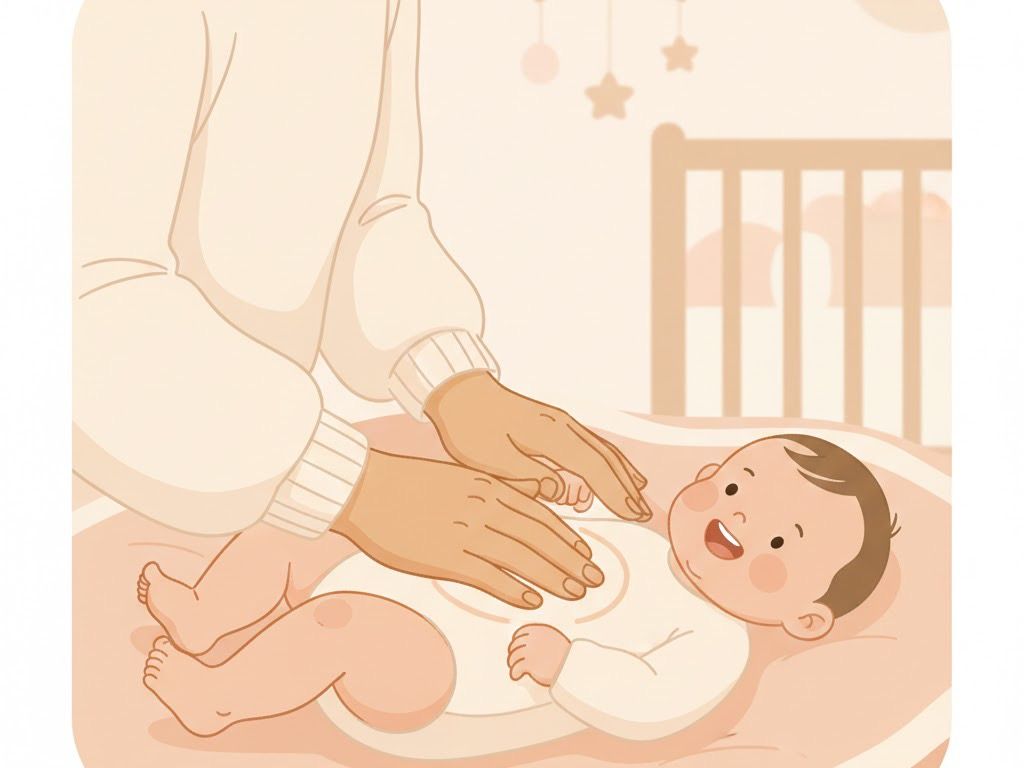
Tummy Massage
"I Love U" massage: Gently trace the letters I, L, U on baby's tummy.How to:
- I: Down the left side
- L: Across the top, then down the left side
- U: Starting from bottom right, trace a U shape
Do 2-3 times daily, 30 minutes after feeding works best.
Bicycle Legs
Lay baby down and move their legs in a pedaling motion.
How to:
- Alternate bending legs toward tummy
- Do several times a day, like at each diaper change
Warm Bath
- 10-15 minutes in warm water
- Helps relax belly and bowel muscles
Dietary Adjustments (6 months+)
High-fiber foods:
- Prunes, pears, peaches
- Peas, broccoli
- Sweet potatoes
Foods to limit:
- Bananas (can worsen constipation)
- Excessive rice cereal only
What NOT to Do
- Honey water - Forbidden under 1 year (botulism risk)
- Suppositories/enemas without doctor approval
- Forcing baby to strain
- Stimulating with cotton swabs - Risk of anal injury
When to See a Doctor
Visit a pediatrician if any of these apply:
| Symptom | Urgency |
|---|---|
| Constipation lasting 2+ weeks | Needs evaluation |
| Repeated bloody stool | Prompt visit |
| Severe stomach pain, vomiting | Same day |
| Weight loss, poor growth | Needs evaluation |
| No first stool within 48 hours of birth | Immediate |
| Constipation in newborn (under 1 month) | Prompt visit |

Track Bowel Movements with BebeSnap
To know if it's constipation, you need to track bowel movement patterns. With BebeSnap:
- Instantly check when the last bowel movement was
- Record stool color and consistency
- Easy to show doctors during visits
Use the AI Stool Analysis feature to photograph stool and get color and consistency analysis.
👉 Learn more about AI Stool Analysis
Frequently Asked Questions (FAQ)
Q: Is my baby constipated if they haven't pooped for a few days?
A: You can't judge constipation by frequency alone. For breastfed babies, going once every 5-7 days after 1 month can be normal, while for formula-fed babies you should watch carefully if there's no stool for 2 or more days. Stool hardness and your baby's discomfort matter more than frequency.
Q: What massage helps with baby constipation?
A: The "I Love U" massage is effective, gently trace the letters I, L, and U on your baby's tummy. Do this 2-3 times a day, about 30 minutes after feeding. Moving the legs in a bicycle motion or giving a 10-15 minute warm bath can also help relax the belly and bowel muscles.
Q: Can I give my baby honey water for constipation?
A: No. Honey is forbidden for babies under 1 year due to the risk of botulism. You should also never use suppositories or enemas on your own, or stimulate the anus with cotton swabs, as this risks injury. Always consult a doctor first.
Q: When should I take my baby to the doctor for constipation?
A: See a pediatrician if constipation lasts 2 or more weeks, if there's repeated bloody stool, or if there's severe stomach pain and vomiting. A newborn's constipation, or no first stool within 48 hours of birth, needs prompt or immediate medical attention.
References
Check Your Baby's Health from One Photo
AI stool analysis reads color and texture, and keeps every health record in one place.
See what the app does firstMedical Disclaimer: This article is for informational purposes only and does not replace professional medical advice. If you have concerns about your baby's health, please consult a pediatrician.
You Might Also Like
Apple for Babies: Stage-by-Stage Portions and When Raw Apple Is Safe
Spinach for Babies: When to Start, Why Boiling Matters, and the One Time to Skip It
Potato for Babies: When to Start, Safe Shapes, and Why Never to Blend It
Wonder Weeks Calculator: Your Baby's 10 Mental Leaps From the Due Date
You Might Also Like

Baby Impetigo: Golden Crusts, Antibiotic Treatment, and When Nursery Is Safe Again
Golden-brown crusts spreading across your baby's skin? Impetigo is a common, highly contagious bacterial skin infection in young children. It stops being contagious 48 hours after treatment starts. Here is how to recognise it and when nursery is safe again.

Baby Cough Types Guide: Dry, Wet & Barking Cough - When to Worry & Home Care
Not all baby coughs are the same. Learn 4 cough types - dry, wet, barking & whooping - their causes, home remedies, phlegm removal tips, nighttime cough relief, and emergency warning signs.
Baby Cold Symptoms & Treatment: Complete Guide from Newborn to 12 Months
Is your baby showing cold symptoms? Learn age-specific symptoms, home care tips, and warning signs that require medical attention.